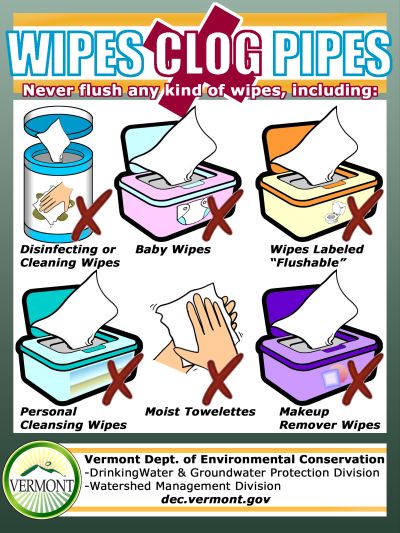
“Flushable” wipes clog pipes and should be disposed of in the trash not the toilet.
Prevent Blockages, Backups, and the Need for Costly Plumbing Services
Vermont Business Magazine As the new year begins, the Vermont Department of Environmental Conservation (DEC) is offering a few tips on what not to flush down toilets and sinks, and how to better dispose of that waste.
For toilets, only flush human waste, toilet paper, and cleaning products in moderation. For sinks, small amounts of liquid food waste, like soup, can be safely flushed without affecting septic systems; however, it is discouraged. Never pour fats, oils, or grease down drains regardless of if you are on a sewer system or have a septic system.
Never flush tissues, cotton swabs, floss, diapers, feminine hygiene products, coffee grounds, cat litter, wipes, excessive household cleaners, cigarette butts, or medications. Flushing these items can clog septic and sewer systems, cause sewage backups into your home, and result in costly maintenance and repairs both for property owners and municipalities.
"Even products advertised as ‘flushable’ do not break down and can clog toilets, household plumbing, sewer pipes and pumps, and septic systems,” said Heather Collins, DEC Wastewater Program Manager. “This can result in sewage backups and overflows that cause pollution and cost homeowners and the public extra money.”
Knowing where and how to best dispose of trash, household chemicals, and medications helps protect public health and the environment. Use these tips to dispose of waste the right way:
- Solid waste like “flushable” wipes, diapers, feminine hygiene products, pet waste, and cigarette butts: Put in the trash.
- Hazardous waste labeled toxic, hazardous, poisonous, reactive, corrosive, or flammable: Bring to a household hazardous waste collection event or facility.
- Needles and sharps: Learn how to safely dispose of needles and sharps.
- Drugs like medicine, vitamins, and pills: Learn how to safely store or dispose of prescriptions from the Department of Health.
- Fats, oils, and grease and compostable food scraps like coffee grounds and banana peels: Compost at home, bring to a drop-off facility, or use a curbside food scrap hauler that accepts fats, oils, and grease. Remember to also follow bear-friendly composting practices.
To learn more about:
- Municipal Wastewater Systems, visit the DEC Wastewater Management Program
- Onsite Wastewater (Septic) Systems, visit the DEC Wastewater System and Potable Water Supply Program
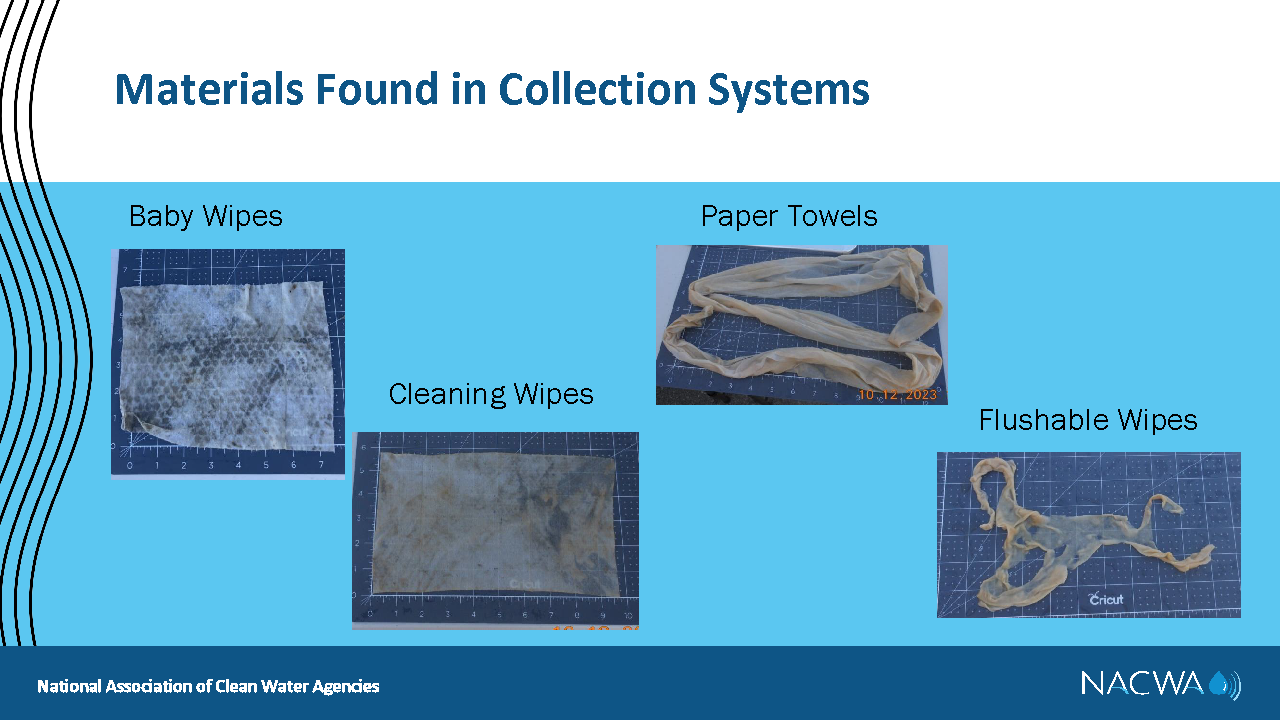
Items like paper towels and cleaning wipes do not break down once flushed and have been found intact after being recovered from sewer pipes. Photo credit: Responsible Flushing Alliance.
The Department of Environmental Conservation is responsible for protecting Vermont's natural resources and safeguarding human health for the benefit of this and future generations. Visit dec.vermont.gov and follow the Department of Environmental Conservation on Facebook and Instagram.
1.15.2026. Vermont Agency of Natural Resources, Montpelier, Website.
To support vital journalism, access our archives and get unique features like our award-winning profiles, Book of Lists & Business-to-Business Directory, subscribe HERE!