

VermontBiz This summer, the Vermont Lakes and Ponds Program is seeking volunteers to help monitor and collect information about lakes and ponds in the state. Volunteers can be found statewide greeting lake visitors, inspecting boats, collecting water samples, tracking algal or cyanobacteria blooms, reporting aquatic introduced invasive species, and more.
“With over 800 lakes and ponds to monitor across Vermont, volunteers are critical to the success of our department’s efforts,” said Department of Environmental Conservation (DEC) Commissioner Misty Sinsigalli. “Thanks to their commitment and hard work, volunteers help our scientists better understand and protect the health of these remarkable natural resources.
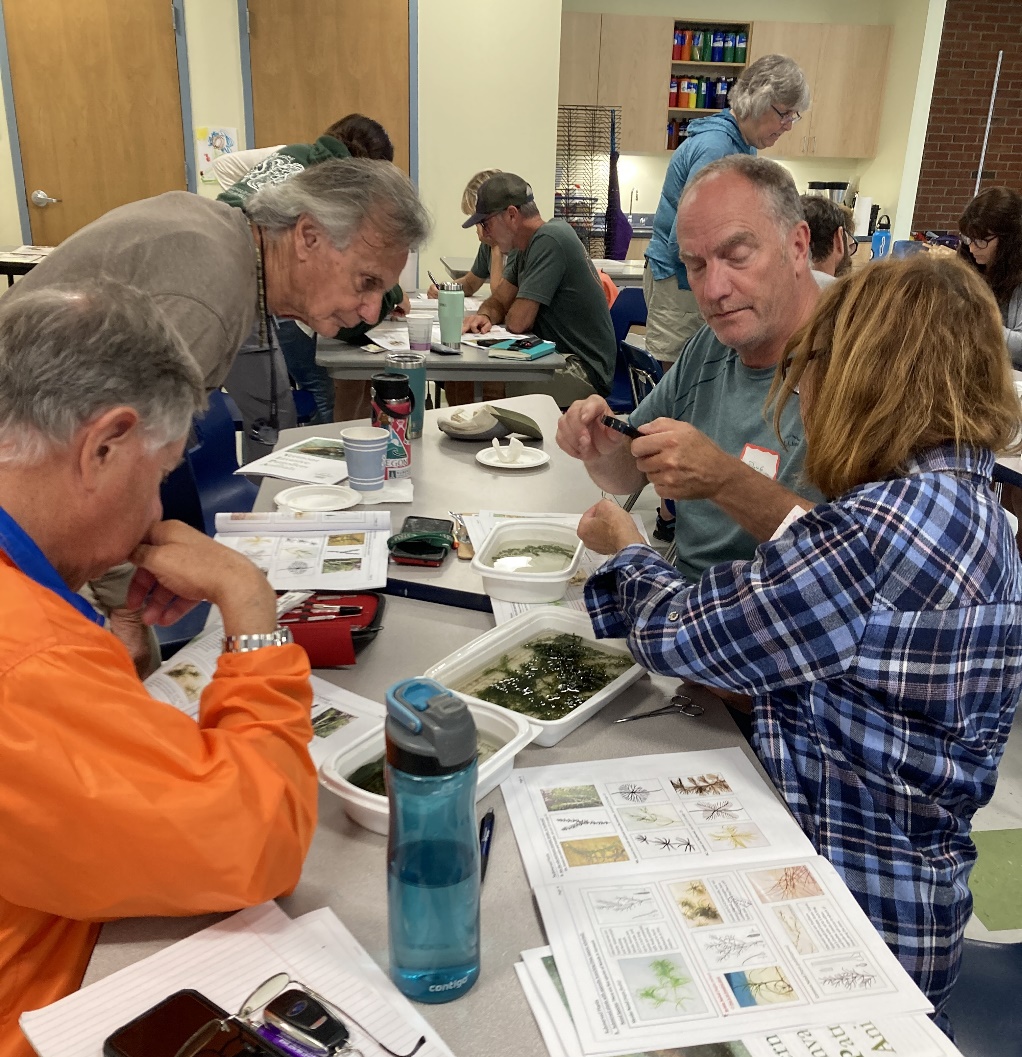
Photo: Volunteers identifying aquatic plants at Vermont Invasive Patrollers training. Courtesy photo.
The Lakes and Ponds Program hosts a few programs for volunteers to get involved with:
- Lay Monitoring Program
- Volunteers are equipped and trained on their boats to sample lake water every two weeks from June through August.
- The information collected has helped state scientists track lake water quality conditions and trends during the summer recreation season since 1979.
- Volunteers learn about lake ecology and stewardship while helping to inform lake protection and restoration.
- To learn more or volunteer, contact Mark Mitchell at 802-490-6126 or [email protected].
- Vermont Invasive Patrollers Program and Vermont Invasive Patrollers for Animals Program
- Volunteers learn how to identify aquatic introduced invasive species, such as zebra mussels and water chestnut, and then choose a lake to monitor each year for aquatic invasive species.
- Tracking aquatic introduced invasive species is key because these organisms can harm the environment, economy, and even human health.
- To learn more, volunteer, or host a workshop, contact Kimberly Jensen at 802-490-6120 or [email protected].
- Public Access Greeter Program
- Volunteers help stop the spread of aquatic introduced invasive species by offering to inspect boats and watercraft at no cost.
- Volunteers have educated lake visitors about aquatic invasive species at public boat launches since 2002.
- To start a greeter program, host a workshop, or learn more, contact Kim Jensen at 802-490-6120 or [email protected].
- Cyanobacteria Monitoring Program
- Volunteers are trained to assess lake conditions and monitor for harmful algal or cyanobacteria blooms.
- Cyanobacteria, also known as blue-green algae, are naturally found in fresh water in the U.S. and throughout Vermont.
- Under the right conditions, cyanobacteria can quickly multiply to create dense surface scums, mats, or layers known as blooms, especially in warm weather.
To learn more or volunteer, contact Peter Isles at 802-490-6130 or [email protected]. If Peter Isles is not available, contact Lizzy Gallagher at 802-490-6129 or [email protected].
Learn more about volunteering online.
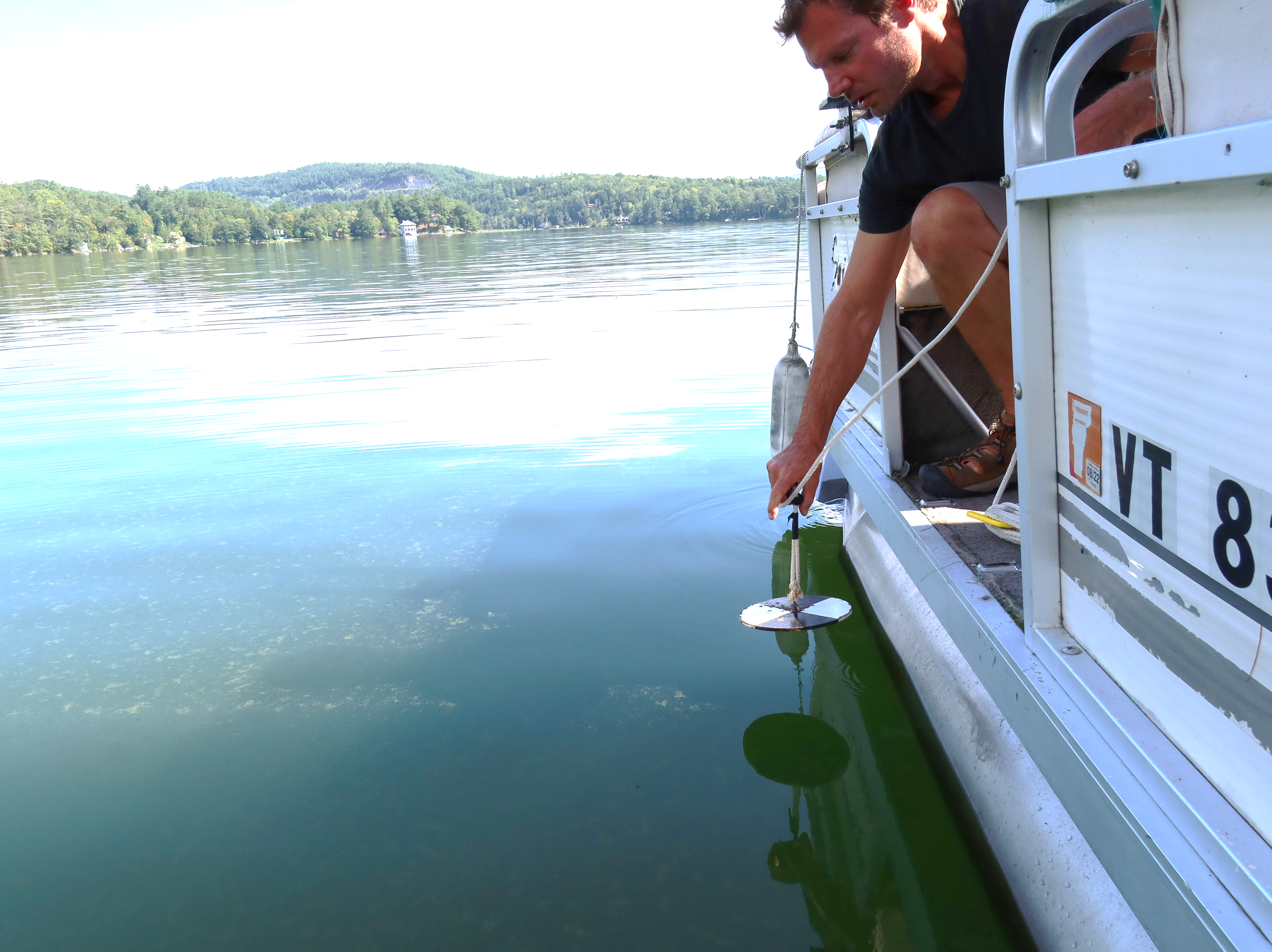
Photo: Lay Monitoring Program training to measure water clarity using a Secchi disk and report cyanobacteria observations. Courtesy photo.
The Department of Environmental Conservation is responsible for protecting Vermont's natural resources and safeguarding human health for the benefit of this and future generations. Visit dec.vermont.gov and follow the Department of Environmental Conservation on Facebook and Instagram.
This institution is an equal opportunity provider. To file a discrimination complaint, for questions, free language services, or requests for reasonable accommodations, please contact ANR’s Nondiscrimination Coordinator at [email protected] or visit ANR’s online Notice of Nondiscrimination.