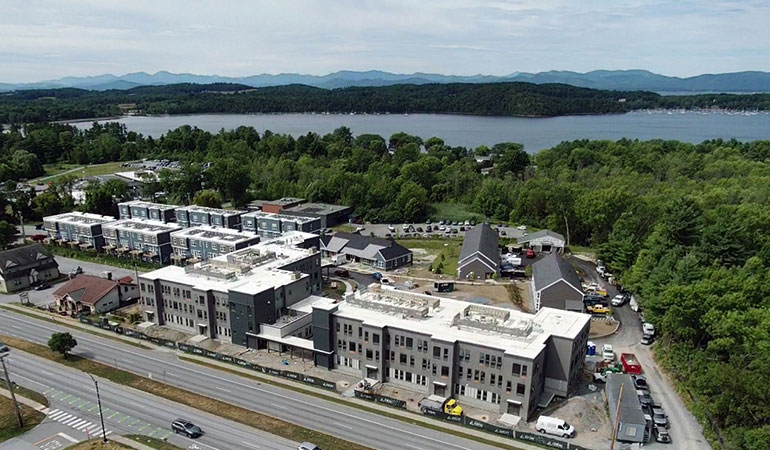
Photo: Bay Ridge Apartments in Shelburne. Photo courtesy DEW Construction.
VermontBiz It’s been a busy year for construction in Vermont. We’ve seen growth across the board — from housing developments to flood recovery, but we’re still up against some tough realities. Contractors are working hard, but labor shortages and rising costs continue to hold us back.
Big Projects, Big Impact
One of the biggest efforts this year is Cambrian Rise in Burlington. DEW Construction is leading the charge on this 1,050-unit housing development, and it’s set to wrap up this fall. That’s a major step toward easing Vermont’s housing crunch. Over in Williston, Finney Crossing keeps expanding with new hotels and commercial space, giving the local economy a solid boost.
Federal and state dollars have helped keep things moving, especially after the summer and winter floods. FEMA-backed recovery work brought a surge of activity. AGC/VT estimates construction volume across Vermont jumped about 12% this past year, forced by one time funding mechanisms.
Infrastructure saw some key upgrades too. Kingsbury Companies tackled improvements at the Swanton wastewater treatment plant and kicked off a sewer project in Colchester projects that show our industry’s commitment to long-term sustainability.
The Workforce Bottleneck
Even with all this work, we’re still short on people. Vermont’s construction workforce — roughly 15,000 strong just isn’t enough to meet demand. Contractors tell me they’re “busy, but not as busy as they could be.” The skilled labor gap is real.
Travis Kingsbury put it plainly: “People ask me, ‘Where did the workers go?’ And I say, ‘I don’t know where they went’.”
Firms are competing hard for talent. Workers are jumping ship for better pay, benefits, and culture. HELM Construction Solutions says most of their partners are hiring, especially for carpenters, project managers, and office staff.
Housing costs aren’t helping. With the median home price now at $422,000, it’s tough for workers to live near the jobs. Kristen Connors from VerMod nailed it: “We’re trying to build affordable housing, but those two words don’t go together anymore.”
Economic Headwinds
Inflation and material costs are squeezing everyone. Bids are coming in over budget, and some projects are getting scaled back or shelved. On top of that, proposed federal tariffs — like a 25% hike on goods from Canada and Mexico—are making sourcing even trickier.
TJ Kingsbury summed it up: “There’s not a lot of work out to bid. Vermont’s pretty anemic right now.” His company is expanding into New Hampshire and New York to keep things moving.
Still, there’s reason to be hopeful. Matthew Wheaton from DEW Construction said it best: “Owners are still sending out projects. There’s activity and opportunity out there.”
Training the Next Generation
We’re making progress on workforce development. Programs like Vermont Works for Women and AGC/VT’s new simulator training center are helping folks get into the trades with scholarships and hands-on experience. Stories like Lily Lukaszevicz, who found her path in carpentry after leaving college, show what’s possible.
Greg Wallace, a local builder, put it bluntly: “It’s unbelievable how much work we’ve turned down this year. Everyone is looking for help.”
As we look ahead, Vermont’s construction industry remains a vital part of our economy and a reflection of the challenges we face statewide. AGC/VT President, John Casella is quoted as saying "With smart investment, strong training programs, and the right policies, we’re not just building projects, we’re building Vermont’s future".
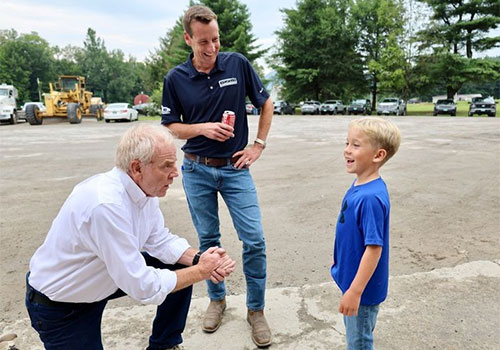
Photo: Richard Wobby with a young friend at the AGC/VT 90the anniversary celebration at Casella Construction in Pittsford. Courtesy photo.
Richard Wobby, Jr, is the executive vice president of AGC/VT.
To support vital journalism, access our archives and get unique features like our award-winning profiles, Book of Lists & Business-to-Business Directory, subscribe HERE!