BETA Alia in Norway in August 2025. Photos Courtesy of BETA Technologies.
by Timothy McQuiston, Vermont Business Magazine
South Burlington-based BETA Technologies, Inc on September 29, 2025, applied to the Securities and Exchange Commission to take the electric aircraft company public.
BETA has many components to the company that features its electric CTOL (Conventional Take-Off and Landing) aircraft and electric VTOL (Vertical Take-Off and Landing) aircraft.
“We are redefining the aerospace industry,” BETA states in the prospectus. “We have developed an electric aircraft platform and propulsion systems that are positioned to transform the aviation industry forward into a new phase of growth. We design, manufacture and sell high-performance electric aircraft, advanced electric propulsion systems, charging systems and components. Further, we have invested in the underlying infrastructure of this breakthrough technology, which is critical to bringing electric aviation to life. We believe we have developed a differentiated presence in North America and are well positioned to expand globally.
“Our company was purpose-built to capture the significant, untapped market opportunity in sustainable, reliable and efficient electric aviation.”
In its prospectus, BETA acknowledges that there are risks to investors, including the capital-intensive nature of the company’s requirements (see PROSPECTUS HERE and summary below).
BETA is seeking to be listed on the New York Stock Exchange under the symbol BETA. Founder and CEO Kyle Clark, 45, will retain his current post and also will retain significant control over the company with more than 50% of the voting shares. Clark himself is an experienced pilot, engineer and owner of several aircraft.
The IPO stock price, how much BETA expects to raise in the offering and exact stock awards were not presented in the prospectus.
However, between the percent of Class A common stock and Class B stock awarded to Clark, BETA will be a “controlled company.” Class A shares are valued at 1 vote for 1 share while Class B shares are valued at 40:1. All outstanding shares of Class B common stock will be beneficially owned by Clark.
The prospectus states: “As a result, Mr. Clark may have significant influence over the outcome of matters submitted to our stockholders for approval, including the election of our directors and the approval of any change of control transaction. We will be a “controlled company” within the meaning of the corporate governance standards of the NYSE, and therefore we are permitted to, and we intend to, elect not to comply with certain corporate governance requirements of the NYSE. Such corporate governance requirements include those that would otherwise require our board to establish a compensation committee and a nominating and corporate governance committee, each comprised entirely of independent directors.”
Major investors who will control over 5% of the company, along with Clark, are Charles Davis, son of the late Vermont Merchants Bank president Dudley Davis; General Electric Company (GE Aerospace invested $300 in BETA in September); Amazon.com NV Investment Holdings LLC (d/b/a The Climate Pledge Fund); TPG Rise Belfry, LP; John E. Abele, and Austin Meyer.

GE Aerospace and BETA plan to develop a hybrid electric turbogenerator for Advanced Air Mobility (AAM) applications. September 2025.
In addition, Martine A. Rothblatt, Ph.D. was an early supporter of BETA. She has served as a director of BETA since February 2021. Dr. Rothblatt founded United Therapeutics (Nasdaq: UTHR) in 1996 and has served as Chairperson and Chief Executive Officer since its inception. Previously, she created SiriusXM satellite radio (Nasdaq: SIRI).
She has extensive experience with fixed wing aircraft and helicopters as an engineer and pilot, including vertical takeoff and landing of electric flight vehicles, including drones, which have been employed by UTHR.
In response to a request for comment by BETA, they sent this message to VermontBiz: "As you likely know and can appreciate, BETA is currently in a restricted communications period. Once we are able, we would be happy to share more information."
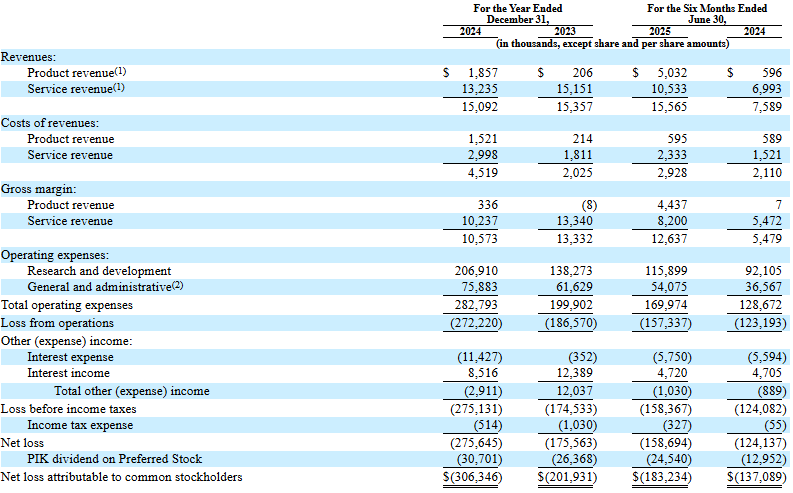
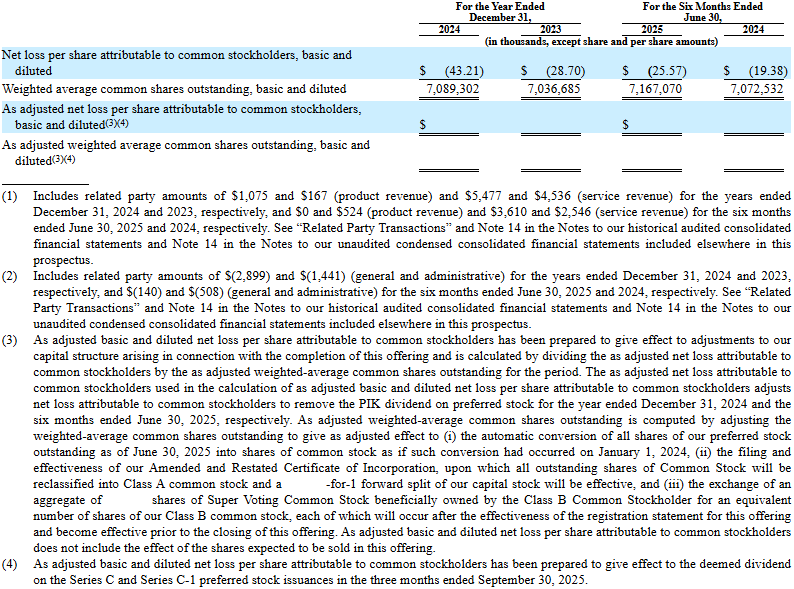
To date, BETA is a modestly sized firm. Revenues were $15.1 million in 2024 (net loss $275.6M) and $15.4 million in 2023 (net loss $175.6M).
And for the first six months of the year, revenues were $15.6 million in 2025 (net loss $158.7M) and $7.6 million in 2024 (net loss $124.1M).
According to the prospectus, product revenues increased by $4.4 million during the six months ended June 30, 2025, compared to the six months ended June 30, 2024. The increase was primarily attributable to new contracts with commercial customers to deliver electric propulsion motors, batteries, and flight control systems totaling $4.9 million offset by a reduction in revenue of $0.5 million due to completion of the forward operating base (FOB) during 2024.
Service revenues increased by $3.5 million, or 50.6% during the six months ended June 30, 2025 compared to the six months ended June 30, 2024. The increase was primarily attributable to new contracts with commercial customers of $2.3 million related to engineering and consulting services to support our customers’ research and development activities, $0.6 million related to priority access to the Company’s charging stations, and a net increase of $0.6 million from U.S. government customers during 2025.
The estimates for BETA (not to belabor the point) are sky high, which is what investors are banking on.
Facebook, for instance, bought Instagram for $1 billion in 2012 at a time when Instagram had 13 employees. BETA now has about 800.
Tesla may be a more germane case study. When Tesla was founded in 2003 by Martin Eberhard and Marc Tarpenning, their idea was to create an electric sports car company, which was also a battery company and tech company.
BETA, itself, is an airplane company, which develops batteries and charging stations, and creates services for its products while designing associated products for other firms.
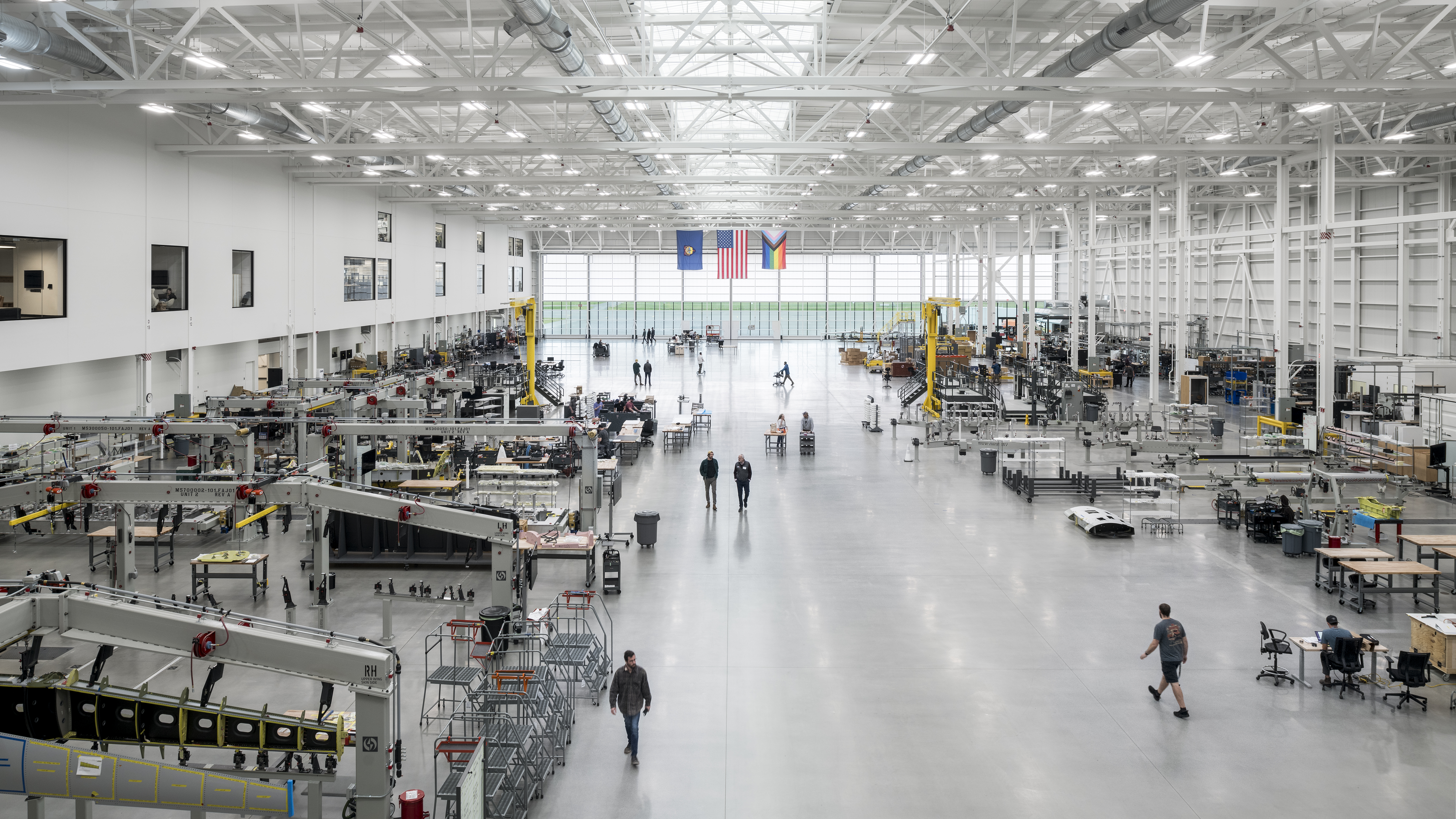
BETA's South Burlington manufacturing facility at BTV.
BETA states: “We are an ‘emerging growth company’ as that term is used in the Jumpstart Our Business Startups Act of 2012, and as such, we have elected to take advantage of certain reduced public company reporting requirements for this prospectus and future filings.”
Kyle Clark, in a letter within the prospectus, said in part: “Electric aviation is inevitable. We believe it will lower the cost of flight, improve safety, expand aviation’s utility, and do so in balance with our environment. Electric aviation will drastically expand the number of flights by opening up new routes and feasible missions allowing cargo and people to fly more. BETA is starting this inevitable transition with our ALIA aircraft platform utilizing the proprietary core technologies we have designed and developed. The deployment of our technology through aircraft sales enables an exciting business proposition with resilient and recurring revenues through aftermarket sales for multiple decades, particularly with our proprietary batteries. The ALIA platform and the core technology we have developed only represent the starting point of our ambitions. I believe the benefits of our core technologies will prove to be disruptive. Advancements in our technologies can make increasingly larger passenger (19, 70, 250 seats) and cargo electric aircraft possible.
“Engineering the future of aviation is a technologically unforgiving pursuit. Our standards are high. It is challenging and demanding, but the outcome is rewarding. Our company is rooted in first-principals engineering, where we design and build each component using the fundamental laws of physics. We fly what we build, we do more than we say and we respect the fact that we are in a highly regulated industry where safety is paramount. BETA’s foundation is in the design and engineering of the highly reliable and safe enabling technologies: motors, inverters, batteries, flight controls and a nationwide electric charging network.”

Kyle Clark
FOUNDER’S LETTER
Potential Investors and Aviators,
“For once you have tasted flight, you will forever walk the earth with your eyes turned skyward, for there you have been, and there you will always long to return,” - attributed to Leonardo di Vinci… and I would add, “and bring someone with you.”
I have been thinking about BETA for more than 25 years, going all the way back to my college thesis “BETA Air.” For me, flying is the ultimate freedom. Something I love to share. BETA combines my love for aviation and the mastery that flying demands with my lifelong pursuits of building and engineering.
BETA is the embodiment of an unrelenting passion and mission. The technical art of designing, building and testing flying machines is an unforgiving pursuit of excellence that requires a multidisciplinary understanding of the physics of flight and psychology of how people relate to machines. The challenges are real, the opportunity is huge, and a group of passionate aviators are redefining how we use the z-dimension of our world. Now, launching BETA as a public company, I look forward to sharing with you the awesome potential electrifying aviation has in transforming an industry and aspects of the economy and society.
Electric aviation is inevitable. We believe it will lower the cost of flight, improve safety, expand aviation’s utility, and do so in balance with our environment. Electric aviation will drastically expand the number of flights by opening up new routes and feasible missions allowing cargo and people to fly more. BETA is starting this inevitable transition with our ALIA aircraft platform utilizing the proprietary core technologies we have designed and developed. The deployment of our technology through aircraft sales enables an exciting business proposition with resilient and recurring revenues through aftermarket sales for multiple decades, particularly with our proprietary batteries. The ALIA platform and the core technology we have developed only represent the starting point of our ambitions. I believe the benefits of our core technologies will prove to be disruptive. Advancements in our technologies can make increasingly larger passenger (19, 70, 250 seats) and cargo electric aircraft possible.
Engineering the future of aviation is a technologically unforgiving pursuit. Our standards are high. It is challenging and demanding, but the outcome is rewarding. Our company is rooted in first-principals engineering, where we design and build each component using the fundamental laws of physics. We fly what we build, we do more than we say and we respect the fact that we are in a highly regulated industry where safety is paramount. BETA’s foundation is in the design and engineering of the highly reliable and safe enabling technologies: motors, inverters, batteries, flight controls and a nationwide electric charging network.
“Perfection is achieved not when there is nothing left to add, but when there is nothing left to take away.”— Antoine de Saint-Exupéry. This quote welcomes people into our R&D facility. If airplanes don’t fly, they aren’t really airplanes. What most often keeps aircraft grounded are equipment failures due to unnecessarily complex design and weather. This compelled us to focus on simplicity and to question the need for complex tilting rotors (thrust vectoring), water pumps, variable pitch propellers, collectives, gear reductions, and state changes in software. These are all absent from our simple aircraft design, and as a result are absent from our certification requirements with the FAA and our bill of materials.
Our focus is on making a lightweight aircraft with low aerodynamic drag, designed to carry a high energy- density battery, and converting that precious energy into propulsion in the most efficient way possible. Our back-to-basics approach is working. Our longest electric airplane flight is 336 NM. We completed the first ever full-scale manned eVTOL transition. Our electric airplanes have been flying military and FAA piloted missions for several years, including by pilots from the FAA and U.S. Military starting in 2022, and are currently flying on multiple continents.
I challenge you to find another electric aerospace company doing more piloted flying than BETA. Every employee at BETA has access to our flight school. Flying creates an extremely close connection to what is important in aircraft design, along with production, sales and support. Aviators understand weather, instrument conditions, reserves, dispatch rates and failures. Aviators understand that the FAA does not give credit for merely making something work. The FAA gives you credit when you show that something doesn’t fail, and, if it does, it fails in a safe way. Design simplicity fits well with this FAA regulatory fact, and our aircraft embody the knowledge we gain by flying.
Vertical integration is at the core of our manufacturing philosophy. We design and make our own motors, inverters, battery packs, monitoring systems, computers, and the equipment used to build our charging network. The ability to move fast as we build an electric aviation ecosystem is a key competitive advantage. The early look at the potential benefits of this strategy is illustrated by the fact that today, we own the charging infrastructure at airports around the country and are supplying our core products to others in the budding electric aerospace industry.
BETA also differentiates itself from the competition by doing significantly more with less. Simplicity is again the key. We have built a nationwide charging network, launched multiple products, shown up for the military, flown our aircraft across the U.S. and Europe and demonstrated the most technically challenging corners of electric aviation. I’m proud of the respect we have earned by being humble, effective and honest. I have learned this from John Abele, Martine Rothblatt, Dean Kamen, Chuck Davis and my parents. I feel extremely lucky to be surrounded by capable, dedicated and hard-working mentors and colleagues.
I invite you to evaluate us for yourself; visit us, fly with us, get to know the team, and ultimately judge us on the exceptional products we have created. We are here because we love what we do. You will feel it. I look forward to getting to know you and welcoming you on this adventure as we build the future of aviation.
-Kyle Clark
Founder and Chief Executive Officer

BETA Alia Simulator.
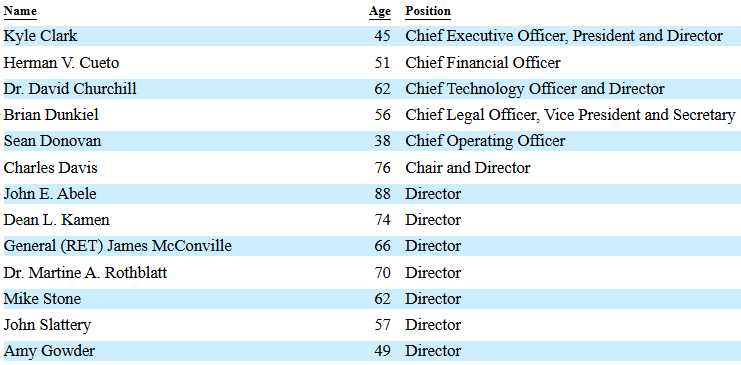
BETA Directors
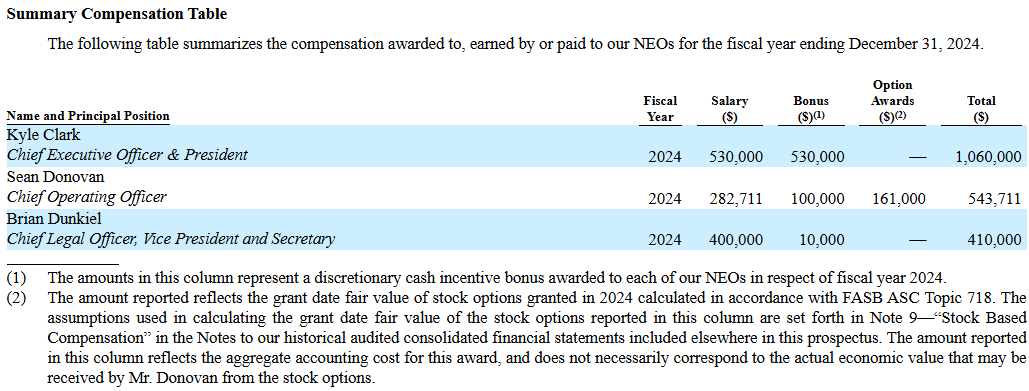
BETA Financial Report
Prospectus Summary
BETA Technologies, Inc. is an emerging leader in electric aviation, aiming to transform the aerospace sector with its next-generation electric aircraft, propulsion systems, charging infrastructure, and supporting technologies. The company’s forthcoming initial public offering (IPO) of Class A common stock marks a critical milestone in its evolution from a venture-backed startup into a publicly traded pioneer in sustainable aviation. BETA positions itself as a vertically integrated aerospace and technology platform targeting significant global opportunities across logistics, medical transport, defense, and future passenger markets.
Company Overview
BETA Technologies was founded with a singular mission: to decarbonize aviation and capture the significant, untapped market opportunity in electric flight. The company designs, manufactures, and sells high-performance electric aircraft and advanced propulsion systems, as well as charging solutions and digital platforms to enable their deployment. BETA’s vertically integrated approach—controlling batteries, motors, flight control software, and charging networks—aims to ensure safety, scalability, and profitability while accelerating the adoption of electric aviation.
Key pillars of BETA’s business include:
- Electric Aircraft and Systems: BETA develops aircraft capable of vertical takeoff and landing (eVTOL) and conventional takeoff and landing (eCTOL), designed for flexibility across mission types.
- Propulsion and Enabling Technologies: The company builds proprietary batteries, motors, and flight controls, reducing dependence on third parties.
- Charging Infrastructure: Through a network of charging solutions based on the CCS-1 protocol, BETA aims to provide nationwide support for electric aircraft and ground vehicles.
- Digital Platform – BETA Operate: A cloud-based system offering real-time operational visibility, predictive maintenance, fleet optimization, and regulatory compliance integration.
Business Model and Strategy
BETA’s model is built around vertical integration and recurring revenue streams, capturing value across the aircraft lifecycle—from manufacturing and aftermarket services to charging infrastructure and software. This approach not only enhances margins but also reduces supply-chain risk and fosters customer loyalty.
1. Multi-Market Approach
The company’s aircraft and technologies serve multiple verticals:
- Cargo & Logistics: Point-to-point delivery, last-mile logistics, and time-sensitive freight.
- Medical Transport: Organ and blood transport, patient transfer, and critical medical supply delivery.
- Defense & Government: Military logistics, surveillance, and emergency response.
- Future Passenger Services: Urban and regional air mobility once regulatory approvals and infrastructure maturity align.
2. Platform Scalability
BETA emphasizes technology portability, designing systems that can be adapted for diverse mission types and future aircraft generations. Its scalable architecture supports expansion into adjacent markets and accelerates the pace of innovation.
3. Infrastructure Ecosystem
Electric aviation’s success depends on robust ground infrastructure. BETA has deployed a nationwide network of chargers—from stationary “charge cubes” to portable mini-units—designed to support aircraft and electric vehicles alike. This infrastructure, backed by government and customer partnerships, lowers adoption barriers and creates additional revenue channels.
4. Digital Integration
BETA’s BETA Operate platform integrates maintenance, control, network planning, and data analytics. It enables real-time flight and charging monitoring, AI-driven predictive maintenance, cost optimization, and seamless API-based integration with existing aviation systems. The platform is expected to become a major revenue driver as fleet sizes grow.
Products and Technology
BETA’s product ecosystem consists of three main categories:
- Aircraft:
- High-performance electric aircraft, both VTOL and CTOL, designed for safety, efficiency, and versatility.
- Focus on reliability and mission flexibility across cargo, logistics, medical, and future passenger markets.
- Propulsion & Components:
- Proprietary batteries optimized for high energy density and fast charging.
- Advanced electric motors and flight control systems that reduce weight and improve performance.
- Integrated thermal management systems for high-speed charging.
- Ground Support Equipment (GSE):
- Comprehensive charging solutions based on the CCS-1 standard.
- Support for mixed fleets, including electric ground vehicles, expanding addressable infrastructure markets.
Financial Overview and Capital Strategy
BETA’s financial strategy reflects its capital-intensive growth model and long-term vision. As of June 30, 2025, the company held $174.5 million in cash and cash equivalents. Historically, it has funded operations through a mix of equity financing, credit facilities, government funding, and customer contracts.
Uses of Capital
- Research & development (aircraft, batteries, motors, flight systems).
- Infrastructure build-out (charging networks, manufacturing facilities).
- Certification and commercialization initiatives.
- Expansion of sales, marketing, and customer support capabilities.
Future Capital Requirements
Until BETA generates sufficient operating cash flow, it expects to continue relying on equity and debt financing. Equity raises may dilute shareholders, while debt could impose operational restrictions. Volatility in capital markets poses additional funding risk.
Growth Opportunities
1. Expanding TAM
The global market for electric aviation spans logistics, emergency medical transport, defense, and future passenger mobility, representing tens of billions of dollars in potential demand. BETA’s platform strategy and early-mover advantage position it to capture significant share across these segments.
2. Certification and Commercial Launch
A critical milestone will be FAA certification, targeted for late 2026. Certification will unlock broad commercial deployment, including passenger services and defense contracts.
3. Strategic Partnerships
Collaborations with aerospace leaders (e.g., GE Aerospace), defense agencies, logistics providers, and medical organizations accelerate product validation, regulatory progress, and market adoption.
4. Software and Data Monetization
BETA’s digital platform opens additional high-margin revenue opportunities, including subscription-based fleet management, predictive maintenance services, and data analytics solutions.
Risk Factors
Investors should carefully consider the following key risks:
- Capital Requirements: The company’s business plan requires substantial ongoing investment. Access to capital markets or affordable credit is not guaranteed.
- Regulatory Hurdles: Certification delays or changes in aviation regulation could materially impact commercialization timelines.
- Technology Risk: Electric propulsion, battery performance, and system integration challenges could delay or impair product rollout.
- Competition: Established aerospace companies and well-funded startups are investing heavily in eVTOL and electric aviation technologies.
- Infrastructure Dependence: Adoption of electric aircraft relies on widespread charging infrastructure and supportive policies.
- Market Adoption: Customer adoption may be slower than expected due to cost, safety perceptions, or operational changes.
- Geopolitical and Macroeconomic Factors: Supply chain disruptions, trade restrictions, and economic downturns could affect demand and operations.
Management and Governance
BETA’s leadership team and board bring deep expertise across aerospace, technology, and finance:
- Kyle Clark, CEO and Founder – aerospace engineer and entrepreneur with decades of aviation experience.
- Martine Rothblatt, Ph.D., J.D., M.B.A. – founder of United Therapeutics and SiriusXM, pioneer in eVTOL technology, and aviation visionary.
- Mike Stone – seasoned investor and private equity leader, previously CIO of TPG’s Rise Funds.
- John Slattery – former CEO and EVP of GE Aviation with extensive aerospace leadership experience.
The company emphasizes governance best practices and aligns management incentives with long-term shareholder value through equity plans and performance-based compensation.
Offering Details
- Securities Offered: Class A common stock, par value $0.0001 per share.
- IPO Price Range: To be determined.
- Use of Proceeds: Primarily for R&D, infrastructure expansion, certification efforts, and working capital.
- Lock-Up Period: Standard 180-day lock-up agreements are expected for executives and major shareholders.
- Underwriting: Major investment banks will act as underwriters, with standard over-allotment (greenshoe) options included.
Regulatory and Legal Considerations
BETA operates in a heavily regulated industry. Its aircraft must meet FAA certification standards, and its operations are subject to evolving environmental, safety, and air traffic control regulations. Additionally, the company must comply with export controls, intellectual property protections, and data privacy laws.
Tax Considerations
For non-U.S. investors, the prospectus outlines key U.S. federal income tax implications related to the purchase, ownership, and disposition of BETA stock. These include capital gains tax treatment, potential withholding obligations, and estate tax exposure. Investors should consult tax advisors for details specific to their circumstances.
Employee and Investor Agreements
BETA maintains robust equity incentive programs, including a 2025 Omnibus Incentive Plan and 2025 Employee Stock Purchase Plan, to attract and retain talent. It also maintains standard investor rights agreements, including registration rights and protective provisions for major shareholders.
Conclusion
BETA Technologies is positioning itself at the forefront of a generational shift in aviation, moving the industry toward zero-emissions, electrified flight. With a vertically integrated platform encompassing aircraft, propulsion, charging, and digital fleet management, BETA offers a comprehensive solution to the infrastructure and technology challenges that have historically impeded electric aviation.
The company’s strategy—focused on scalable technologies, multi-market deployment, infrastructure development, and data-driven operations—creates multiple revenue streams and significant competitive advantages. However, investors must weigh these opportunities against substantial risks, including regulatory uncertainty, capital intensity, and evolving competitive dynamics.
If successful, BETA could emerge as a foundational player in the next era of aviation, redefining how goods, people, and critical resources move through the air—and potentially reshaping global transportation in the process.
To support vital journalism, access our archives and get unique features like our award-winning profiles, Book of Lists & Business-to-Business Directory, subscribe HERE!