

Vermont Business Magazine U.S. Environmental Protection Agency (EPA) has fulfilled its statutory obligation and completed required comprehensive site cleanup reviews, known as "five-year reviews," for a Superfund site on the National Priorities List in Vermont during the 2025 Fiscal Year.
As required by law, EPA conducts reviews at Superfund sites after cleanup remedies have been implemented every five years. This comprehensive review of previous work helps ensure that EPA continues to evaluate the performance of cleanup efforts and determines whether any further action to protect human health or the environment is required.
The five-year review of the site, which is available on EPA's website, concluded that the remedy continues to effectively protect human health and the environment and made recommendations for follow up actions where needed.
Completed Vermont Five Year Review in Fiscal Year 2025:
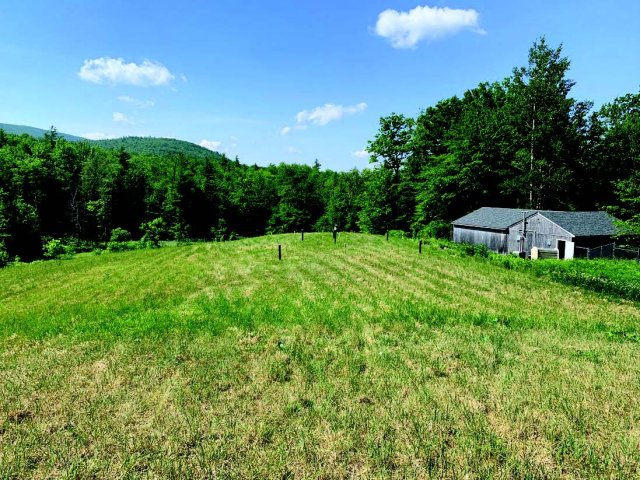
Burgess Brothers Landfill, Woodford, Vermont
Background
The Burgess Brothers Landfill is located in Bennington, Vermont.
Burgess Brothers Construction Company operated the facility as a sand pit, salvage yard and landfill from the 1940s until the mid-1970s.
Starting in the early 1950s the site was used as a metal salvage facility and disposal area. Metals, sludge, rejected small appliance and military specialty batteries were also disposed at the site. The two lagoons received liquid wastes and sludge from about 1967 to 1976. These wastes consisted of lead-contaminated wastewater, spent solvents, and battery wastes. From 1971-1976, about 2,371,100 gallons of liquid waste, primarily trichloroethene (TCE) and tetrachloroethene (PCE), and 241,090 pounds of solid or semi-solid wastes (primarily lead sludge) were reportedly disposed of at the site. Site investigations and information provided by the former site operator indicated the landfill also received newspaper and building demolition debris.
Union Carbide Corp.'s Bennington Plant disposed of wastes from battery manufacturing, an unknown quantity of lead sludge, and the equivalent of 47,780 drums of hazardous wastes at the site. Facility operations contaminated soil, ground water and surface water with heavy metals and volatile organic compounds (VOCs).
The site is being addressed through federal, state, and potentially responsible party (PRP) actions. Site PRPs agreed in 1991 to take responsibility for the cleanup. The long-term cleanup focuses on the entire site. EPA initially selected a cleanup plan that included putting a multi-barrier cap over the landfill and a soil cap over an adjacent marshy area that was downgradient from the landfill. The plan also called for treating groundwater through a system called air sparging and through soil vacuum extraction of soil contaminated with VOCs in the former lagoon area. The plan also called for land use controls and long-term monitoring to be sure the cleanup remains effective. The initial work was finished by March 2000.
The soil vacuum extraction/air sparging system operated from December 2000 through 2002. It was determined that the air sparging was no longer helping remove VOCs and it was discontinued. In January 2004, concentrations of VOCs stabilized, indicating the presence of an ongoing VOC source. The vapor extraction system was discontinued in February 2005 and remained shut down through the end of 2006. At the direction of EPA, operation resumed in August 2007 and was terminated again in 2011 with the selection of a new cleanup plan.
The new cleanup plan included the construction of two downgradient groundwater interceptor trenches which were completed in 2014. Sampling results to date indicate that the interceptor trenches are capturing the contaminated groundwater and the treatment system is effectively removing the contaminants from the groundwater. The site will be inspected every five years to ensure that the cleanup remedy continues to be effective.
In the spring of 2016, in response to the detection of per- and polyfluoroalkyl substances (PFAS) in another area of Bennington, EPA collected and analyzed groundwater and surface water samples from the site for these compounds. The levels of these compounds in the groundwater decreased with distance from the landfill and were below federal and state action levels downgradient of the second interceptor trench. The compounds were not detected in the surface water samples.
The site’s remedy included landfill capping, soil vapor extraction and groundwater treatment. Construction of a cap over the landfill and the soil vapor extraction system were completed in 1999. In September 2011, the cleanup plan was updated to address groundwater contamination that had moved beyond the landfill cap. Two groundwater interceptor trenches were constructed in 2013 and 2014 to capture this contaminated groundwater. Following several modifications to the treatment system, the groundwater extraction and treatment system has functioned as designed since September 2015. Long-term monitoring of the groundwater and operation and maintenance of the system is ongoing.
In addition to the landfill capping and groundwater capture and treatment, the remedy includes five-year reviews. The last review was conducted in 2015 and found that the remedy was protective of human health and the environment because the exposure pathways for direct contact and groundwater ingestion have been controlled by the cap, and institutional controls (e.g., land use restrictions) are in place. However, for the remedy to be protective in the long-term, the 2015 review stated that the groundwater interceptor trenches have to operate successfully to capture and treat contaminated groundwater to prevent further migration of the contaminant plume from the landfill and to capture the portion of the plume that has already migrated from the landfill. Subsequent monitoring has confirmed that the interceptor trenches are successfully capturing the contaminated groundwater and that the treatment system is successfully removing the VOCs from the groundwater.
At this site, activity and use limitations that EPA calls institutional controls are in place. Institutional controls play an important role in site remedies because they reduce exposure to contamination by limiting land or resource use. They also guide human behavior. For instance, zoning restrictions prevent land uses – such as residential uses – that are not consistent with the level of cleanup.
For more background, see Institutional Controls.
Institutional controls are required for this site.
This site requires ICs because a decision document, such as a Record of Decision, has documented some level of contamination and/or remedy component at the site that would restrict use of the site. These ICs are required to help ensure the site is used in an appropriate way and that activities at the site do not damage the cleanup components. These ICs will remain in place for as long as the contamination and/or cleanup components stay on site. The matrix below is a general summary of the restrictions at this site at the date of this report. The information in this matrix is a general description of the restrictions at the site only. The site contacts should be consulted if there are questions on the ICs for this site.
The following IC Instruments provide media-specific use restrictions that have been implemented by EPA for protecting human health, the environment and remedial engineering on this site. Instruments are documents used by EPA or other organizations to implement the use restrictions at a site. To know about other media-specific use restrictions that are planned but not implemented at this site, please contact the Regional Office using the Site Contact listed above. Note that where multiple entries occur, it will impact more than one pathway.
Click here for IC Instruments implemented for this site.
ICs are generally defined as administrative and legal tools that do not involve construction or physically changing the site. Common examples of ICs include site use and excavation restrictions put in place through State and local authorities like zoning, permits and easements. ICs are normally used when waste is left onsite and when there is a limit to the activities that can safely take place at the site (i.e., the site cannot support unlimited use and unrestricted exposure) and/or when cleanup components of the remedy remain onsite (e.g., landfill caps, pumping equipment or pipelines). Effective ICs help ensure that these sites can be returned to safe and beneficial use.
Superfund Program
The Superfund program, a federal program established by Congress in 1980, investigates and cleans up the most complex, uncontrolled, or abandoned hazardous waste sites in the country and endeavors to facilitate activities to return them to productive use. There are many phases of the Superfund cleanup process including considering future use and redevelopment at sites and conducting post cleanup monitoring of sites.
Throughout the process of designing and constructing a cleanup at a hazardous waste site, EPA's primary goal is to protect human health and the environment, the agency’s core mission. At many sites, EPA continues to ensure it remains true to EPA's core mission, by requiring cleanup reviews every five years. It is important for EPA to regularly check on these sites to ensure the cleanup remedy is working properly. These reviews identify issues (if any) that may affect the protectiveness of the completed remedy and, if necessary, recommend action(s) necessary to address them.
For more information about EPA's Superfund program, visit www.epa.gov/superfund
BOSTON (November 19, 2025) - U.S. Environmental Protection Agency. EPA Region 1: https://www.epa.gov/aboutepa/
To support vital journalism, access our archives and get unique features like our award-winning profiles, Book of Lists & Business-to-Business Directory, subscribe HERE!
