Complaint-based inspections often conducted later than program’s required timeframes, inspectors didn’t always confirm corrective actions were taken, performance measures not being used to drive improvement, Department expresses intent to adopt all recommendations
Vermont Business Magazine State Auditor Doug Hoffer released an audit today of the Vermont Department of Health’s Food and Lodging program. The audit, the first of four the Auditor’s Office will be releasing in the coming months relating to how state government responds to Vermonters’ complaints, assessed whether Food and Lodging investigates complaints within their own required timeframes and whether inspectors confirm that the violations they find have been corrected. In addition, the audit evaluated whether VDH uses performance measurement to improve their important public health duties.
The Food and Lodging program is responsible for ensuring establishments across the state follow health and sanitation protocols designed to protect the public. They license and inspect more than 6,000 food establishments and regulate lodging facilities while also addressing complaints from the public concerning illness or sanitation at food and lodging establishments and the manufacturing of certain food products.
Between 2022 - 2024, Food and Lodging received 1,081 complaints. Complaint types include allegations of bed bugs, inadequate cooking, contaminated food equipment, and unsanitary conditions.
“Making sure Vermont’s restaurants, hotels, motels and inns adhere to health and safety requirements is critical for public health and safety and is good for the economy,” said Auditor Hoffer. “While not every consumer complaint winds up being a legitimate violation, Food and Lodging needs to act quickly to identify the ones that are and bring the establishments into compliance.”
Highlights of the audit include:
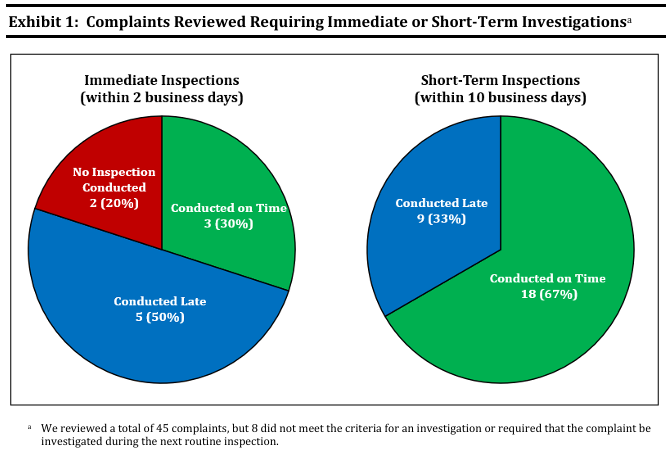
- Sixteen of the 45 complaints selected for review (36 percent) were not investigated within the required timeframe. Of particular concern is that 7 of the 10 complaints (70 percent) that had the most critical allegations were not investigated within the required 2 days, including two complaints that were not investigated at all.
- Of the 26 complaints that required corrective actions, the VDHFL inspector did not consistently follow up on corrective actions expected to address the complaint. The inspectors closed 18 of the 26 complaints (69 percent) in the USAFoodSafety database even though they had not confirmed that all the underlying problems were resolved.
- Food and Lodging’s procedures for handling complaints is missing key elements which, if added, would help address the audit’s findings.
- The Department of Health does not currently measure the performance of the Food and Lodging program even though this is a long-standing State requirement. In particular, they have not established quality or result measures that would offer insight into the program’s efficiency and effectiveness.
"Of the 45 complaints we randomly selected to review, 10 met the criteria for immediate follow-up, 27 met the criteria for short-term follow-up, 4 met the criteria for follow-up during the next routine inspection, and 4 did not meet VDHFL’s criteria for investigation. Sixteen of the 45 complaints (36 percent) were not investigated within the required timeframe for immediate or short-term inspections, or at all, as shown in Exhibit 1. Of particular concern is that 7 of the 10 complaints (70 percent) that had the most critical allegations were not investigated within the required 2 days, including two complaints that were not investigated at all. The remaining 14 late inspections were conducted between 1 and 130 business days past VDHFL’s timeframe standard.4 The median number of days in which inspections were late was six business days.
“In 13 of the 39 inspections VDHFL conducted related to complaints (33 percent), the inspector did not observe the condition alleged in the complaint and/or no corrective actions were cited in the inspection report. Of the remaining 26 complaints that did contain corrective actions, the VDHFL inspector did not consistently follow up on corrective actions expected to address the complaint. These corrective actions were either identified and recommended by the inspector or the establishment itself had asserted that they were planned or completed. The inspectors closed 18 of the 26 complaints (69 percent) in the USAFoodSafety (USAFS) database even though they had not confirmed that all the underlying problems were resolved. For example, VDHFL received a bed bug complaint, and the inspector observed the presence of bed bugs during an inspection. The establishment claimed that a pest control service was scheduled for the following day. The inspector requested copies of the service reports, but they were not provided. Nevertheless, the inspector closed the complaint in USAFS.”
4 One complaint was investigated 247 days after VHDFL’s standard. This was an outlier since the facility was a mobile unit that was closed for the season.
The Department responded to the audit expressing its intent to implement the eight recommendations the Auditor’s Office made to improve the program’s performance.
Hoffer added: “I want to thank the Health Department staff who assisted my team of auditors throughout the audit process. As is often the case when our office inspects a program, we found a dedicated group of State employees committed to the mission of the program. The fresh set of eyes we brought to our review, though, found room for improvement, and we’re confident that when they adopt our recommendations the Food and Lodging program will more effectively root out problems before they impact the public.”
The full audit can be found here.
11.20.2025. MONTPELIER, VT – State Auditor
To support vital journalism, access our archives and get unique features like our award-winning profiles, Book of Lists & Business-to-Business Directory, subscribe HERE!