"Poor" outpaces "Good." Businesses Cite Workforce, Housing, Costs, and Regulatory Predictability as Key Factors Impacting Vermont’s Competitiveness
Vermont Business Magazine The Vermont Futures Project today released the results of the 2025 Vermont Business Climate Survey, offering an in-depth, data-informed look at how Vermont employers are experiencing the state’s economic landscape. The survey gathered insights from 139 employers across all fourteen counties and a wide range of industry sectors. The results reflect a nuanced view of Vermont’s economic conditions, marked by persistent structural challenges, cautious outlooks, and a continued need for long-term policy alignment.
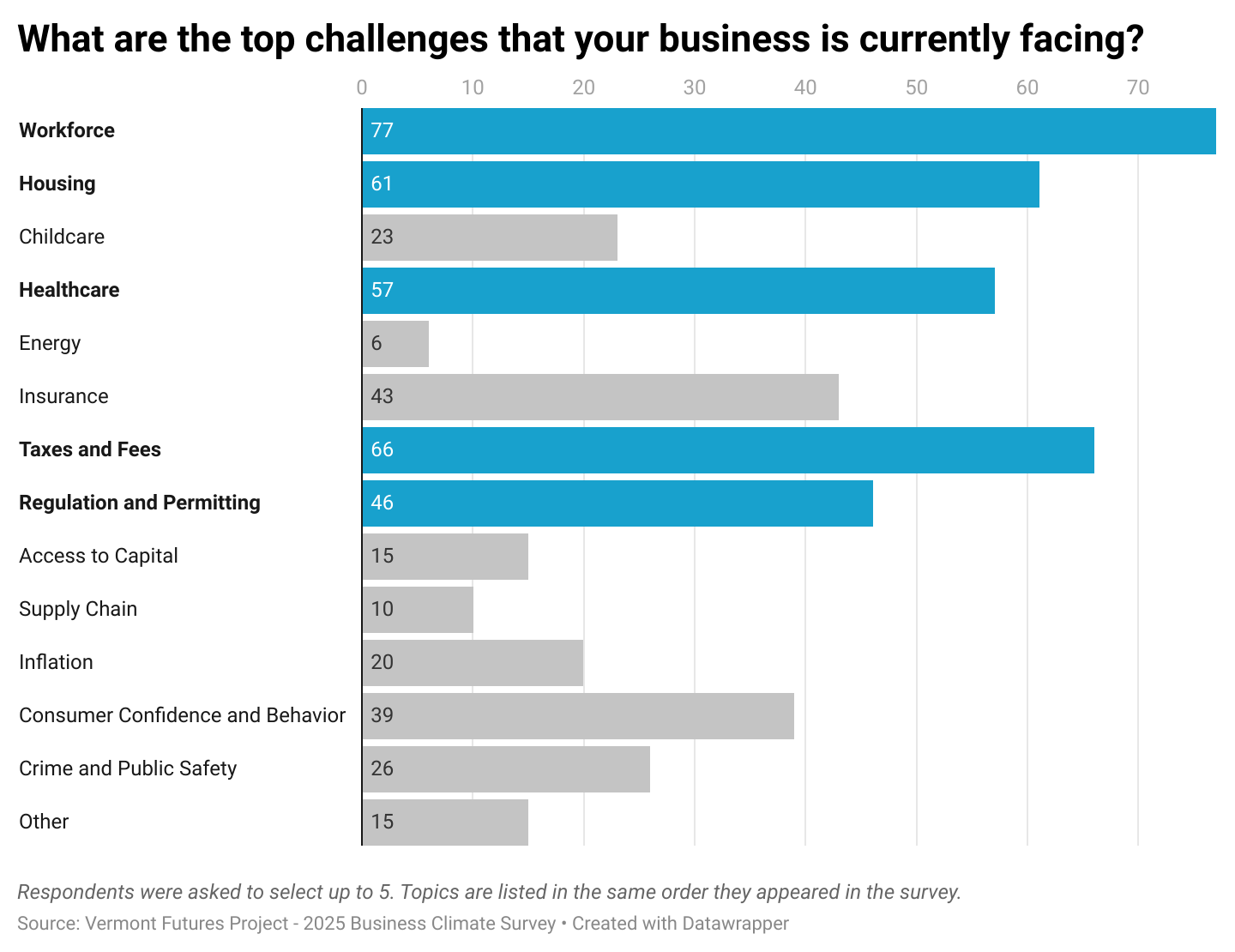
The top concerns were workforce, taxes and fees, housing and healthcare.
Key Findings Reflect Persistent Challenges
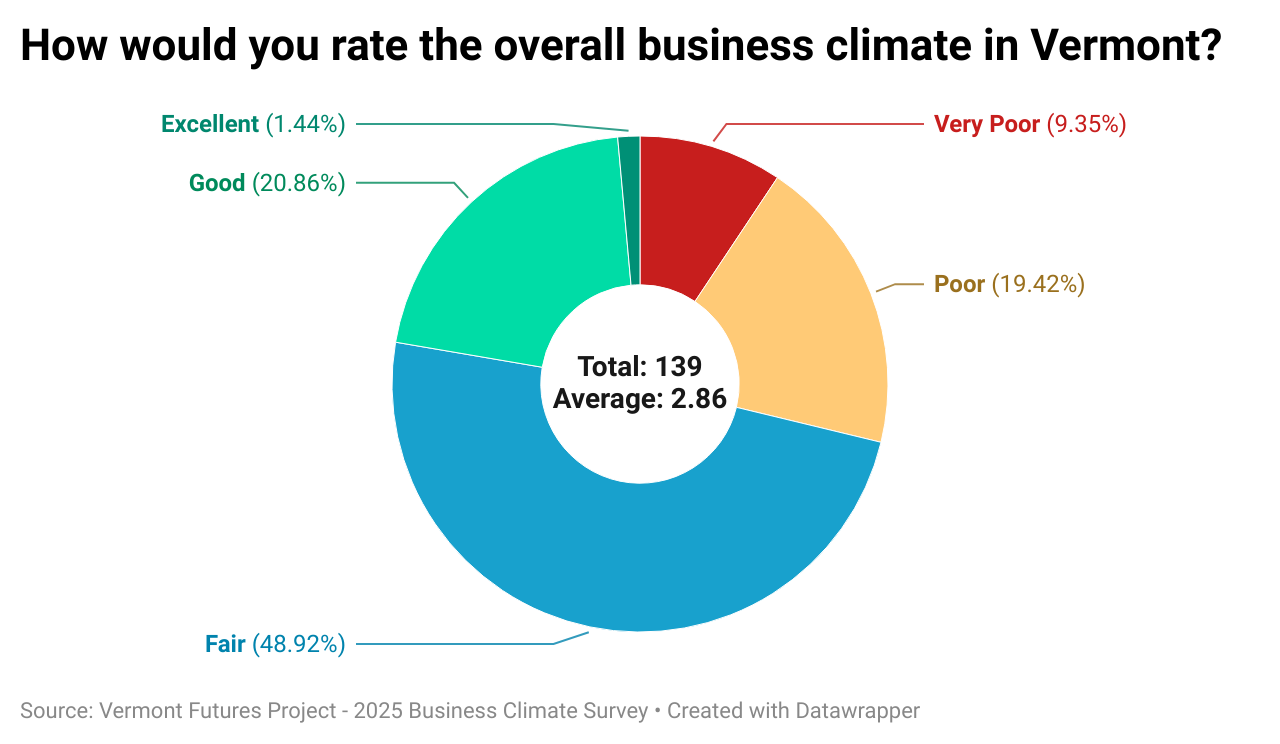
Respondents rated Vermont’s overall business climate 2.86 out of 5, a middle-of-the-scale sentiment that closely aligns with last year’s findings. Business performance over the past year was mixed, and employers anticipate similar conditions in the year ahead.
Across regions and sectors, employers consistently identified several themes.
Workforce pressures remain a defining challenge.
Employers continue to struggle with recruitment and retention. Workforce availability, rising living costs, and the ongoing housing shortage all directly influence talent decisions.
Housing affordability continues to impede growth.
Employers report that employees face limited and increasingly expensive housing options. These findings reinforce the interconnected workforce and housing targets established in the Vermont Economic Action Plan and point to the continued need for increased supply and more efficient permitting.
Rising costs limit growth and investment.
Businesses cited taxes, fees, health insurance premiums, and general operating expenses as major drivers of financial pressure, particularly for small and midsized employers operating with narrow margins.
Regulatory predictability continues to influence business confidence.
Many respondents expressed concern about whether policymakers understand the economic pressures facing employers. Only a small share described Vermont’s regulatory landscape as clear or predictable.
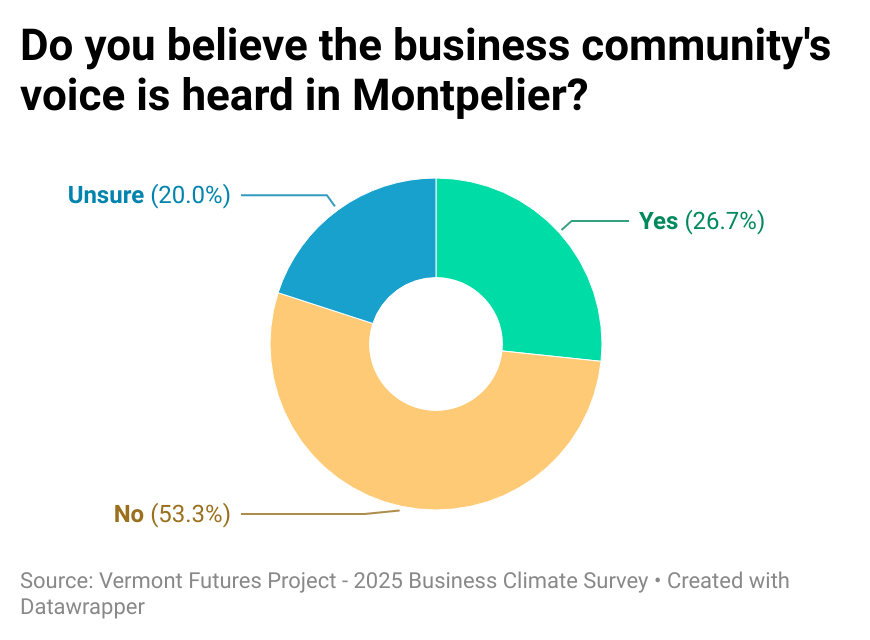
Employers feel their voices are not consistently incorporated into decision-making.
A substantial portion of businesses reported that they do not feel heard or represented in policy discussions, underscoring the need for improved engagement and alignment.
A Statewide Snapshot of Vermont’s Economic Conditions
The survey sample reflects the full breadth of Vermont’s economy. Respondents included employers from manufacturing, healthcare, tourism, hospitality, agriculture, professional services, technology, and nonprofit organizations. This diversity provides a wide-angle view of the conditions shaping Vermont’s economic competitiveness and affordability.
“The Business Climate Survey helps us understand what Vermont employers are experiencing today and what Vermont must prioritize for long-term prosperity,” said Kevin Chu, Executive Director of the Vermont Futures Project. “These results reinforce what our Economic Action Plan makes clear. Vermont’s competitiveness depends on workforce growth, expanded housing supply, and stable and predictable economic conditions for employers and families.”
A Tool for Turning Planning Into Policy
The Business Climate Survey is a key component of the Vermont Futures Project’s work building on the Vermont Economic Action Plan. The plan outlines long-term targets and measurable strategies to grow the workforce, expand housing, strengthen economic vitality, and support a more affordable future. When combined with the Competitiveness Dashboard (which will be launched in December), labor force trends, and other economic indicators, the survey provides policymakers and partners with a data-informed understanding of the economic realities facing businesses across the state.
“This survey is one of the clearest signals we have of where Vermont businesses are struggling and where the greatest opportunities exist,” said Amy Spear, President of the Vermont Chamber of Commerce. “These findings ensure that our conversations about policy are informed by data and lived experience. The Vermont Futures Project plays an essential role in providing independent insights that strengthen affordability, competitiveness, and economic vitality across Vermont.”
Full Report Now Available
The complete 2025 Vermont Business Climate Survey Findings Report, including visualizations and detailed sector and regional analysis, is available at vtfuturesproject.org/businessclimatesurvey.
About the Vermont Futures Project
The Vermont Futures Project provides independent economic research, analysis, and thought leadership to support a more affordable, prosperous, and thriving Vermont. Learn more at vtfuturesproject.org.
Montpelier, VT (November 19, 2025)–Vermont Futures Project
To support vital journalism, access our archives and get unique features like our award-winning profiles, Book of Lists & Business-to-Business Directory, subscribe HERE!