Vermont Business Magazine A new report focusing on energy affordability in Vermont has been released by the non-profit organization Energy Action Network (EAN). The report provides in depth analysis of the costs of different energy choices for Vermonters.
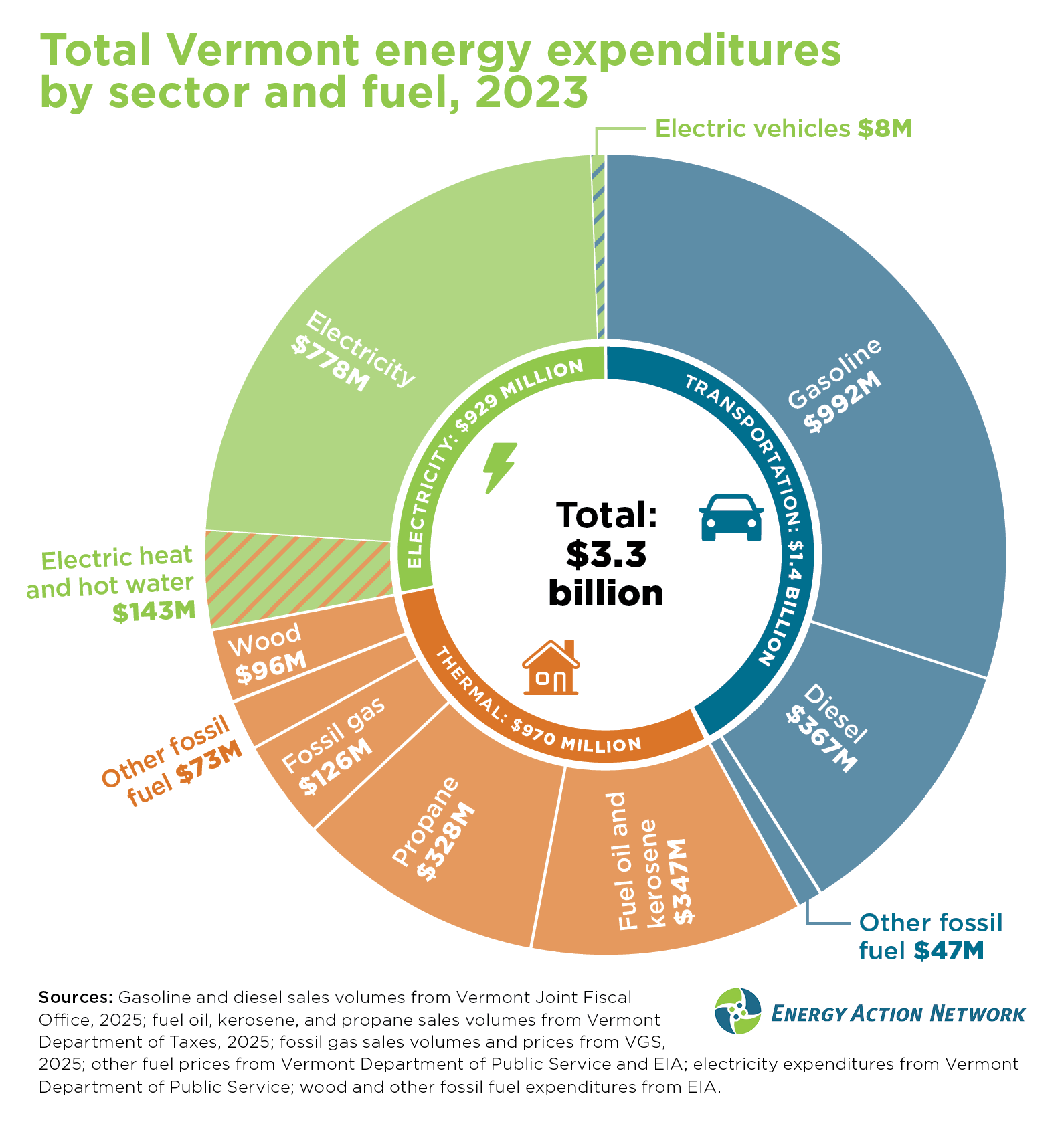
Transportation is the 2nd largest average household expense, with only the cost of housing being higher. Within housing costs, heating is a major expense. Altogether, over $3 billion a year is spent on energy in Vermont, the largest share being the over $2 billion a year spent on fossil fuels for transportation and heating.
Report co-author and EAN Executive Director Jared Duval said, “The status quo is not affordable for many Vermonters -- and achieving greater energy affordability is crucial to overall affordability in Vermont.”
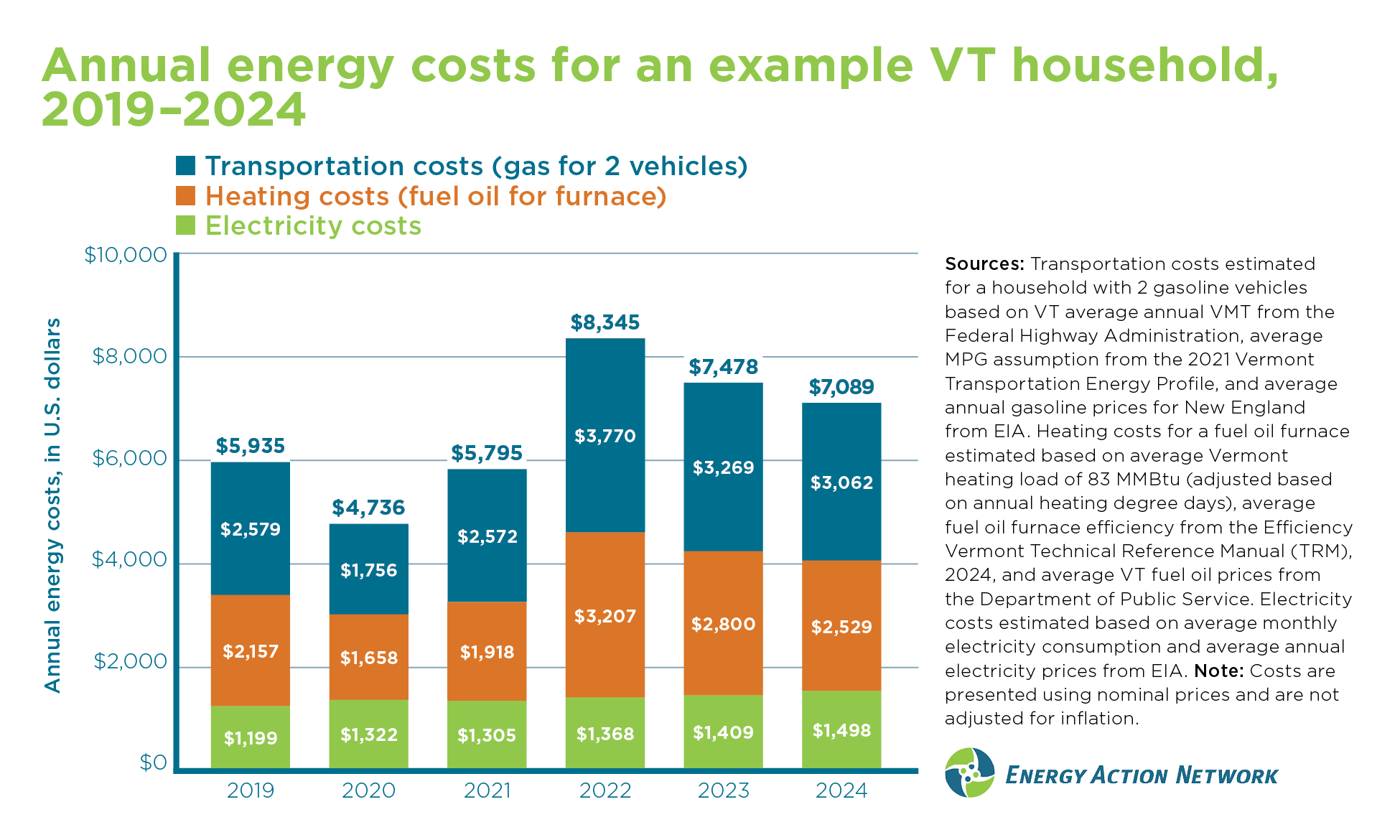
EAN’s report finds that the most expensive part of Vermont energy bills stems from continued dependence on fossil fuels. Average household energy costs were over $7,000 in Vermont in 2024, primarily for fossil fuels like gasoline for transportation and fuel oil and propane for heating.
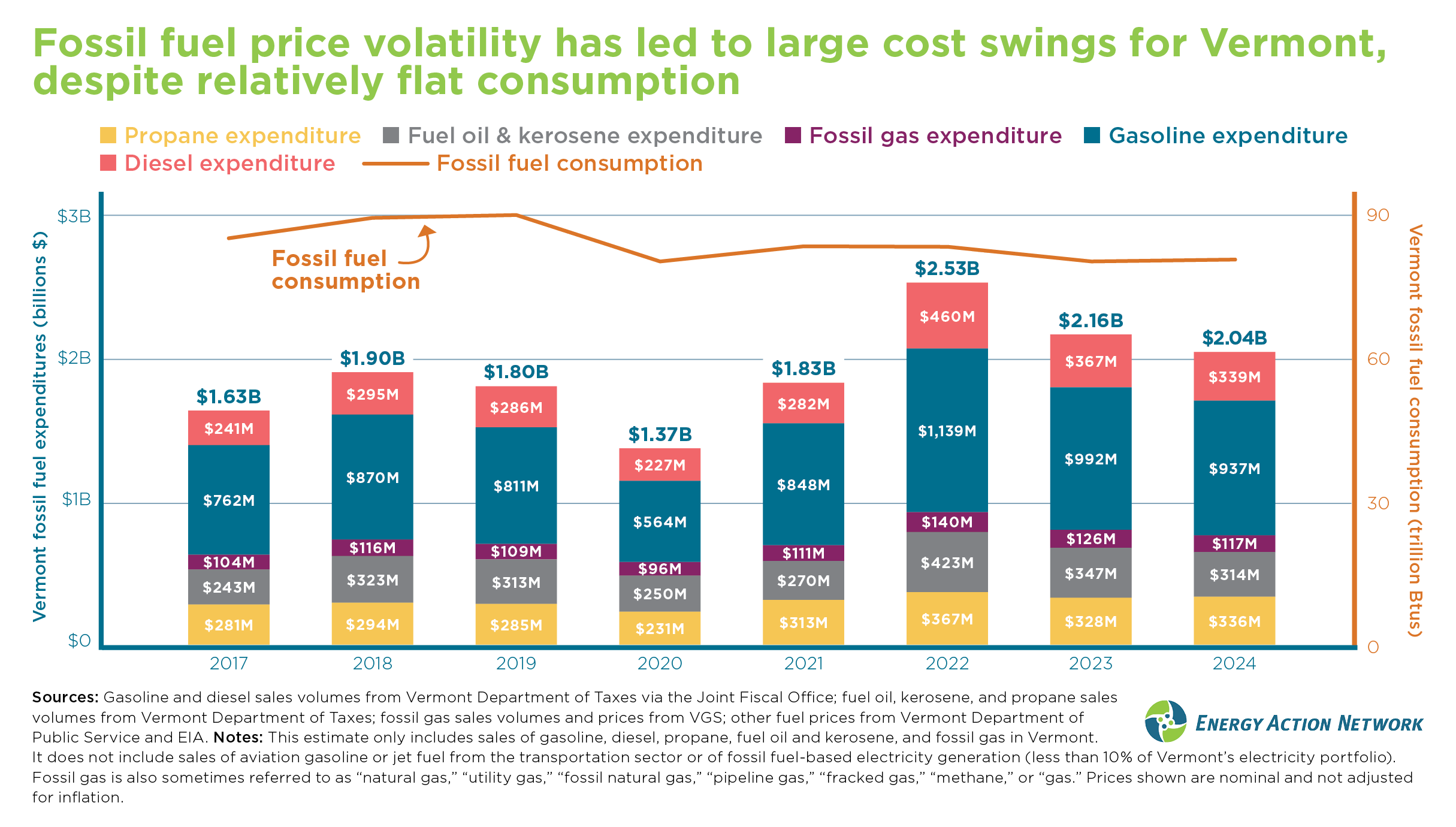
“Fossil fuels are expensive and price-volatile,” Duval added. “They also drain money out of Vermont and are heavily polluting.”
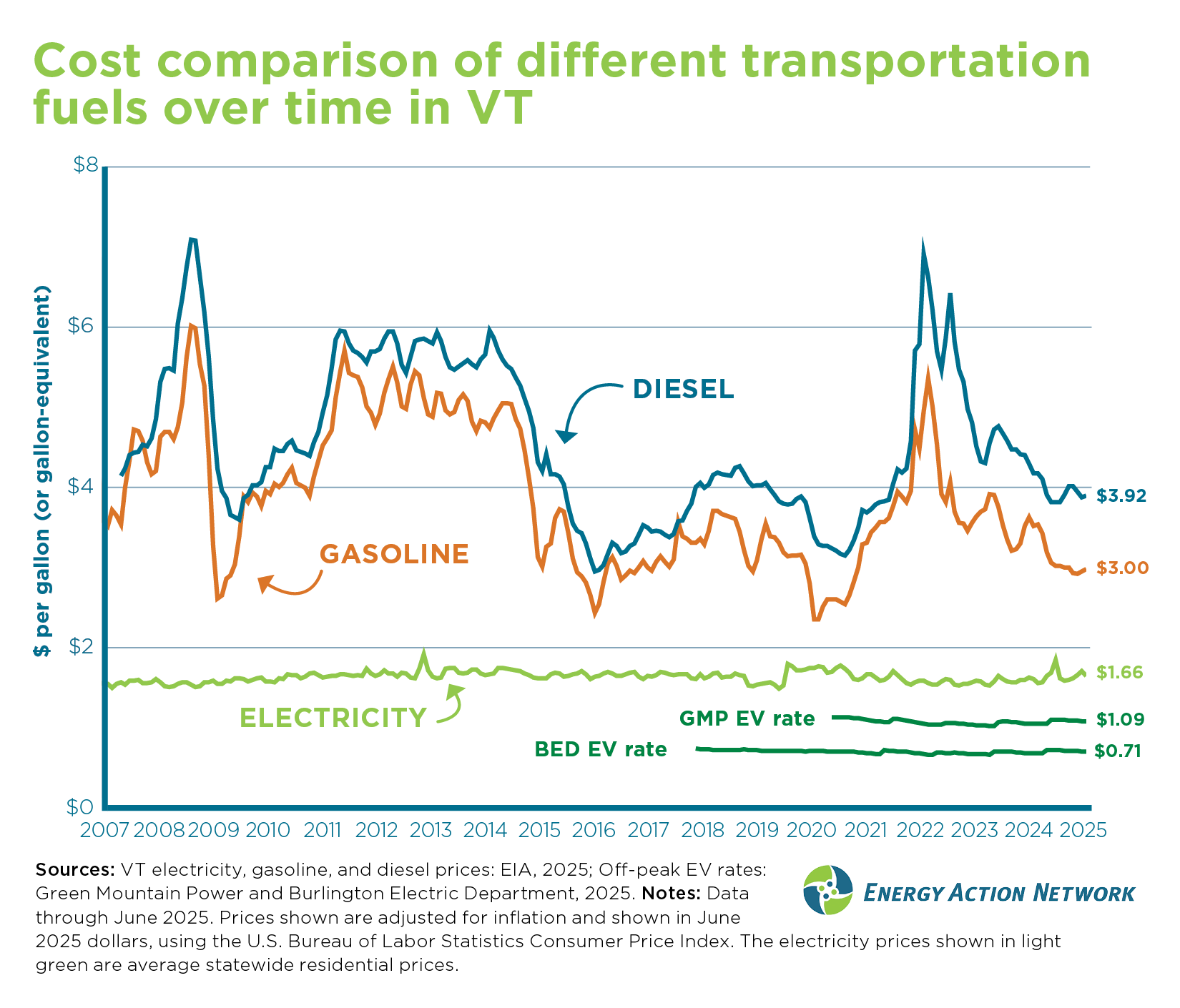
The report finds that the best way to achieve durable energy affordability—where Vermont households and businesses can save money month after month and year after year—is via technologies that are more energy efficient and rely on lower-cost, more price stable energy sources. Specifically, the report analyzes solutions that can provide ongoing and lifetime savings, including weatherization, electric vehicles, heat pump water heaters and heating systems, and efficient wood heating, as compared to continued dependence on fossil fuels and inefficient fossil fueled equipment.
But the report also finds that there are often upfront cost barriers to Vermonters in accessing more efficient equipment, putting the technology that can deliver more durable affordability out of reach of the Vermonters who would benefit most, in the absence of grants and incentives.
“As federal and state funding for energy efficiency and modern electric technology has been cut or subject to uncertainty, the Vermonters who most need lower energy costs are at risk of being left behind without new policy or funding,” Duval said.
EAN produces the Annual Progress Report for Vermont on Energy, Affordability, and Emissions to help ensure that energy conversations in Vermont are grounded in and guided by the latest and highest quality data and analysis. The report was unveiled and first presented at the EAN Annual Summit on November 5th. To read the full report, visit https://eanvt.org/annual-report/
Energy Action Network is made up of a network and an organization. As a non-profit organization, EAN conducts energy, economic, and emissions data tracking, research, and analysis on behalf of all Vermonters. The non-profit also convenes and facilitates collaborative meetings among EAN’s diverse network of members. The Network’s mission is to achieve Vermont’s climate and energy commitments in ways that create a more just, thriving, and sustainable future.
11.5.2025. Montpelier, VT – Energy Action Network
To support vital journalism, access our archives and get unique features like our award-winning profiles, Book of Lists & Business-to-Business Directory, subscribe HERE!