A Weekly State House Recap
by Maggie Lenz and Nick Charyk on behalf of Atlas Government Affairs
Ch-Ch-Changes
The Scott Administration's message to lawmakers last week was clear: if they do not pass an education bill the Governor is willing to sign, they will not be allowed to go home. And while that threat has been hanging over the State House all year, last week it became a fixed point. The Legislature is being told to stay until the education bill is resolved in a way the administration deems workable. The Governor is playing his energized hand in a building that is overcome with exhaustion.
The Senate began last week with a bill that had cleared three of their committees but had little support. Senators were uneasy. Education stakeholders had lined up in opposition. Publicly and privately, Democrats signaled that the current version could not pass. And then on Tuesday, during a surreal evening caucus at the Pavilion Building, Senate President Pro Tem Phil Baruth (D/P-Chittenden Central) told Senate Democrats that he would not move forward with this bill that relied primarily on Republican votes. He presented options for how to pivot but left it open. Some senators welcomed the reset. Others raised concerns about the alternate paths forward, which all included rewriting major tax and education policy on the Senate floor. In Vermont, most policies are crafted slowly in committees.
From Wednesday through Thursday, the process appeared to slow to a crawl. The broader sentiment was that the Senate should move back toward something closer to the House version they had received weeks earlier. That version reflected months of thoughtful committee work by the House.
Drafts floated around informally. Policy disagreements ran up against political constraints. Legislative lawyers and fiscal analysts were visibly overworked and nearing the breaking point. There was no apparent objective Senate Democrats were trying to achieve, beyond trying not to remain in session indefinitely under the Governor’s terms.
But finally, on Friday afternoon, word got around that Senate Democrats had reached a deal. And all thanks to an incredibly unlikely allegiance: Senators Ruth Hardy of Addison County and Seth Bongartz of Bennington County. The two apparently spent many hours in a room together negotiating a compromise.
Two Democratic senators working out a deal might not seem surprising unless you understand the education battle lurking in the shadows. They may share a party, but these two senators represent two opposing sides of a long-running divide over education policy in Vermont. Senator Hardy has been an evangelical champion of oversight and public accountability for private schools that accept public funds. Senator Bongartz, who chairs the Senate Education Committee, comes from a region with deep ties to the independent school system and previously chaired the board of trustees at Burr and Burton Academy, a prominent independent school in Manchester.
The clearest examples of Sens. Hardy’s and Bongartz’s compromises were on provisions related to which private schools are allowed to take public dollars. The House version limited public tuition to Vermont private schools where at least 50 percent of students are publicly funded. The original Senate Education draft would have allowed tuitioning to private schools within 25 miles of the state border and reduced the publicly enrolled threshold to 25 percent. The Hardy-Bongartz version landed in between, allowing tuition only to Vermont private schools with the 25 percent threshold of publicly funded Vermont students.
For Senators who had spent the week without clear direction, the Hardy-Bongartz framework provided a necessary anchor. It did not eliminate political tension, but it gave most Democrats something to almost unify around. And it will now give the Senate something to work with in negotiations with the House and the administration. (Side note: We passed a top Senate Republican shortly after the deal was announced and we cheerfully asked him, “Deal?” Our hopeful shorthand for “Are we going home soon?” He shot back, “There’s no deal for me!” It was a reminder that Republicans had no hand in this agreement.)
On Friday evening, the Senate passed that version of the bill on a voice vote. It will likely head to a committee of conference next, where the two chambers will attempt to reconcile differences and produce a final bill.
The Governor’s threat to keep lawmakers in session is not symbolic. Every additional week the Legislature remains in session adds an estimated $300,000 in staffing and operational costs. Prolonged sessions also reduce transparency and public participation. The longer lawmakers stay, the more decisions shift from committee rooms to leadership offices, and from public hearings to private negotiations. That shift is already well underway, though.
While the policy questions inside H.454 are complicated, the political dynamic at this point is not. Lawmakers are trying to pass something that meets their own standards, reflects public input, has a realistic chance of becoming law, and isn't a political liability. And that is an intriguingly narrow space to occupy.
Curiosities: a weekly peek at the odd and intriguing happenings under the Golden Dome
A Montpelier Fairytale
On Friday morning, as tension mounted in the State House, Rep. Conor Casey (D-Montpelier) opened the House session with a story that made the chamber pause, laugh, and perhaps reflect on the danger of being too sure of ourselves.
“We’ve had some eccentric, sometimes even controversial devotionals this year,” he began. “So out of respect to the Speaker, I’m gonna try to not get very weird here. That said, I do feel the need to tell you about how I grew up on a mountain that was actually a demonic portal to the Celtic otherworld.”
Casey noted that he’s not especially religious. Still, there were things he was raised to believe. One of them was faeries.
“Not the winged Tinkerbell types you’d see in cartoons. But a race who William Butler Yeats called too good for hell and too bad for heaven. In Ireland, faeries were not delicate like in England. They were not Shakespearean sprites. They were powerful beings, full of mystery and danger. Outside the typical Christian construct of good and evil.”
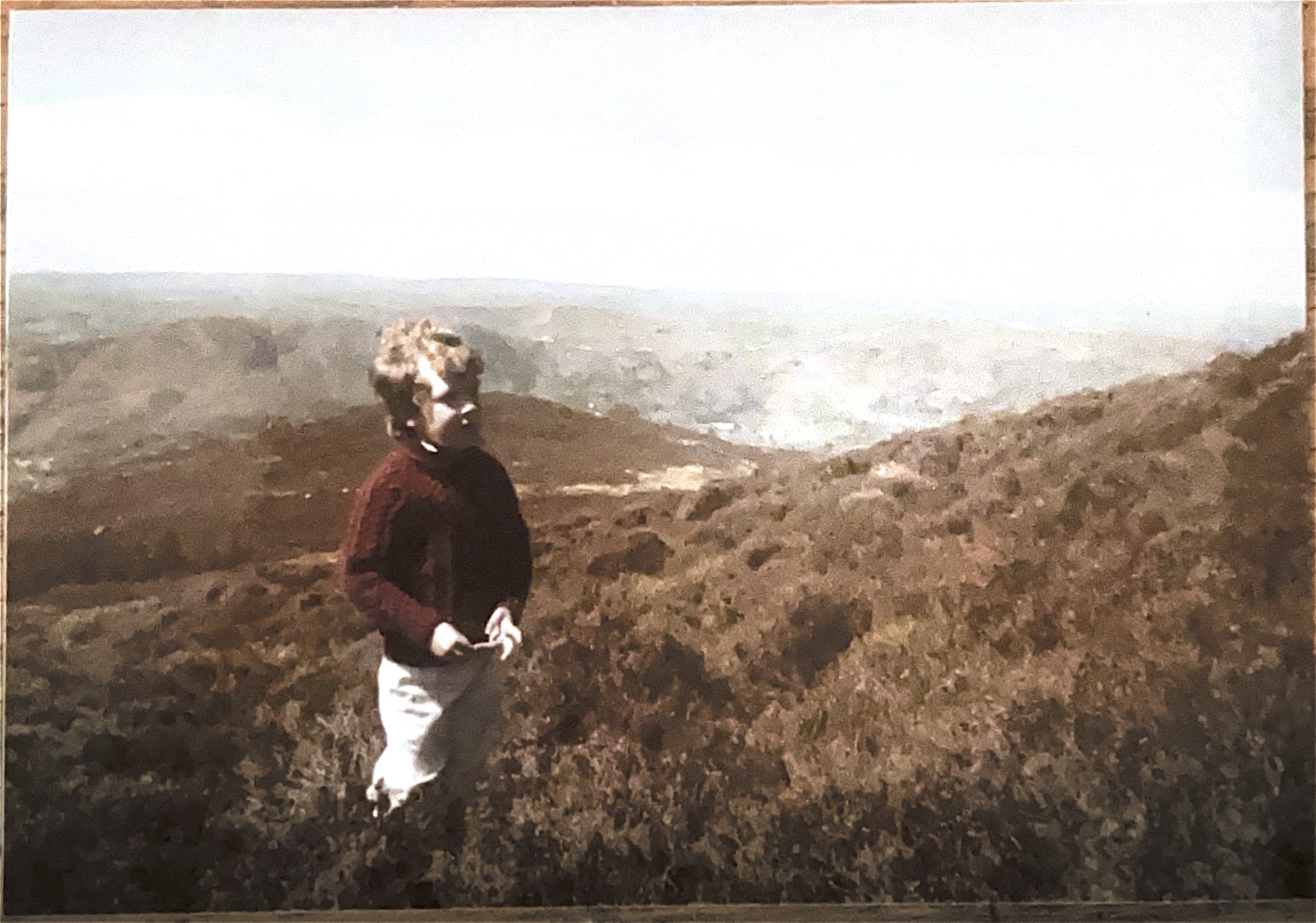
Rep. Conor Casey as a wee lad.
Casey grew up in Carlingford, a village by the Irish Sea, in the shadow of Slieve Foy. “It was known throughout Ireland that Carlingford was a veil to the Celtic otherworld. You could find [portals] in the deep green of the hawthorn trees, in the quiet stillness of the faerie mounds, in the whisper of the wind.
Faeries are real. And we were raised to be careful. To respect their places. To never cut down a faerie tree or disturb their mounds. We didn’t need priests or scholars to tell us these things. We knew because someone who didn’t heed these unspoken rules... the good people had a way of reminding us.”
Which brings us to Cocker O’Reilly. “Cocker O’Reilly was known for never being wrong. And worse still, he made sure you knew it. One night after a fierce bit of drinking, he stumbled up the hill toward home. The night was dark. The whiskey was strong. And when nature called, he did the unthinkable. He relieved himself without a second thought.
In the morning he realized what he had done. The faerie mound he had desecrated was home to a queen and a princess. Though he scoffed at the warnings of his neighbors, the good people had taken note.
By the next morning, Cocker O’Reilly was gone. In his place, in his cottage, was a horse. His legs, his arms, vanished. His voice, his sharp tongue, reduced to nothing but a terrified neigh.
They say the neighbors knocked down the walls to let him out. They say he ran and never returned. And they say that white horse on Slieve Foy is the last trace of a man who was always right until he was terribly, terribly wrong.”
Casey said stories like this weren’t told for fun, but to help make sense of the world. “They tell us about pride. About respect. About the mysteries we cannot explain. As Yeats wrote, ‘Come away, O human child! To the waters and the wild with a faery, hand in hand. For the world’s more full of weeping than you can understand.’
Let’s not be like Cocker O’Reilly this last week or two or three of the session. Let’s not be so sure of ourselves that we forget to listen, to respect, and to tread carefully on the sacred places of this world. Otherwise, the State House here might just become a stable full of horses.
And to those of you who doubt that my story is true, I promise you it’s a hundred percent true… that it’s a story.”
To support vital journalism, access our archives and get unique features like our award-winning profiles, Book of Lists & Business-to-Business Directory, subscribe HERE!