Note: As of Feb. 19, the Health Department’s COVID-19 surveillance report will no longer include information about cases and deaths, as data reporting transitions to a format similar to other respiratory viruses like the flu.
Case data has become a less meaningful indicator of COVID-19 activity since individual cases are being reported in a very limited basis by health care settings and laboratories. The same is true for death data, as COVID-19 has shifted from being the underlying cause of most COVID-associated deaths to a contributing cause.
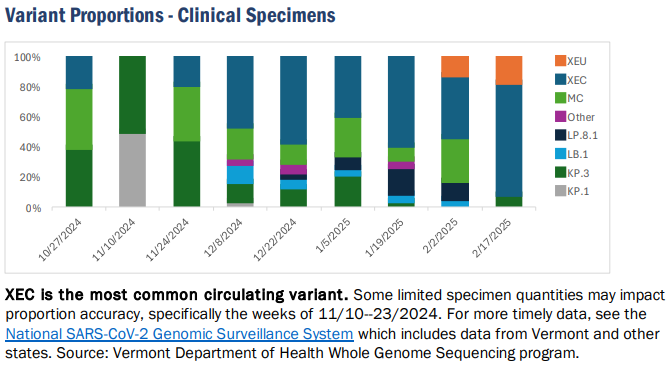
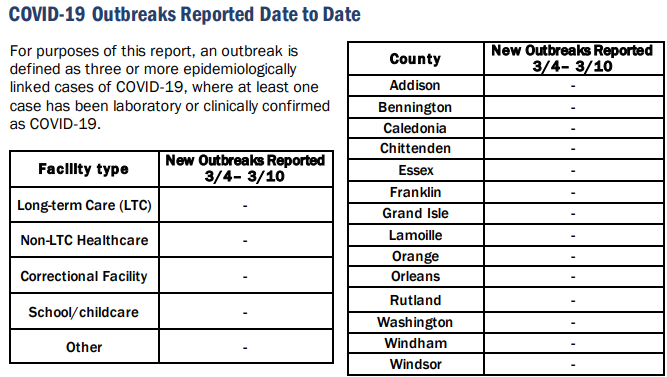
The department continues to monitor the impact of COVID-19 in Vermont using the most meaningful data, including emergency department visits, wastewater data and outbreaks.
Report Timeframe: February 23 to March 1, 2025. Current Vermont Department of Health recommendations on preventing COVID-19.
New to this report is an expanded wastewater testing survey, which includes results for COVID-19 , Avian Flu, Influenza, RSV and Norovirus. SEE BELOW.
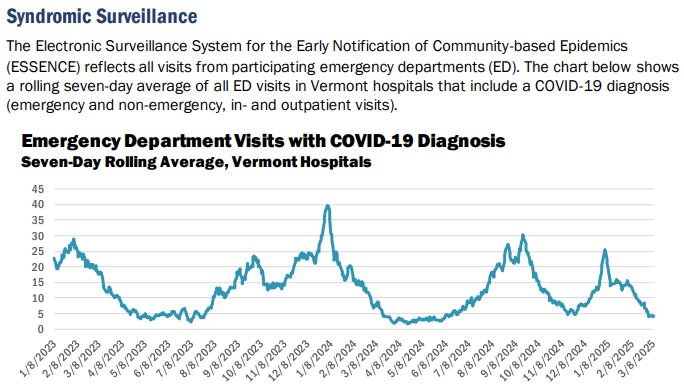
by Timothy McQuiston, Vermont Business Magazine The Vermont Department of Health reported last week that the number of COVID-19 hospitalizations are down. Hospitalizations fell to just under 5 after a spike in January. Likewise wastewater testing indicates that virus levels fell steeply also after a spike, especially in Montpelier, but also at most test sites. They have now leveled off, as have many other indicators.
The Vermont pandemic death total stands at 1,282 as of March 8, 2025, an increase of 4 from the previous week (the most recent data available from the CDC). The VDH is no longer reporting COVID fatalities and cases in Vermont.
Meanwhile, Vermont Health Commissioner Mark A. Levine MD will be retiring at the end of March 2025. Dr. Levine, 71, of Shelburne was first appointed by Governor Scott in 2017 and is currently one of the Administration’s longest-tenured commissioners. He led his department through the COVID-19 pandemic and has served as a key advisor on public health matters. He was featured and well regarded during the governor's pandemic response press conferences at the height of the pandemic in 2020 and 2021.
Also, the new RSV immunization for babies is over 90 percent effective at preventing hospitalization. In the Pediatric Intensive Care Unit (PICU) at University of Vermont Children’s Hospital, things look different this year – specifically, fewer newborns and infants admitted in need of critical respiratory care after catching one of the season’s most aggressive respiratory viruses: Respiratory syncytial virus (RSV).
“RSV is the most common reason for children under one year old to be admitted to the hospital,” Rebecca Bell, MD, a pediatric critical care physician at UVM Medical Center. “The kids that get the sickest are the youngest kids – particularly under six months old. Every year, our PICU is full of infants critically ill with RSV infection.”
But this year, RSV-related hospital admissions for these youngest patients are down significantly, said Dr. Bell – and the reason is clear: A new monoclonal antibody prevention medication approved in July 2023 by the Food and Drug Administration.
The medication, called nirsevimab, is given via injection to infants under eight months old and uses lab-made antibodies to block RSV from infecting cells. Unlike a vaccine, the immunization provides a ready-made supply of antibody protection to babies without triggering an immune system response. Protection against severe RSV infection begins immediately.
See current Vermont Department of Health recommendations on preventing COVID-19.
SEE COVID TABLES BELOW
Overall, 24% of Vermonters received a COVID vaccine shot in 2024/2025.
How many Vermonters are vaccinated against COVID-19, flu, and RSV?
This dashboard includes COVID-19, flu, and RSV vaccination data for Vermont residents reported to the Vermont Immunization Registry. Check back regularly as updates are made weekly on Tuesdays.
How many Vermonters are vaccinated against COVID-19, flu, and RSV?
This dashboard includes COVID-19, flu, and RSV vaccination data for Vermont residents reported to the Vermont Immunization Registry. Check back regularly as updates are made weekly on Tuesdays.
The hospitalizations dataset contains day-level data reported from all Vermont hospitals each Tuesday. Reported numbers are subject to correction.
Laboratory-confirmed and diagnosed COVID-19 cases and COVID-19 outbreaks must still be reported to the Vermont Department of Health.
There was zero outbreak last week (1 the week before), with none in Long-Term Care Facilities and none in schools (many schools were on break).
Vermont has the second lowest state fatality rate in the US (146.3 per 100K; Hawaii 112.7/100K). Mississippi (462.8/100K) and Oklahoma (458.8/100K) have the highest rates. The US average is 306.4/100K (CDC data).
There has been a total of 1,223,304 COVID-related deaths to date in the US (CDC) and 7,089,989 globally (WHO).
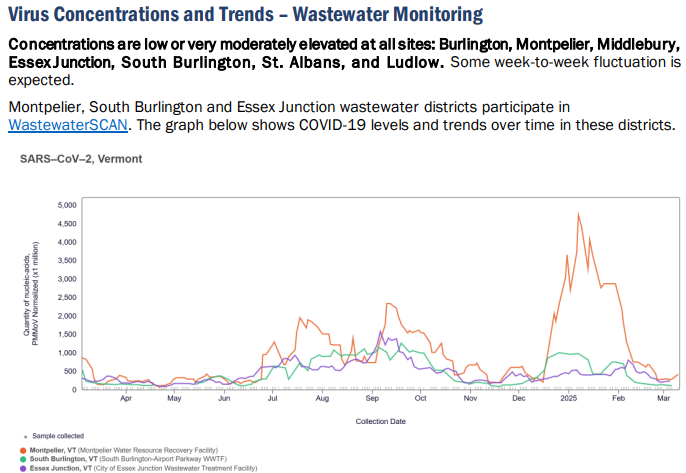
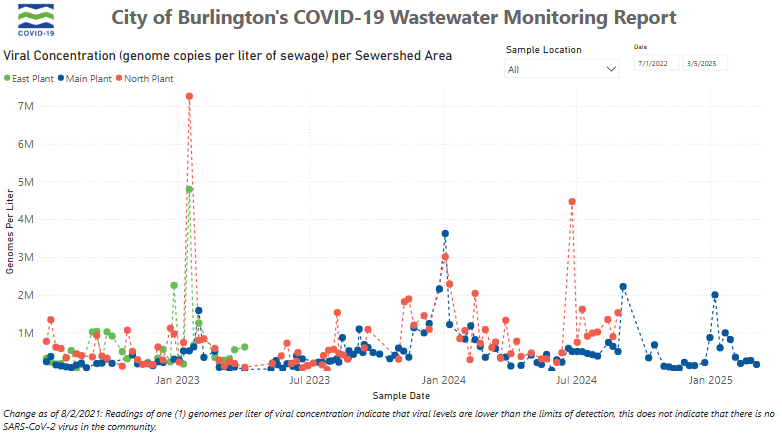
WastewaterSCAN and wastewater monitoring data for infectious diseases in Vermont and nationally. WastewaterSCAN analyzes information from participating wastewater treatment plants through March 14, 2025. Note: Avian flu was detected in Montpelier wastewater on March 6, 2025.
- Vermont
- H5 was detected in Montpelier as of March 6, 2025.
- National
- H5 (the flu A subtype associated with H5N1 or avian influenza)
- H5 has been detected at 74 WastewaterSCAN sites across 24 states.
- A heat map of H5 detections is linked here.
- Vermont
- Influenza A is in a “High” category in Vermont, with a downward trend in the last 3 weeks.
- Influenza B is in a “High” category in Vermont, with an upward trend in the last 3 weeks.
- National
- Influenza A remains in the “High” category nationally with 98% of samples detecting the pathogen.
- Influenza B remains in the “Low” category nationwide, but appears to be trending upward.
- Vermont
- COVID-19 is in the “High” category in Montpelier, and a "Medium” category in Burlington, with a downward trend over the last 3 weeks.
- National
- COVID-19 is in the “Medium” category nationally, with medium concentrations and no trend over the last 3 weeks.
- Median concentrations are ~44.8k cp/g, down approximately 30% from February (~65k cp/g).
- Vermont
- RSV is in the “High” category in Vermont, with high concentrations but a downward trend in the last 3 weeks.
- National
- RSV remains in the “High” category nationally, with high concentrations and no trend over the last 3 weeks. 88% of samples were positive.
- Vermont
- Norovirus is in the “High” category in Vermont, with high concentrations but no trend in the last 3 weeks.
- National
- Norovirus remains in the “High” category nationally, with high concentrations and a downward trend in the last 3 weeks.
- 100% of samples were positive for Norovirus in the last 3 weeks.
CDC states that already an estimated 97% of Americans have some level of immunity, from either vaccination or infection or both, which they said will help keep down new transmission and lessen serious outcomes.
On March 7, 2024, a study by a nationwide collaborative group including University of Vermont Larner scientists, published in Nature Communications, explored how the human body responded to mRNA COVID-19 vaccines—such as PfizerBioNTech Moderna. Both vaccines work by helping the body produce antibodies against the COVID-19 virus’s spike protein, but the study team found that the efficacy of the vaccines varied among subjects.
Researchers found that individuals over the age of 65, men, those with higher weight, smokers, diabetics, and those with a history of emphysema tended to have lower antibody levels. To contrast, subjects who had been diagnosed with COVID-19 previously—particularly those with COVID-19 severe enough to lead to hospitalization—had significantly higher levels of anti-S1 than other groups in the study. Surprisingly, those who had taken the Moderna vaccine also reported a significantly higher level of anti-S1 than the PfizerBioNTech recipients.
Vermont Department of Health recommendations: Preventing COVID-19 (healthvermont.gov)
Early Indicators
Severity Indicators
CDC | Test Positivity data through: March 8, 2025; Emergency Department Visit data through: March 8, 2025; Hospitalization data through: February 22, 2025; Death data through: March 8, 2025.
Posted: March 17, 2025 2:51 PM ET
The Delta variant took off in August 2021, which resulted in the heaviest number of deaths before vaccines and their boosters helped alleviate serious COVID cases. Multiple Omicron variants are now circulating and appear more virulent than previous variants, but perhaps not more dangerous, according to the CDC.
New COVID-19 variant JN.1: Experts explain symptoms, how to spot and treat the new strain
AP April 5, 2023: WHO downgrades COVID pandemic, says it's no longer a global health emergency
Walk-in vaccination clinics run by the state closed on January 31, 2023. Learn more
The federal government officially ended its pandemic response as of May 11, 2023. See more information BELOW or here: https://www.healthvermont.gov/covid-19/testing.
Starting May 11, 2023, the CDC and Vermont Department of Health will no longer use the COVID-19 Community Level to measure COVID-19 activity in the U.S. and Vermont. Instead, Vermont's statewide COVID-19 level will be measured by the rate of COVID-19 in people being admitted to the hospital, per 100,000 residents.
Focusing on hospitalization data is a better estimate of how COVID-19 is impacting the community now that reported COVID-19 cases represent a smaller proportion of actual infections. This also allows us to compare Vermont’s hospitalization levels with other parts of the country.
The US confirmed its first case of COVID-19 on January 20, 2020.Vermonters ages 6 months and older are eligible for COVID-19 vaccines. Getting vaccinated against COVID-19 is the safer way to build protection from serious illness–even for those who have already had COVID-19. Learn more about COVID-19 vaccines (CDC)
Find COVID-19 Vaccines
COVID-19 vaccines are available at primary care practices, pharmacies, local health offices, and other locations across Vermont. Please check with the location where you get your other routine vaccines—like flu shots—when you make an appointment to make sure they have COVID-19 vaccines available.
COVID-19 vaccines are available at no cost to you. Anyone can get vaccinated in Vermont, including those who live in another state, are non-U.S. citizens, or who have no insurance.
- For most people, their health insurance will cover the cost of getting vaccinated.
- For people who do not have health insurance, or who have insurance that does not cover the cost of vaccines (less common), the Vermont Immunization Program can cover the cost of the vaccine directly to the provider.
- Health care providers can charge a small fee to give the vaccine.
- Talk to your doctor before getting vaccinated to find out how much it may cost. Some practices offer a sliding scale.
- If you do not have health insurance and are under the age of 65, you can make an appointment at your local health office to get vaccinated. Local health offices do not charge a fee for giving the vaccine.
Know your rights when getting free vaccines.
Stay Up to Date with Your Vaccines
You are considered up-to-date if you are over the age of 6 years old and have received a bivalent (updated) COVID-19 vaccine. Learn more about kid vaccines
You may be eligible for additional COVID-19 vaccine doses if:
- You are 65 years of age and older and received your first bivalent (updated) COVID-19 vaccine booster four or more months ago.
- You are moderately or severely immunocompromised and received a bivalent (updated) COVID-19 vaccine booster two or more months ago.
If you are unable or choose not to get a recommended bivalent mRNA vaccine, you will be up to date if you received the Novavax COVID-19 vaccine doses approved for your age group.
Find more on recommended doses from CDC
Important Links
COVID Vaccine Information for Health Care Professionals
More on COVID-19 Vaccines (CDC)
Recommended COVID Vaccine Doses (CDC)
Find a COVID-19 vaccine near you.
Image
Use Vaccines.gov to find a location near you, then call or visit the location's website to make an appointment.
COVID-19 Vaccines for Children
Everyone 6 months of age and older is eligible to get a COVID-19 vaccination. Most children are also now eligible for a bivalent dose that offers increased protection against the original strain and omicron variants.
Children 6 months through 5 years of age who received the Pfizer-BioNTech COVID·19 vaccine are up to date if:
- They are 6 months to 4 years of age and received at least three COVID-19 vaccine doses, including at least one bivalent (updated) COVID-19 vaccine dose.
- They are 5 years of age and got at least one bivalent (updated) COVID-19 vaccine dose.
Children 6 months through 5 years of age who got the Moderna COVID-19 vaccine are up to date if:
- They received at least two Moderna COVID-19 vaccine doses, including at least one bivalent (updated) COVID-19 vaccine dose.
See more on recommended vaccine doses by age group (CDC)
Resources for parents and caregivers
https://www.vermontfamilynetwork.org/ccfk/

Tips for Helping Kids Feel Ready for Any Vaccine (Vermont Family Network)

What Families with Children Should Know About COVID-19 Vaccines (translated)
https://www.youtube.com/watch?v=lWcqHOgQIVg&t=5s
Conversations About COVID-19 Vaccines for Children with Vermont Pediatricians (American Academy of Pediatrics)
Help Getting Vaccinated
If you cannot get vaccines through any of the options above, our local health offices offer immunization clinics by appointment.
Need a ride? If you do not have transportation to get a free COVID-19 vaccine or booster, please contact your local public transportation provider or call Vermont Public Transportation Association (VPTA) at 833-387-7200.
English language learners, or immigrant or refugee community members, who would like to learn about more about vaccine clinics can contact the Association of Africans Living in Vermont (AALV) at 802-985-3106.
New Vaccine Cards and Requesting Vaccine Records
If you lost your vaccine card or your information is wrong:
- You may be able to get a new CDC COVID-19 vaccination card at the pharmacy or health care provider’s practice where you were vaccinated. Not all pharmacies or providers provide this service.
- Vermont Immunization Registry (IMR) can give you a copy of your vaccination record by mail (within a week) or secure email (within two business days). NOTE: The IMR and CDC cannot issue you a new white CDC COVID-19 vaccination card or provide QR codes. Instructions on how to request vaccine records
Recommendations for keeping your vaccination card and record up to date
Videos and Factsheets with Translations
Find more COVID-19 translations
COVID-19 resources for people who are deaf and hard of hearing
State Walk-In Vaccination Clinics Closed (January 2023)
Report your COVID-19 test results
To support vital journalism, access our archives and get unique features like our award-winning profiles, Book of Lists & Business-to-Business Directory, subscribe HERE!