

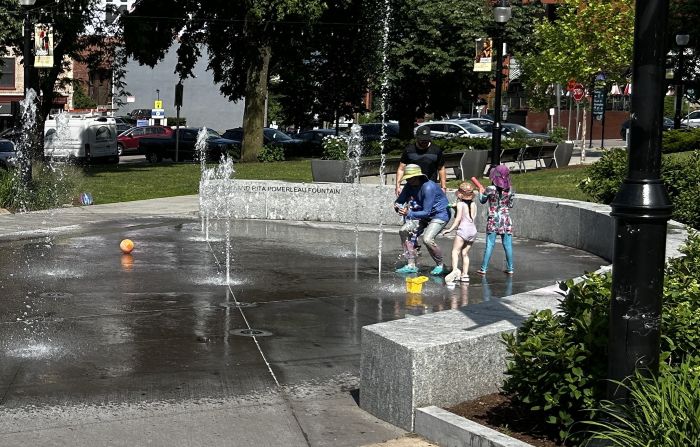
Kids (and adults) play in the City Hall Park fountain in Burlington Tuesday morning as temperatures approached 90 degrees by 10 am. VermontBiz photo.
At-risk groups include infants and young children, older adults and people with certain medical conditions
Vermont Business Magazine With dangerous levels of heat and humidity entering their second day in Vermont and New York’s North Country, University of Vermont Health Network is urging residents to remain aware of the elevated risk of heat stroke and take steps to protect themselves and their loved ones.
The Champlain Valley is expected to see the biggest impacts, according to the National Weather Service’s Burlington Forecast Office, with dangerously hot conditions and heat index values up to 106 degrees possible this afternoon in cities including Burlington, Ticonderoga, Middlebury, Plattsburgh, St. Albans and more.
Rising Heat Stroke risks
Heat stroke is a medical emergency caused by the body overheating and usually occurs because of exposure to high temperatures or physical activity in high temperatures for too long. It can occur if body temperature rises to 104 degrees or higher and can happen within 10 to 15 minutes.
Symptoms of heat stroke include nausea, dizziness, confusion, slurred speech, rapid breathing and pulse, as well as hot, dry or red skin without sweating.
Individuals experiencing heat stroke need emergency medical care – so call 9-1-1. Move the person, or yourself, out of the heat. Remove clothing and sponge or mist with cool water. If the person is conscious, give cool, but not cold, water.
Vehicle risks for children and animals
The interior of vehicles can quickly heat up to dangerous temperatures on hot days. On a day in the 80s, the interior of a vehicle can reach over 100 degrees in less than 10 minutes.
To mitigate the risk of hot vehicles people should take the following steps:
- Never leave a child, vulnerable adult or pet in a vehicle.
- Keep a parked vehicle locked and key fobs out of reach so kids don’t get in on their own.
- Create reminders, like alerts on your cell phone, to remind you to check the back seat of your vehicle when you arrive at your destination. Ask your childcare provider to call if your child doesn’t arrive when expected.
If you see a child, unresponsive adult or animal in a vehicle, call 9-1-1. Vermont law protects someone who forcibly enters a vehicle to rescue a child or animal. Fast action could save a life.
Mitigating heat risks at home
If your house is not air conditioned, consider visiting places like a shopping mall, library or movie theater for a few hours. Check with your local health department to see if there are any cooling centers in your area.
When preparing food, prioritize items that do not require heating up your kitchen or using your stove or oven.
Throughout your house, keep shades and blinds closed to block out the sun and reduce how quickly the interior of your home heats up throughout the day.
Mitigating heat risks at work
The Occupational Health and Safety Administration (OSHA) advises workers facing extreme heat to prioritize three things: Water, rest and shade.
- Begin your day well-hydrated, and drink water regularly to maintain proper hydration.
- Take periodic rest breaks in the shade if you are working outside.
- Don’t wait until you feel sick to cool down.
- Discuss any safety concerns with your employer.
Mitigating heat risks for children at play
The best way to reduce heat risks throughout the day is to limit outdoor play to cooler times – which are generally early morning or late evening. Other ways to reduce heat risks include:
- Wearing light-colored, loose-fitting clothing made of natural fibers like cotton.
- Using sunscreen to protect your skin from sunburn, which can cause dehydration and affect the body’s ability to cool itself down.
- Drink plenty of fluids and avoid alcoholic beverages.
- Take frequent rest breaks in the shade
You can also review the heat index procedures for school sports in New York and Vermont.
About University of Vermont Health Network
University of Vermont Health Network is an integrated system serving the residents of Vermont and northern New York with a shared mission: working together, we improve people’s lives. The partners are:
- University of Vermont Medical Center
- University of Vermont Health Network Medical Group
- University of Vermont Health Network – Alice Hyde Medical Center
- University of Vermont Health Network – Central Vermont Medical Center
- University of Vermont Health Network – Champlain Valley Physicians Hospital
- University of Vermont Health Network – Elizabethtown Community Hospital
- University of Vermont Health Network – Porter Medical Center
- University of Vermont Health Network – Home Health & Hospice