

by Vermont Auditor of Accounts Doug Hoffer
Back in 1988, my first job in Vermont was in the City of Burlington’s Community and Economic Development Office, often called CEDO. That is where I was introduced to the strategies and policies designed to produce and protect affordable housing. Vermont has been a laboratory in affordable housing since that time, especially the VT Housing & Conservation Trust, “inclusionary zoning” adopted in Burlington, and the land trust model used by the Champlain Housing Trust and others.
For decades I’ve advocated for state government to help increase the stock and particularly the affordability of housing units. Now is no different.
I know how tempting it can be for policymakers, though, at a time when the housing crunch is especially severe, to see any new “housing construction program” as an unqualified good. However, that feeling of “we need to do something” can lead to risky and wasteful uses of taxpayer dollars.
The Auditor’s Office has a responsibility to try to protect taxpayer money from risk and waste even when the political winds are blowing strongly. That’s why we weighed in throughout the legislative session with concerns about the proposed Community Housing and Infrastructure Program (CHIP), the year’s big housing initiative within S.127.
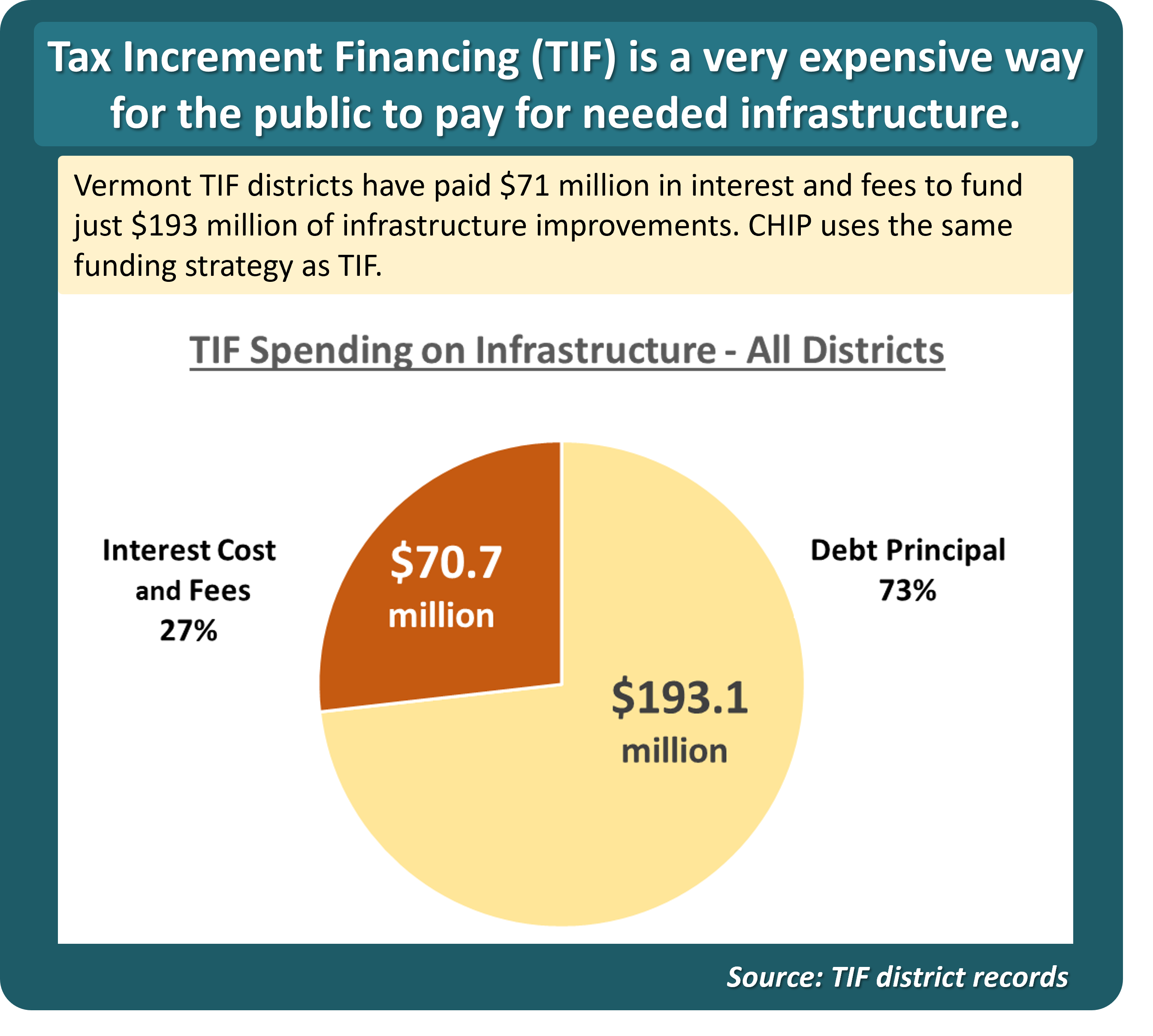
CHIP has commendable intentions – invest in infrastructure needed to support new housing construction throughout Vermont, especially in small communities not able to access existing programs. But despite those intentions, we worry that CHIP’s modified tax increment financing (TIF) plan will:
- Ultimately transfer resources away from poorer, rural communities and toward more prosperous communities.
- Increase financial stress on public education in rural communities by draining money from the Education Fund.
- Result in unnecessarily large subsidies to project developers.
- Cost Vermont taxpayers far more than if the State had chosen to achieve the same objectives using longstanding public infrastructure programs.
It is also noteworthy that the program allows the Economic Progress Council to approve proposals if they “meaningfully address” the purpose of the bill. Not only can we not audit such vague and subjective criteria, but this provision delegates authority for potentially huge allocations of taxpayer funds to a body comprised almost entirely by unelected officials.
In the end, CHIP was approved despite those concerns. Fortunately, some of our recommendations were included in the final legislation. Among those were:
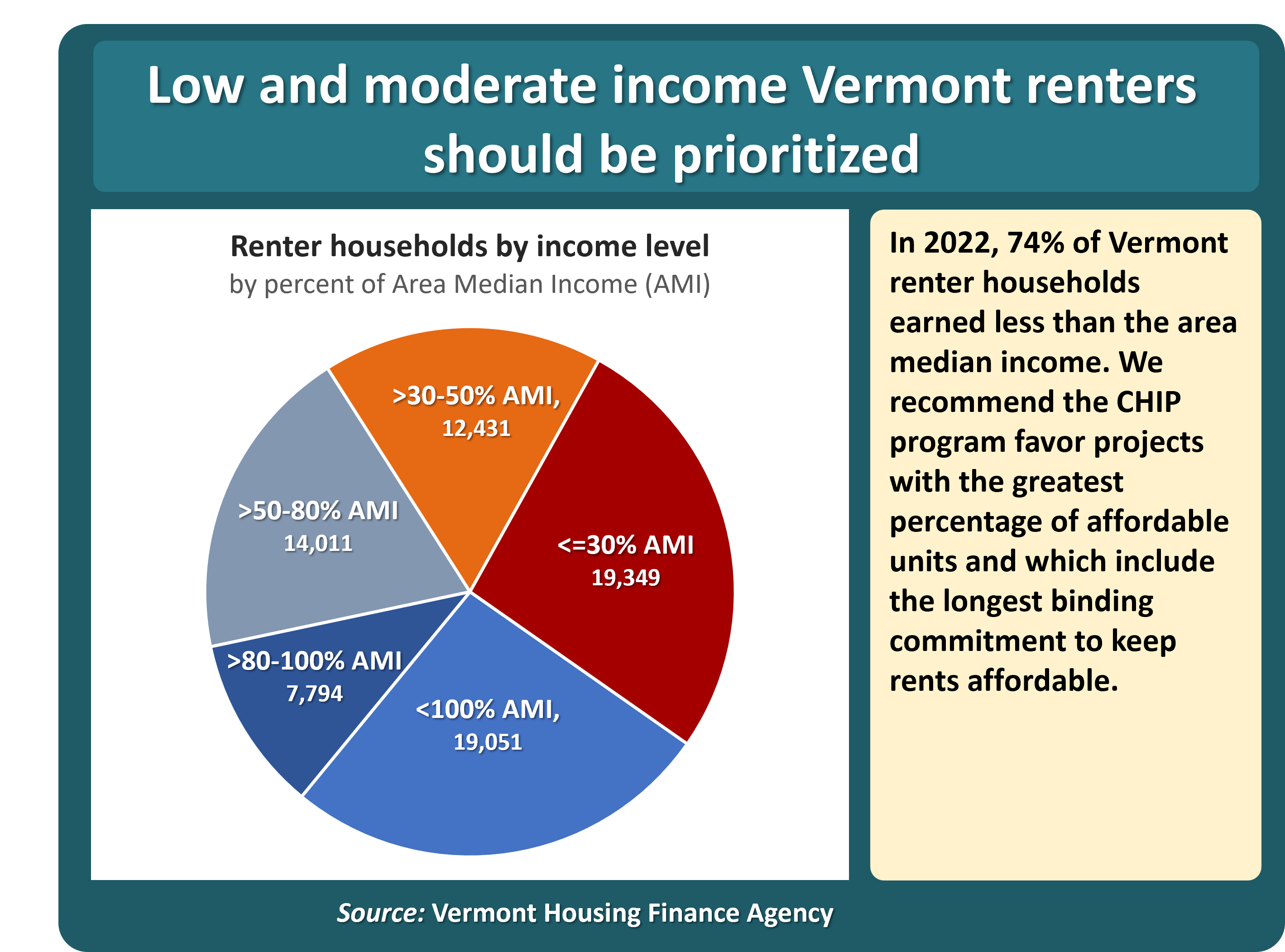
- Clarifying that the intent of the program was to create housing for households of low and moderate incomes. The original proposal could have provided taxpayer funds to developments including only luxury homes. The final bill requires 15% of the units to be affordable but not in perpetuity (only for about 20 years). Some projects can be approved with even fewer affordable units.
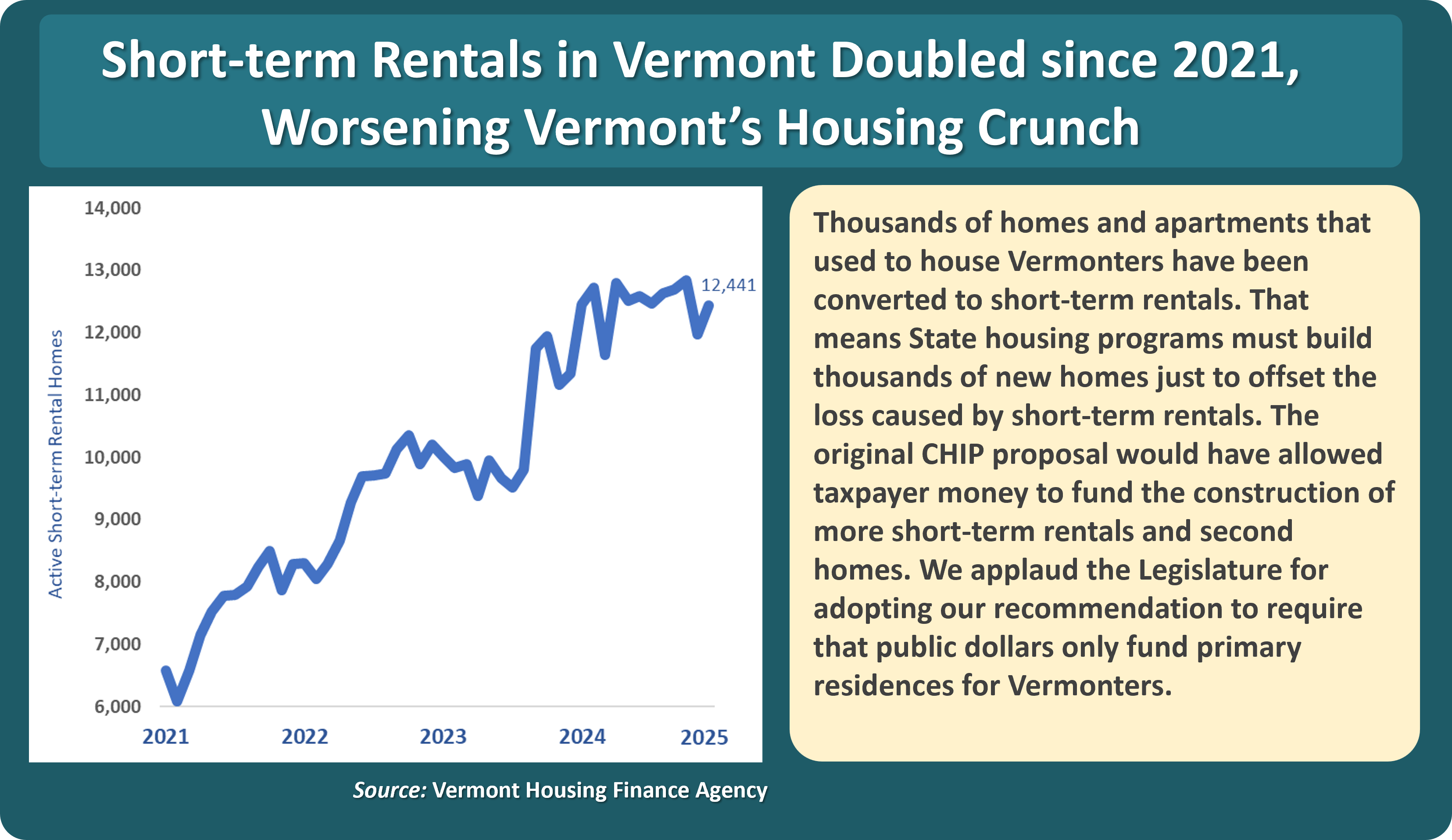
- Requiring that the housing units being created are primary residences. The original proposal would have allowed taxpayer funds to be used for constructing second homes and short-term rentals. As with affordability, however, these covenants will apply for only about 20 years.
- Adding a requirement that most projects only receive taxpayer funds if the development actually demonstrates that it needs the subsidy. The original proposal simply gave taxpayer money to anyone developing buildings under fairly loose parameters even if the money wasn’t necessary for the project to proceed.
- Disallowing Education Fund tax dollars from properties next to the proposed development site from being diverted away from the Education Fund. The original proposal would have allowed property tax growth on existing, high-value properties that have nothing to do with the new housing project to be diverted away from the Education Fund, putting more strain on property taxes that are already too high.
Also, it is not too late for the Scott Administration to implement the program in a way that further reduces the potential for wasteful spending. We have communicated to Governor Scott and his team that these and other program rules can and should be put in place:
- Establish a scoring system that favors applications featuring the highest percentage of housing development. As written, the legislation allows substantial public subsidy of developments that are mostly for commercial uses and include very little housing. CHIP is a housing bill, and if taxpayers are going to subsidize private development they should at least get as much housing as possible.
- Establish a scoring system that favors applications featuring the highest percentage of affordable housing development as a percentage of total floor area of the projected development.
- Establish a methodology to discount from the allowed taxpayer subsidy the background growth rate of the parcel(s) in the proposed development. The tax increment calculation, which is the basis for how much money is diverted from the Education Fund in order to finance CHIP activities, assumes that there would be no property value growth in a CHIP district for 20 years unless the CHIP projects proceed. In other words, the CHIP program’s benefit calculation assumes that parcels in, say, Burlington’s downtown or Stowe or Killington village would have flat or negative property value growth for 20 years. By operating under that implausible premise, more dollars are diverted from the Education Fund than can be justified.
- Develop a legislative proposal for 2026 that would move the enforcement responsibilities for CHIP away from the Agency of Commerce and Community Development (ACCD) office. It is a well-established principle in public sector management that regulatory enforcement and promotion activities should not be performed by the same department or agency. It is a program design flaw to leave enforcement in the hands of an agency whose mission is to promote the program and who view the CHIP developers as partners.
As I noted in the beginning, I join the Governor and the Legislature in wishing to promote housing construction and affordability throughout Vermont. My office will remain vigilant to make sure your tax dollars are not wasted in that pursuit.