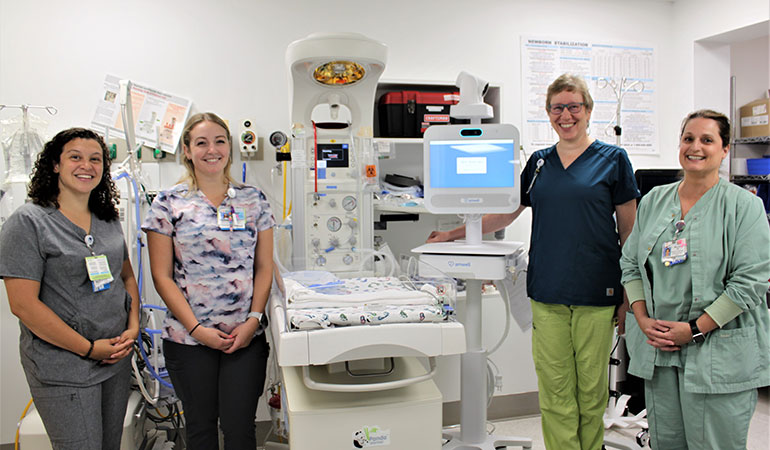
Photo: The telemedicine unit in the NICU at North Country Hospital in Newport. Courtesy photo.
by Olga Peters, Vermont Business Magazine
The Green Mountain Care Board released a comprehensive report in September aimed at transforming the state’s healthcare system. The report, prepared by the management consulting firm Oliver Wyman, has generated strong reactions from communities whose local hospitals were advised to restructure or reduce services.
The report revealed that many of Vermont’s hospitals operate at a financial loss and recommended consolidating services to improve profitability. It also proposed sweeping changes for four specific hospitals: North Country Hospital, Gifford Medical Center, Springfield Hospital and Grace Cottage Hospital.
“The Oliver Wyman final report includes extensive recommendations designed to ensure an affordable, equitable, accessible and sustainable health care system,“ wrote members of the GMCB, an independent group of five Vermonters charged with ensuring that changes in the health system improve quality while stabilizing costs.
While there is widespread agreement that healthcare in Vermont is expensive, many strongly disagree with the report’s findings. Specifically, Newport’s North Country Hospital and Randolph’s Gifford Health Care have identified inaccuracies within the report.
“We hear we need to cut all these services at our hospital, even though the state and the report writers don’t recognize how incredibly busy this hospital is,“ said North Country President and CEO Thomas Frank.
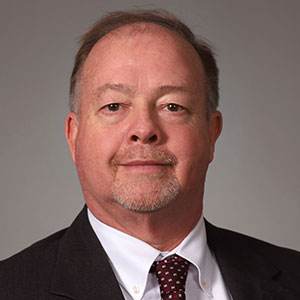
Photo: Thomas Frank, CEO of NCH. Courtesy photo.
Disagreements persist. Many rural communities view their local hospital as a vital access point for necessary care, a key economic driver and a major employer. Despite assurances from state officials that there are no plans to close any hospitals, this message isn’t resonating with the community. The communities surrounding North Country Hospital, in particular, see their hospital as indispensable.
Although the report was intended to promote equity, community members believe that restructuring North Country Hospital as recommended would achieve the opposite effect. Leadership at both North Country Hospital and Northeastern Vermont Regional Hospital worry that implementing the Wyman recommendations would create a two-tiered health care system, with access to care determined by affordability.
“You want to make a real difference in people’s health outcomes? asked Shawn Tester, president and CEO at NVRH. “Raise the median household income, because that’s the single-biggest predictor and driver of overall health and well-being.“
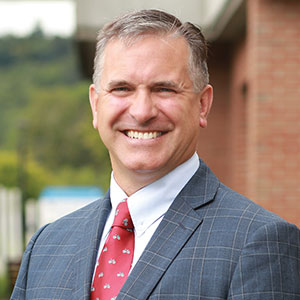
Photo: Shawn Tester, CEO of NVRH. Photo: NVRH.
According to data from the U.S. Census Bureau, the per capita income for counties in the NEK ranges between $31,000 and $36,000, compared to the statewide per capita of $41,680.
Recommendations have sparked feelings of uncertainty, questions about increasing transportation times and doubts about whether the NEK can meet its goal of increasing its workforce without a local hospital.
At a Nov. 18 City Council meeting, Newport Mayor Linda Joy Sullivan said she would press state officials to keep the hospital open.
Loralee Tester, executive of the Northeaster Kingdom Chamber of Commerce, said she found comments in the Oliver Wyman report “hugely problematic.“
“If you don’t have a hospital that offers real services, you’re going to really struggle to find people who want to move there,“ Tester said. “And then you have those people who are perpetually underserved, and you’re making it even harder for them.“
Northeast Kingdom Economic Report: A renaissance in progress
David Snedeker, executive director of Northeastern Vermont Development Association, agreed.
“I think it would be devastating,“ he said. “North Country Hospital serves Newport, northern Orleans County and northern Essex County, which would lengthen travel time for anybody needing services there.“
When asked about the potential impact of reduced services on Jay Peak’s workers and visitors, Director of Communications Dehlia Wright responded via email: “There would be an impact, but the hospital will never close. The Wyman report was flawed and based on inaccurate data. While the hospital is crucial for attracting and retaining talent, its importance extends far beyond Jay Peak, serving the entire Northeast Kingdom region.“
Shawn Tester criticized the report, calling it flawed and stating that it’s impossible to support its recommendations when the underlying data is unreliable.
“First off, I’m going to say emphatically and with certainty that North Country Hospital isn’t going anywhere, and we’re going to make sure that doesn’t happen,“ he said. “We at NVRH and North Country Hospital are in this together.“
Frank said the Wyman report has “been a bit of a disaster for us“ since its release. Many staff, for example, have asked if they should begin looking for a new job.
According to Frank, in fiscal year 2024, North Country had:
-
16,000 emergency room visits.
-
35,000 primary care visits. (The hospital supplies 95% of the area’s primary care.)
-
600,000 lab tests.
-
32,000 diagnostic imaging tests.
-
2,000 admissions.
Frank identified several inaccuracies in the report and has communicated these to the authors, resulting in some corrections. For instance, an early version of the report, using data from a previous fiscal year, stated that North Country Hospital had 10,000 emergency department visits. The actual number for that year was 14,500. The report also incorrectly stated that the hospital had 200 births over two years, when in fact, it averages 200 births per year.
“There are so many challenges here that might not exist in a place like Chittenden County or even Franklin County. It’s a very unique area of the state,“ Frank said.
He believes that many Vermonters hold an “out of sight, out of mind“ attitude towards the Northeast Kingdom.
“A lot of people are developing a bit of a complex,“ he said. “We’re the only part of this state that has industrial wind projects. Why do we have them and no one else? There are mountains in the rest of the state too. We have the largest prison in the state. We have the only landfill in the state.“
Frank believes this “out of sight, out of mind“ mentality may have influenced the Oliver Wyman report. He emphasized that North Country Hospital contributes roughly $61 million to the local economy and is the area’s largest employer, with over 600 employees.
“If our hospitals go away, I can’t even imagine what would happen to this area of the Northeast Kingdom; restaurants, hotels and everything else would close,“ he said. “People who have the ability to move and get jobs elsewhere would leave. This is a really tough situation that we’re in right now, and there are a lot of scared people in the community.“
Frank and Shawn Tester pointed out that their facilities are currently treating a higher proportion of acute patients. They attributed this to delayed care during the COVID-19 pandemic, the effects of which are still being felt by hospitals.
“We’re seeing more reactive care in the post-COVID world,“ Frank said.
One of Shawn Tester’s primary concerns about the Wyman report is that it threatens the Northeast Kingdom’s care system at a time when the older demographic is significantly increasing. He argues that instead of cutting health care services, the Kingdom needs to expand and invest in its health care system to meet the growing needs of its aging population.
“When we think about constraining access to care — which is essentially the current regulatory environment and the recommendations of the Oliver Wyman report — you’re really going to impact communities like Brighton, Norton, Lunenburg, Concord and Hardwick,“ Tester said. “Is that really what we want in our society?“
Tester acknowledges that there are no easy answers for a small state with a limited tax base. He also notes that it’s difficult to compete economically with neighboring New Hampshire, given its tax system.
“We’re kinda fighting with one area tied behind our back,“ he said. “The reality is that Chittenden County, in many ways, is isolated because its western border is a lake.“
In his opinion, Vermont must have honest conversations about how it ensures equitable access to care, especially for the more rural communities.
One suggestion from the Wyman report that Frank supports is increased collaboration with Northeastern Vermont Regional Hospital. He mentioned that the two facilities are already partnering in areas like recruitment, policy sharing and patient referrals. Given the evolving health care landscape and changes at neighboring hospitals, further collaboration is likely.
Historically, North Country Hospital has brought in specialist care, such as cardiologists, by contracting with larger hospitals such as UVM Medical Center and Dartmouth Hitchcock Medical Center. However, both hospitals are no longer able to provide these physicians. Additionally, UVMMC is facing cuts due to a budget reduction of over $1 million from the Green Mountain Care Board.
As a result, UVM Medical has informed Frank that they are closing 50 inpatient beds and divesting themselves of dialysis services. Frank believes these decisions will have ripple effects on North Country Hospital.
Frank is also exploring collaborations with other health care providers in the area, such as urgent care centers, to fill in service gaps. The two hospitals are also establishing a joint collaborative called the Northeast Kingdom Health Service.
North Country Hospital is classified as a critical access hospital, a designation partly based on being located at least 35 miles from the nearest hospital or academic medical center. Frank points out that North Country is 45 to 50 miles from its closest neighbor, NVRH, and two hours from UVMMC.
“It gets back to the fact that people are just shaking their heads. Why would you close the only true critical access hospital in the state of Vermont?“ Frank asked.
Shawn Tester said hospitals have led through transformation. For example, when NVRH opened 50 years ago, it was a 100-bed facility. It’s now a 25-bed critical access hospital. Advances in technology and care have reduced inpatient stays.
“We know how to work with our partners like North Country Hospital to meet our region’s needs,“ Tester said. “I see tremendous opportunity in front of us to continue to innovate, to continue to lead, to continue to be here, supporting the needs of these communities.“
He emphasized that Northeast Kingdom communities need the state to actively support their growth by simplifying processes for business expansion, housing development and infrastructure improvements. And he stressed the importance of recognizing the unique needs and priorities of these rural communities, which often differ significantly from those of urban areas.
Olga Peters is a freelance journalist from southern Vermont.
To support vital journalism, access our archives and get unique features like our award-winning profiles, Book of Lists & Business-to-Business Directory, subscribe HERE!