by Doug Hoffer, Vermont State Auditor Vermont’s Medicaid program cost more than $2 billion last year, providing coverage to nearly 197,000 individuals who were served by thousands of Vermont providers, including hospitals, nursing homes, general practitioners, and specialists.
Because of the scale and importance of the program, we decided to conduct two audits of the Department of Vermont Health Access (DVHA), the state department that manages Vermont’s Medicaid program. The first audit related to DVHA’s Special Investigative Unit (SIU), which is responsible for trying to prevent Medicaid fraud, waste, and abuse. The second audit assessed the performance of the Blueprint for Health, a DVHA program that since 2006 has attempted to improve health outcomes and lower health care costs by working with primary care practices.
Medicaid Fraud, Waste, and Abuse
Protecting against Medicaid fraud, waste, and abuse is very important. Vermont’s health care system is very expensive, with too many access problems. Any dollar that shouldn’t have been paid out means that taxpayers have shelled out more than necessary, or that their funds could have been better spent. Our audit reviewed the work of the SIU and tracked whether DVHA leadership adopted the SIU’s recommendations to recover improper Medicaid payments and to adopt policies that reduce fraud risk.
Highlights of the audit include:
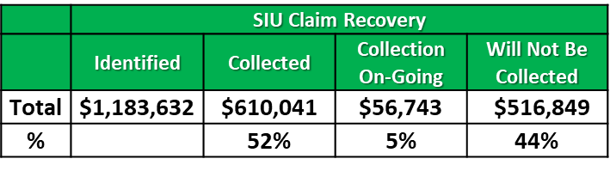
- The SIU identified about $1.2 million in improper payments in the 20 investigations reviewed as part of our audit’s sample. However, almost $517,000 will not be recovered due almost entirely to DVHA management’s decisions that effectively nullified the SIU’s improper payment findings.
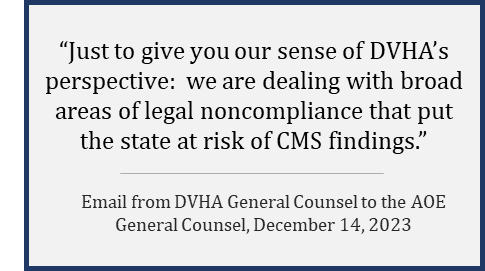
- The SIU identified programmatic risks during the course of their investigations and sent “vulnerability memos” to DVHA and other State Medicaid organizations related to 8 of the 20 investigations reviewed. In most cases the state entities did not act to address all the vulnerabilities the SIU identified. For example, a June 2021 SIU vulnerability memo pertaining to the Agency of Education’s (AOE) school-based health services program reported that some services provided under a bundled rate were not always received or provided in full and were duplicative with claims billed under another program. Three years later, despite escalation to the Secretaries of Human Services and Education, DVHA and the AOE have not been able to reach an agreement on how to address the vulnerability.
- DVHA generally took SIU concerns into account when making policy changes. However, in three of the 20 policy changes reviewed, the SIU’s program integrity concerns were not addressed, leaving Medicaid open to potential risk including in two high-cost healthcare categories.
- Even though DVHA’s contract with OneCare, the state’s primary accountable care organization, has exceeded $300 million annually, their oversight of OneCare’s program integrity activities has not been robust.
The Special Investigative Unit within DVHA does really critical work. How DVHA leadership handles their findings contributes to Vermonters’ confidence that Medicaid dollars are being spent effectively. It’s clear DVHA management takes the SIU’s work seriously, but some of their decisions, as well as the lack of some internal processes, highlight the need for more work in this area.
Blueprint for Health
Blueprint’s initial objectives were largely accomplished nearly a decade ago. Most notably, Blueprint helped most primary care practices achieve a set of quality standards established by the National Committee for Quality Assurance. In addition, health information technology and care coordination have become near-ubiquitous in Vermont’s primary care landscape. With those initial goals long since achieved, we wanted to know if Blueprint can show that it continues to provide health and financial benefits through its ongoing efforts. Few government programs enjoy such positive reputations as the Blueprint, but that is not always a guarantee that a program is effective. Our independent and objective auditors, who are guided solely by what can be demonstrated with evidence, set out to answer these questions for Vermonters.
Highlights of the Blueprint audit include:
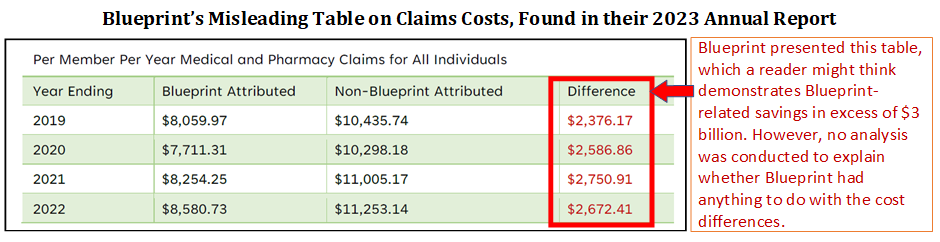
- Blueprint has not performed a recent credible assessment of the program’s impact on cost savings. Instead, Blueprint has made misleading claims regarding program savings. In their 2023 Annual Report and elsewhere, Blueprint reported that they did an analysis which showed Blueprint’s effectiveness in controlling health care costs, inferring the program saved, improbably, almost $3 billion between 2019 and 2022. Needless to say, this was not supported by evidence.
- Overall, Blueprint has not sufficiently planned, analyzed, or reported its efforts to improve overall population health and to control health care costs. Without quantifiable goals and an assessment of progress towards those goals, the extent to which Blueprint is impacting Vermonter’s health and controlling health care costs can’t be determined.
- Blueprint officials do not have a current strategic plan, despite being required to by statute. Strategic plans are critical to giving direction to an agency’s work.
- Blueprint’s public reporting did not always reflect the impact of the Blueprint program itself because in their figures Blueprint often included data for Vermonters who were not part of the program.
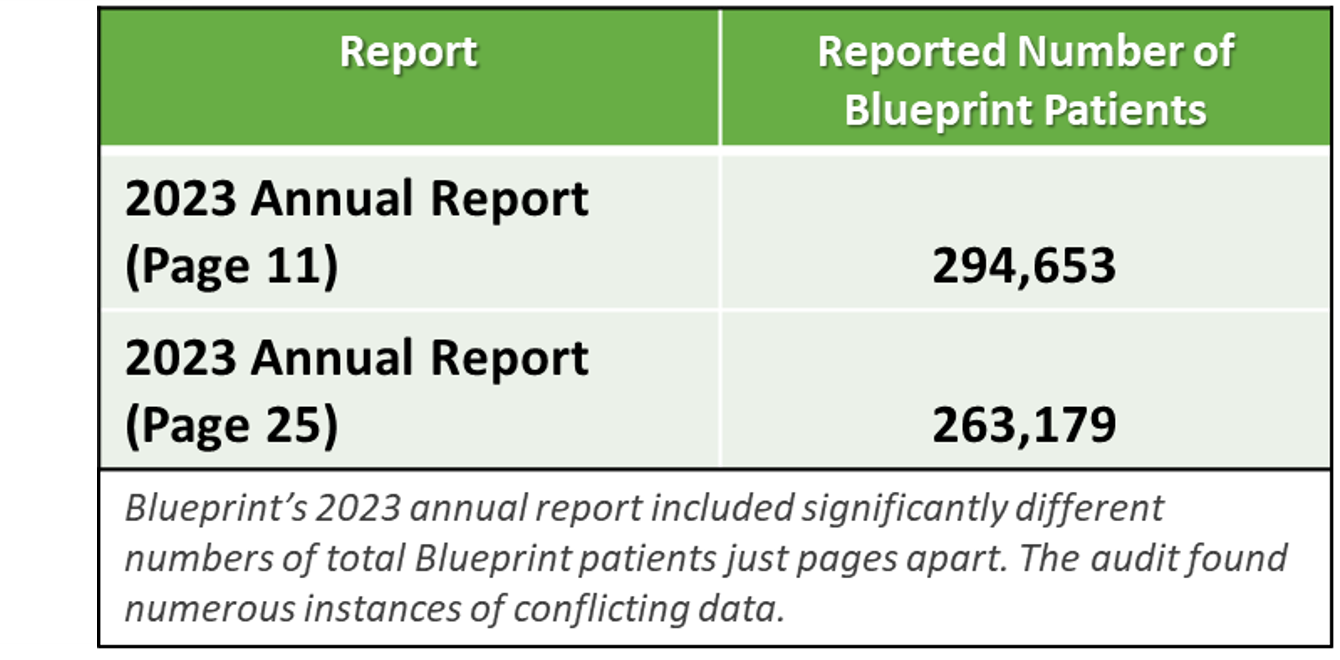
The Blueprint may well be having a positive impact on health outcomes and reducing health care spending, but the truth is that no one really knows. Blueprint officials need to re-commit themselves to evaluating their impacts. Primary care providers frequently talk about how important Blueprint payments are to their practices, and given the stress primary care providers are under I don’t doubt that the Blueprint payments they receive are most welcome. The question for policymakers, though, is whether Blueprint’s program activities are moving the needle on cost or quality. If not, the funds could be deployed to other proven strategies, or the funds could just be added to primary care reimbursement payments.
I am heartened that DVHA officials have agreed to nearly all of our recommendations in the two audits. We will continue to monitor these programs to track DHVA’s progress, and to protect taxpayers.
To support vital journalism, access our archives and get unique features like our award-winning profiles, Book of Lists & Business-to-Business Directory, subscribe HERE!