A Weekly State House Recap
by Maggie Lenz and Nick Charyk on behalf of Atlas Government Affairs
First, a Quick TIF Explainer
Tax Increment Financing, or TIF, is a tool that municipalities use to finance public infrastructure improvements, such as streets, sidewalks, and stormwater management, to support development. The improvements serve a designated TIF District, which must be approved by both the municipality and the state. Critics of TIF argue that it diverts tax revenue that would otherwise go into the education fund. They say the program is complicated, benefits only a handful of larger municipalities, and sometimes funds projects that would have happened anyways, without the subsidy. Supporters argue that TIF unlocks private development that wouldn’t happen otherwise, expanding the grand list and ultimately increasing revenue for the Education Fund.
Under Vermont’s current TIF system, a municipality must designate an entire TIF district, which includes multiple parcels of land, and get state approval before using the tool. But there is growing interest among stakeholders in creating project-based TIFs instead. This would eliminate the need for a full district and instead allow municipalities to apply TIF to a single project rather than an entire area. This would make the tool more accessible to smaller towns or developments that need infrastructure investment but don’t require a full district designation.
HIT
The Housing Infrastructure Initiative, or HIT, was presented to the House Commerce and House General committees by a new housing advocacy group called Let’s Build Homes. The coalition is focused on policies that remove financial and regulatory barriers to housing development. Leading the effort is a familiar face, former Burlington Mayor Miro Weinberger, who has re-emerged in Montpelier as a leading housing policy voice.
Weinberger and Let’s Build Homes argue that the biggest obstacle to building more housing isn’t just permitting, it’s infrastructure. In a state where more than 200 villages lack wastewater systems and 100 lack public water, developers face an expensive problem before even breaking ground.
Unlike TIF, which funds a range of municipal projects, HIT is exclusively for housing. It would let developers take on the burden of financing infrastructure, rather than straining municipal budgets.
Let’s Build Homes presented the proposal with a sense of urgency. Vermont needs 30,000 new homes in the next five years, but whether HIT gets traction, it is too early to tell.
The Final Acronym of the Column: SPARC
So, if HIT is a scalpel for housing infrastructure, SPARC, or Strategic Projects for Advancing Rural Communities, is a tool that more closely resembles a Swiss army knife for rural areas and small towns. It is TIF-esque.
Presented to the House Commerce Committee by Joan Goldstein, Commissioner of Economic Development, SPARC is the Scott Administration’s proposed municipal financing tool to help towns fund housing, flood mitigation, infrastructure, and economic development projects.
The core mechanism works like this: Towns partner with an investment partner, usually a developer. They submit a Community Agreement to the Vermont Economic Progress Council for approval. If approved, the project rebates a portion of its incremental new property tax revenue to the developer or municipality to cover eligible costs.
SPARC is meant to be more flexible and accessible to small towns than Vermont’s current TIF structure, and projects are individually approved rather than tied to a large-scale TIF district. So, something closer to a project-based TIF but for rural areas.
Goldstein pitched SPARC as a win-win for towns struggling to fund infrastructure while expanding their tax base. The Fair Haven project example showed how a vacant lot generating $12,821 in tax revenue could become a 50-unit development generating $417,522 annually while allowing a portion of that revenue to offset high development costs.
None of the alphabet-housing-soup proposals this week seem to have changed hearts and minds in the legislature. Detractors remain dubious, enthusiasts remained evangelical. This fracture can’t be healed by a few good-looking slides, as it stems from a deep ideological rift over state-backed economic development incentives.
The Senate Has Entered the Chat
The Senate Economic Development and Housing Committee is cooking up a housing omnibus bill, a sprawling package blending ideas from the administration, legislators, and housing advocates.
On Friday morning, the committee went down their wish list for the bill. They are considering adding six million dollars for brownfield redevelopment, creating project-based TIFs, offering incentives for accessory dwelling units to be used for long-term rentals rather than short-term Airbnbs, making permitting and Act 250 changes, including easing some historic preservation rules that can limit development, adjusting tenant and landlord rules such as renter protections, credit-building initiatives, and mobile home rent stabilization. One noteworthy idea is to allow the governor to declare a housing state of emergency, which would shorten permitting timelines when housing shortages hit critical levels.
Senator Kesha Ram Hinsdale (D-Chittenden South) emphasized during the meeting that the committee should focus on crafting the strongest housing policy possible rather than waiting for the House to take the lead. She pointed out that the House Ways and Means Committee Chair was already skeptical of the TIF piece, cautioning that relying on them to clear the way might be futile. “We need to make sure we’re proud of our work and let it go from here,” she said, underscoring that the Senate should move forward with the best bill they can craft regardless of whether the House follows suit.
Curiosities: a weekly peek at the odd and intriguing happenings under the Golden Dome
Claw and Order
Some Vermont lawmakers are pondering another cutting-edge topic. Cat videos.
It’s a phrase not typically seen in draft legislation, but it’s nestled within S.69, a bill focused on minors’ online privacy. In a provision about tailoring content recommendations, “cat videos” are cited as an example of specific media a viewer might want to see more or less of. (The other example? “Breaking news.”)
The bill sets limits on how content is suggested to minors so they won’t be drawn into a purr-petual scroll of endless whiskered entertainment.
The Week in Three Pictures:

On Wednesday, Members of Circus Smirkus perform in the Cedar Creek Room to celebrate Creative Sector Day at the Vermont State House.
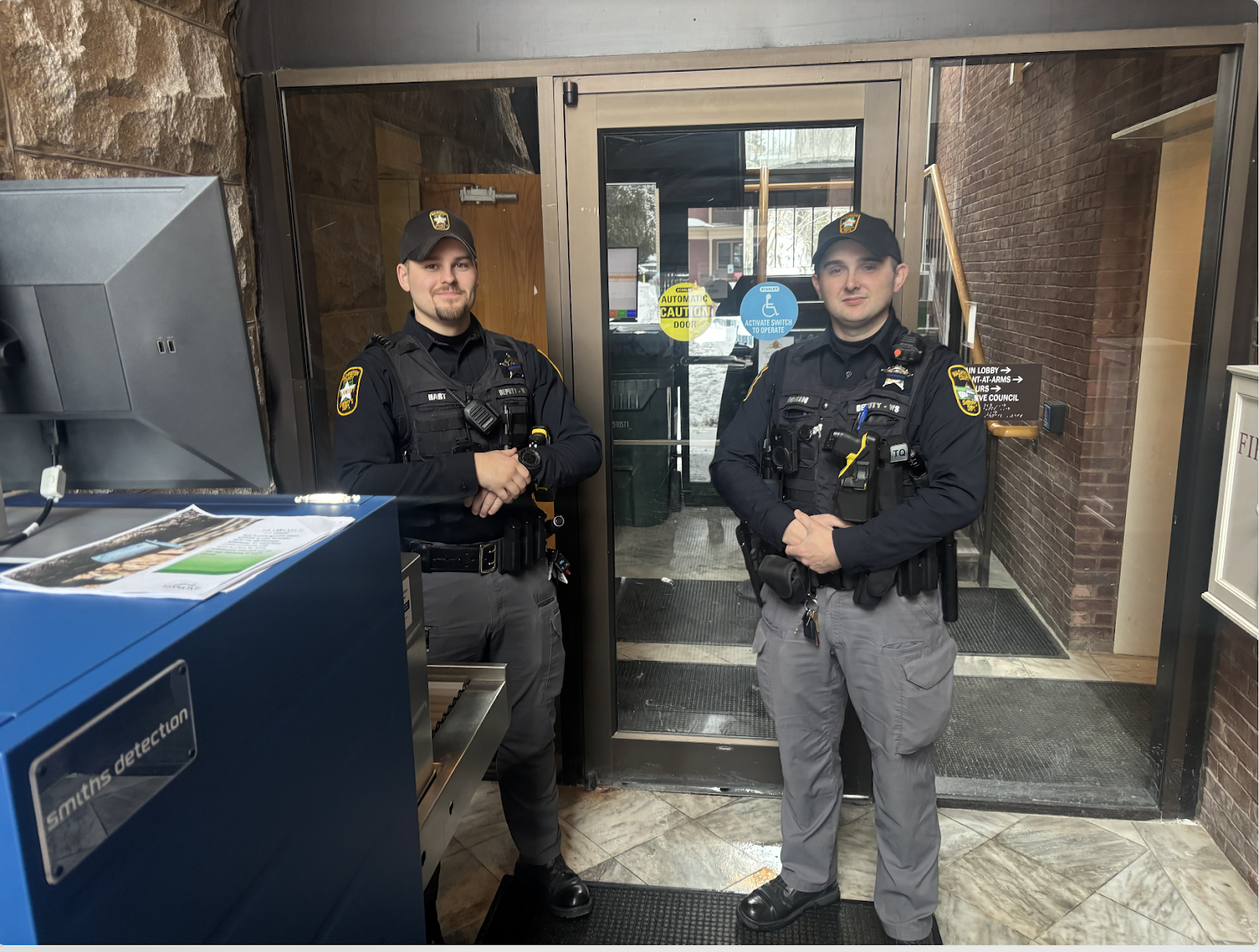
On Thursday, a perceived but apparently “non-imminent” threat from outside the State House shuts down all entry points but one, and adds some TSA-lite security measures.

On Friday, the State House is adorned with love via the Montpelier Valentine’s Day Bandit.
2.15.2025. Atlas Government Affairs
To support vital journalism, access our archives and get unique features like our award-winning profiles, Book of Lists & Business-to-Business Directory, subscribe HERE!