A Weekly State House Recap
by Maggie Lenz and Nick Charyk on behalf of Atlas Government Affairs
On Tuesday, Governor Phil Scott delivered his budget address to a joint session of the House and Senate. If you’ve been paying attention over the years, you won’t be shocked to hear that he stuck to a familiar palette of affordability, with tasting notes of tackling property taxes, public safety, and education reform. And given the recent election results that saw more than two dozen seats flip from Democrat to Republican, let’s just say the governor enjoyed a noticeably warmer reception than in years past. And he seemed to strike an affable tone to match.
Governor Scott kicked things off with a bit of Budget 101 for the new members, breaking down the difference between one-time money and base funding. (Quick refresher: one-time money is exactly what it sounds like, a temporary influx of cash that won’t be around next year. Base funding, on the other hand, is the ongoing money that keeps the state’s lights on.)
From there, he laid out his vision for Vermont’s $9 billion budget, emphasizing that his plan includes no new taxes, but some very tough choices about how to allocate limited resources.
Conspicuous in its absence, though, was any mention of the looming uncertainty around the federal dollars that play a massive role in Vermont’s budget. The audience could be forgiven for feeling a sense of cognitive dissonance. President Trump’s office announced a federal funding freeze earlier that same day, a move that could send shockwaves through state finances. Whether the governor purposely sidestepped the topic, we can’t say. What we do know is that this budget, as presented, will have to contend with the tumult ahead, as sweeping federal changes under Trump turn state finances into a moving target.
And let’s not forget that while Republicans made gains in November, Democrats still control the legislature. Their supermajority may be gone, but they control the legislative agenda. That means Governor Scott’s budget is just the opening bid in a long, politically fraught negotiation. Buckle up.
A House Divided
Housing is one of Vermont’s most urgent challenges. Everyone seems to agree on this. Governor Scott called it his top priority last year, but most of his proposals never made it into law. The legislature ultimately overrode his veto to pass H.687, a package of Act 250 reforms, without him.
This year, Scott is back with a new omnibus housing proposal, one of his main policy pushes.
On Thursday morning, during a joint committee walkthrough of the plan led by Alex Farrell, Commissioner of Housing and Community Development, the shifting political landscape in Montpelier really came into focus.
Senator Alison Clarkson (D-Windsor), who now chairs the Senate Economic Development Committee, pressed Farrell on why the administration was trying to revisit the so-called 'Road Rule,' a controversial provision hashed out in last year’s housing bill. The rule triggers state environmental review for developments with long private roads, aiming to prevent forest fragmentation but frustrating rural builders. “Why take that on now, after we came to a grand bargain on that?” she asked.
Farrell was reminding her that Scott had vetoed the bill in question when suddenly a freshman Republican, Representative Thomas Charlton, jumped in. “It was a grand compromise, but not with landowners,” he countered.
Senator Clarkson, who also represents Charlton’s district in the Senate, wasn’t having it. “It was a grand compromise in this building to get that bill passed… you weren’t here for that, but we were,” she shot back.
She wasn’t wrong. Representative Charlton wasn’t in Montpelier last year. His district was represented by Democrat Heather Chase, whom he unseated in November. But he didn’t miss a beat. “No, but that’s why I’m here now,” he replied.
The exchange was brief, but it hung in the air a little longer than usual. A year ago, a Republican challenging the Democrats’ housing agenda might have been background noise. Now, it’s part of a much more consequential dynamic.
A perfect parable for the shifting political winds? Perhaps not. But a telling one, for sure.
Curiosities: A weekly peek at the odd and intriguing happenings under the Golden Dome
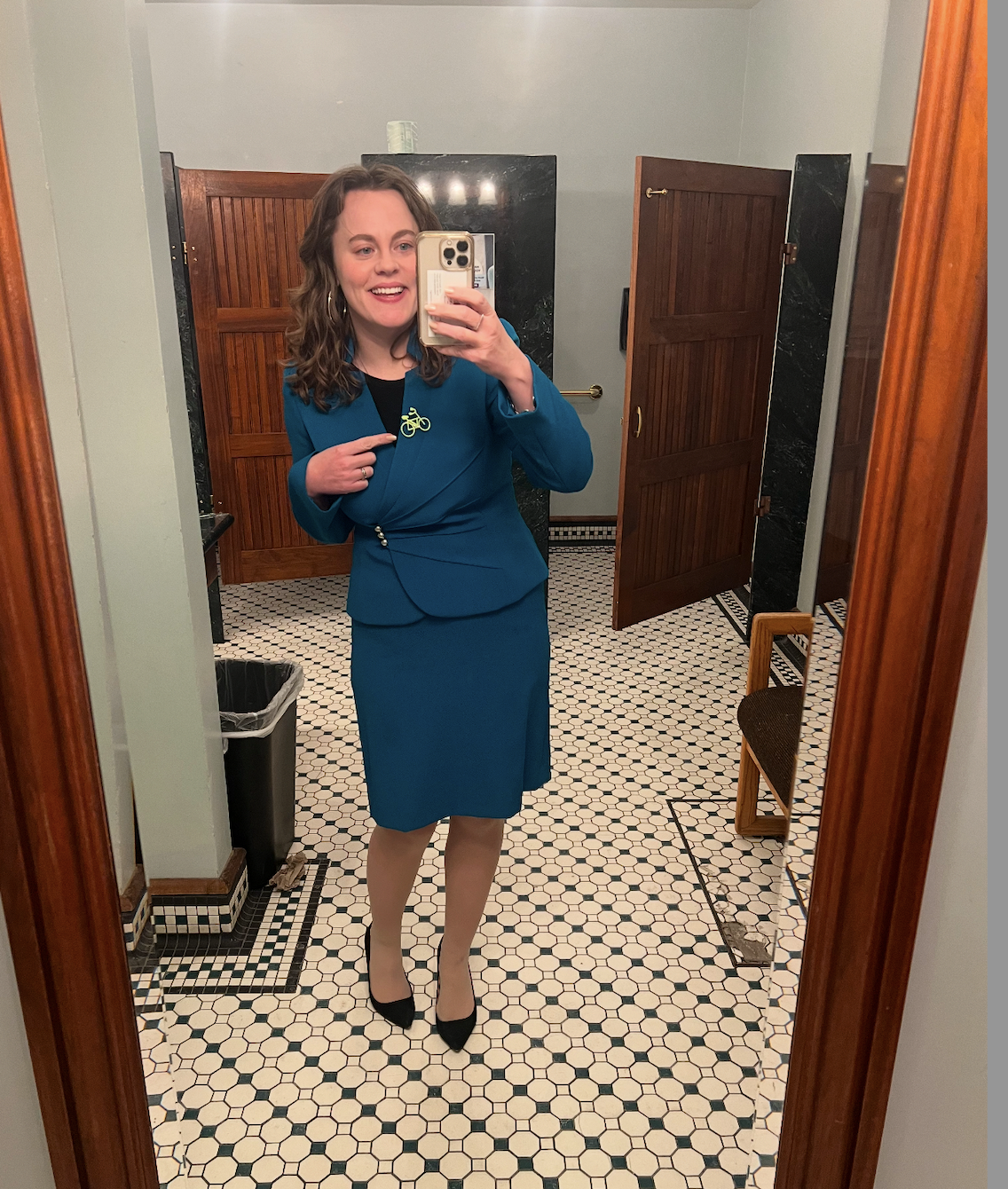
Fashion in politics can be about more than just clothing. It can also be a tool and a statement. No one knows this better than Senator Becca White (D-Windsor), one of Vermont’s youngest senators and the youngest woman ever elected to the Vermont State Senate. We caught up with her this week to ask about her Outfit of the Day posts (#OOTD), fashion as protest, and how her style has evolved over time.
Her popular OOTD posts started as a fun way to share her daily State House outfits on social media. It quickly became her most popular content. Posting her "outfit of the day" gave constituents a peek into daily life in Montpelier, but it also became a way to express her evolving role in politics.
"Looking back a few years, my fashion choices were mainly made for the purpose of feeling safe, trying to fit in," she told us. "Now that I have more authority and confidence in my skills as a politician, I feel my fashion choices can be bolder and show my personality more. I no longer worry about fitting in."
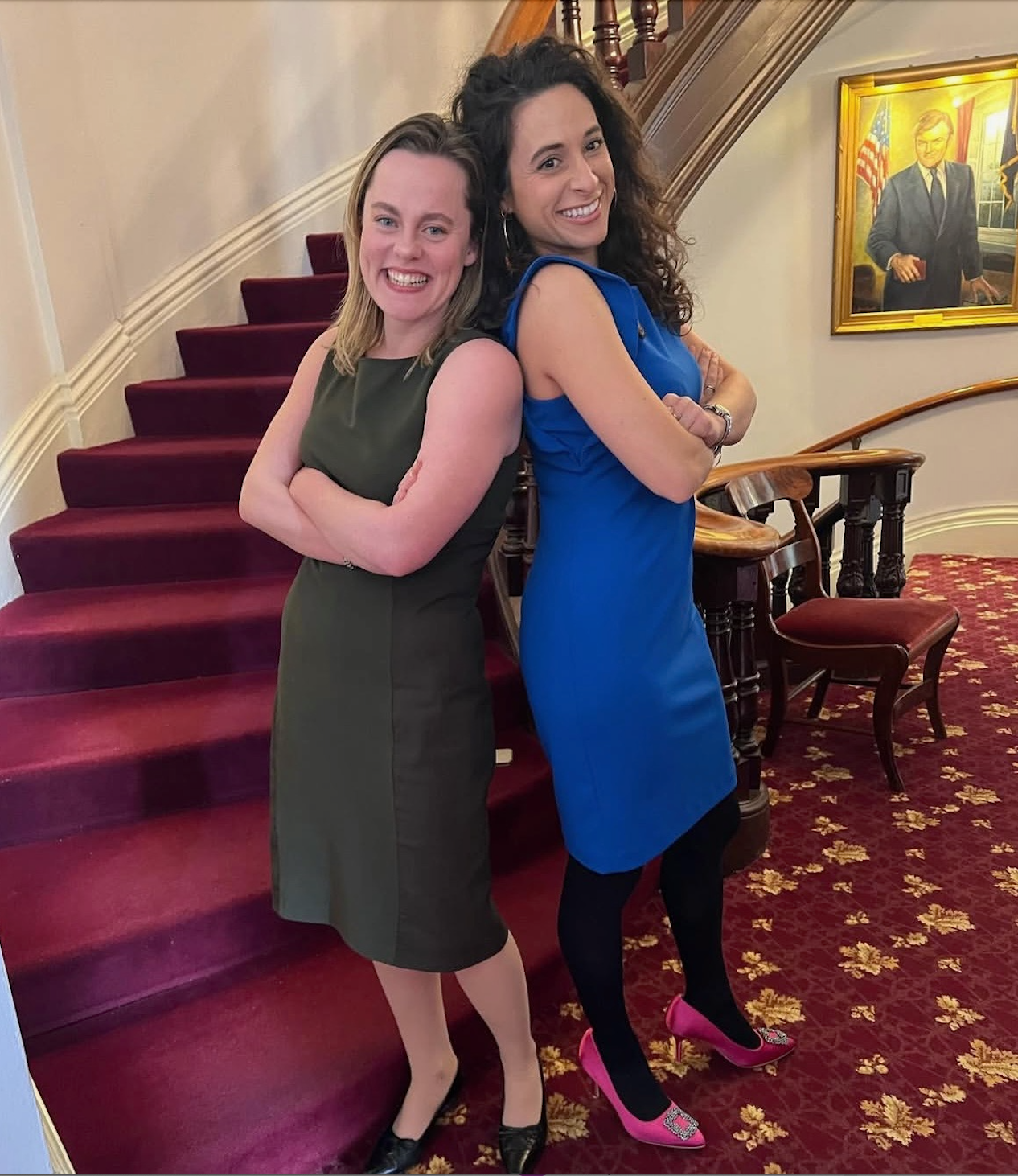
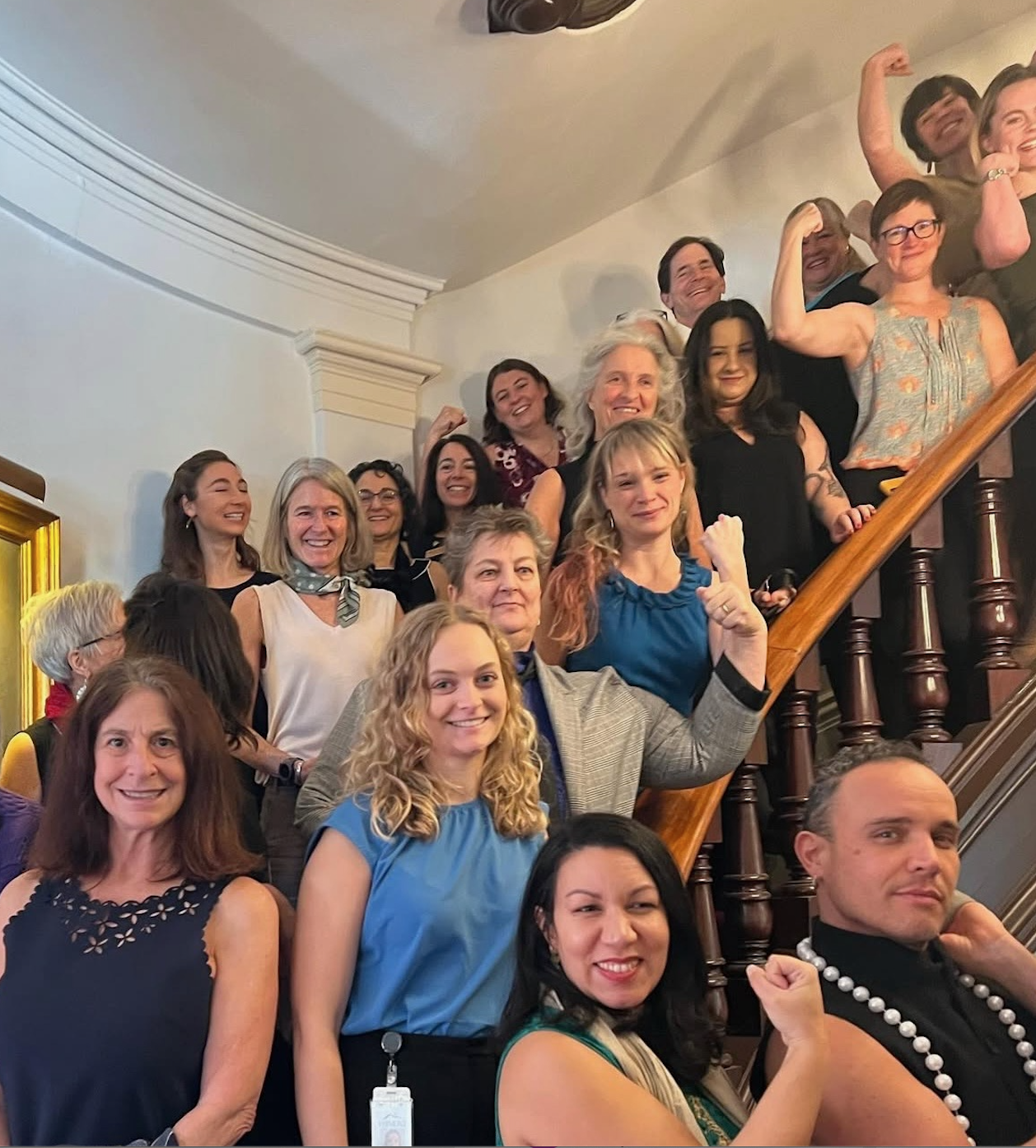
She is also interested in fashion as protest art. As reported by Sarah Mearhoff in VTDigger in 2023, when women in the Missouri Legislature were forced to adhere to a strict new dress code, Senator White and Representative Mary-Katherine Stone (D-Burlington) coordinated a show of solidarity against restrictive dress codes targeting women in politics. The protest encouraged many women in the Vermont Legislature to wear sleeveless clothing.
Sadly, but not surprisingly, when Senator White posted about it online, she was met with a flood of sexist backlash. Some of the real gems included comments like, "I think broads should go topless to protest! (If they are hot.)" She points to this as a clear example of the scrutiny and harassment women face over basically anything they do. "Your arms shouldn’t be a politically controversial thing to display as a woman in public."
There’s a (mostly) unspoken rule for women in politics: Look put together, but not vain. Be stylish, but not frivolous. Don’t be too young, too old, too feminine, too severe. The rules are impossible, and yet women are judged by them constantly. Senator White’s approach is refreshing, not just because she’s rejecting those outdated constraints, but because she’s making clear that how she presents herself is not for the approval of the political class, but for herself and the values she represents.
To support vital journalism, access our archives and get unique features like our award-winning profiles, Book of Lists & Business-to-Business Directory, subscribe HERE!