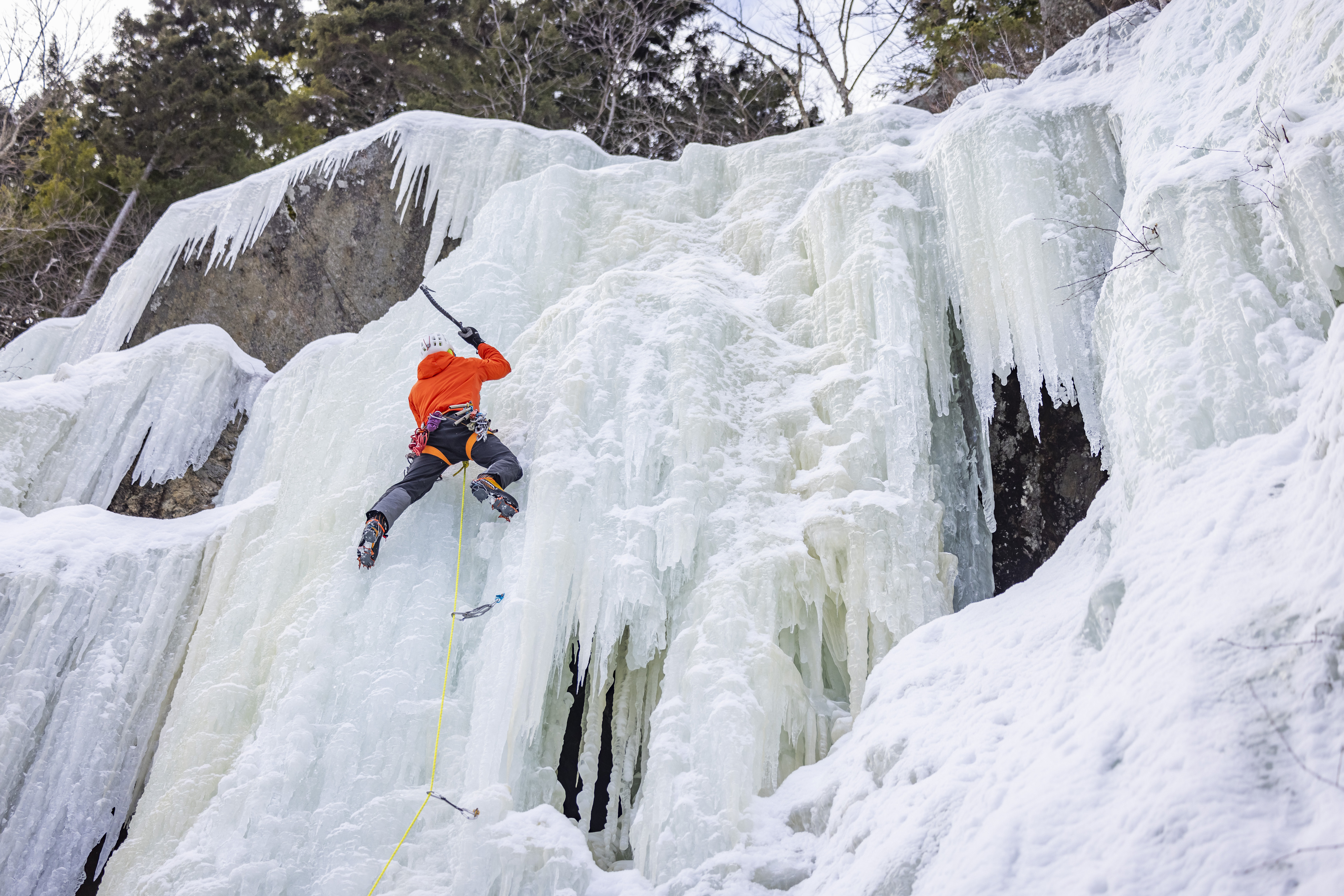
Vermont Business Magazine Two new studies led by Vermont State University (VTSU) faculty and students reveal that ice climbing in New Hampshire’s Mount Washington Valley contributes more than $6.2 million annually to the regional economy, supporting 36 jobs and generating $4.4 million in Gross Domestic Product (GDP).
The research, which includes The Mount Washington Valley Ice Climbing Study: Use Patterns, Demographics, and Economic Impacts and The Mount Washington Valley Ice Fest Survey Report, offers a detailed look at visitor demographics, spending patterns, and the broader economic significance of the sport in the Mount Washington Valley region.
The studies were conducted by Professor Dr. Ben Mirkin of VTSU Lyndon’s Outdoor Education, Leadership, and Tourism (OELT) Program, in collaboration with VTSU alumni Eleanor Weisman-Rowell, undergraduate research fellow Carson Zundel, Friends of the Ledges, and Dr. James Maples and Dr. Ryan Sharp of the University of Tennessee. Funding was provided in part by the Vermont State College System’sChancellor’s Innovation Fund and VTSU’s Office of Undergraduate Research and Graduate Professional Study’s summer 2025 program.
“This research underscores the vital role that outdoor recreation plays in rural economies,” said VTSU Professor Benjamin Mirkin, Ph.D., lead researcher on the studies. “Ice climbing is more than a niche sport—it’s a driver of tourism, a source of jobs, and a catalyst for community identity. The VSCS investment in student-led, community-driven research demonstrates a commitment to empowering undergraduates to shape real-world outcomes in the places they care about most.”
The Mount Washington Valley hosts nearly 12,000 ice climbing visits each season, with 85% of climbers traveling from outside the region. These visitors typically stay for three days, spending on lodging, dining, gear, and local services. Ice Fest, which just marked its 32nd year, attracted 750 participants from across the country and supported nearly $240,000 in regional GDP.
These findings arrive at a pivotal moment. Proposed changes to regional rail use could affect access to key climbing areas, making the data especially relevant to ongoing land use and infrastructure discussions. The research team hopes the results will support creative, collaborative solutions that balance recreation, conservation, and transportation needs.
Access Fund, the national advocacy organization for sustainable climbing access and conservation, sees the findings as a valuable tool for advancing their mission.
“This study clearly shows how key ice climbing is to the economy of the Mount Washington Valley, and affirms what climbers have always known – that it is critical to prioritize and protect ice climbing areas,” says Molly Mundy, Access Fund’s Northeast Regional Manager. “I’m looking forward to utilizing this study and drawing on the long history of success that Access Fund has had with similar studies across the country, to help improve access, and support both the community of climbers and the larger local community.”
The findings also offer valuable insights for local advocacy groups like Friends of the Ledges, a volunteer organization dedicated to preserving climbing access and heritage in the White Mountains. The group serves as a liaison between the climbing community and landowners, including the New Hampshire Division of Parks and Recreation and the U.S. Forest Service.
“This data offers an opportunity to reframe conversations with land managers and other key stakeholders,” shared Mike Morin, Board Member of Friends of the Ledges. “As a volunteer organization dedicated to preserving the climbing heritage of the White Mountains, we rely on credible research like this to advocate for sustainable access and responsible stewardship. These findings strengthen our conversations with land managers and other policy makers, while also offering key data points that we’ll be able to leverage when pursuing grants to cover the cost of access improvements or other management needs at winter climbing sites across the Mount Washington Valley.”
For VTSU undergraduate student researcher Carson Zundel, the research project was a defining academic experience. Now co-authoring a forthcoming academic paper with Professor Mirkin and recent graduate Eleanor Weisman-Rowell, Zundel reflected, “Working on this research helped me see how the skills we learn in the Outdoor Education, Leadership, and Tourism program apply directly to real challenges. It was a hands-on opportunity to contribute to something that matters to both climbers and local communities.”
VTSU’s OELT Adventure Education Program is the only university program in the country accredited by the American Mountain Guides Association. VTSU Lyndon also offers an industry leading Mountain Resort Management program, with specialized tracks in mountain operations and resort management. Through hands-on learning and community partnerships, the program prepares students to lead in the evolving outdoor recreation industry.
To learn more about VTSU’s OELT program, please visit: https://vermontstate.edu/academic-programs/outdoor-education-leadership-bs/
About Vermont State University
Vermont State University provides a high-quality, flexible, and affordable education for students seeking associate, bachelor’s, and master’s degrees, certificates, and in-demand professional credentials. The university builds upon a history of public higher education in Vermont dating back to 1787. Learn more at: https://vermontstate.edu
8.11.2025. Lyndonville, Vt. — Vermont State University
To support vital journalism, access our archives and get unique features like our award-winning profiles, Book of Lists & Business-to-Business Directory, subscribe HERE!