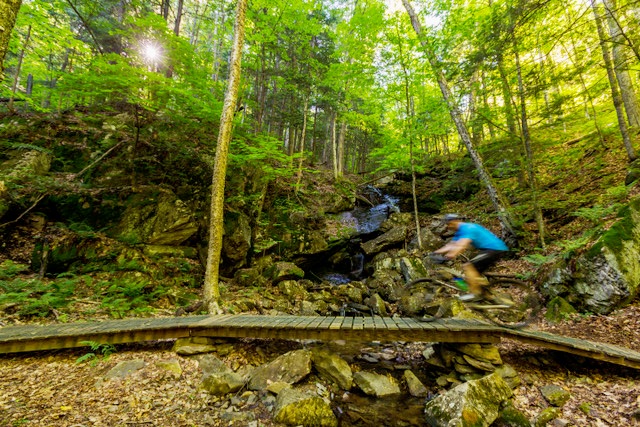
Vermont Business Magazine The “Economic Benefits of Mountain Biking" report was released this week by Trust for Public Land and the International Mountain Bicycling Association (IMBA). The report extols the virtues of the sport and of Vermont's Kingdom Trails. The East Burke-based organization gets much attention in the report as an international mountain bike tourism destination. According to the report, Kingdom Trails generates a $10.3 million economic boost locally by attracting 94,000 visitors each year who drop an average of $176 per day in the community.
The report is compilation and analysis of 50 recent studies and is designed to help communities and advocates better understand the opportunities and challenges around the creation, expansion and enhancement of their local trail systems.
Including:
- Mountain biking tourists spend an average of $416 per visit, contributing to local businesses like lodging, restaurants, and retail establishments
- Spending-per-visit varies by trail location and type, but ranged from just over $100 to over $1,000 per visit
- Mountain biking trails create employment opportunities: across the 13 locations included in the report, the trail networks generated up to 1,626 jobs and $54.1 million in labor income each year.
It’s also offers advice, like:
- How to understand the challenges of planning trails in rural communities
- What are the best practices for rural outdoor recreation planning
- What are the recommended actions to maximize benefits of mountain bike trails
- Who are potential community partners
- How to develop rural outdoor recreation economy support
And compiles a long list of case studies and economic impact results, including from:
- Alabama
- Colorado
- Maine
- Minnesota
- Montana
- South Dakota
- North Carolina
- New Hampshire
- Oregon
- Tennessee
- Utah
- Vermont
- Wisconsin
The report, part of the Trust for Public Land’s Green Paper Series, explores the economic impact of mountain biking, particularly in rural communities in the U.S. It emphasizes mountain biking's ability to boost local economies, improve community health, and enhance quality of life. These findings are based on extensive research conducted over the past decade.
Mountain biking offers rural communities the chance to diversify their economies, attract new residents, and enhance quality of life. Successful trail systems not only generate direct and indirect economic benefits but also foster social connection, physical health, and environmental stewardship. With thoughtful planning, strong stakeholder collaboration, and a commitment to inclusivity, communities can maximize the positive impacts of mountain biking for years to come.
Economic Contributions of Mountain Biking
Mountain biking contributes directly to local economies through tourism spending, employment opportunities, and business development. Indirectly, it benefits residents through increased property values, improved health outcomes, and enhanced community vibrancy. Along with the data on Kingdom Trails, the report notes that the average spending per mountain biking tourist is $416 per visit, with daily expenditures ranging from $103 (Duluth, MN) to $1,107 (Chequamegon, WI). Visitors spend on lodging, food, entertainment, transportation, biking gear, and other expenses, generating millions in local tax revenues and supporting thousands of jobs.
Special events like the Iceman Cometh Challenge in Michigan amplify these effects, bringing both participants and spectators who collectively spend millions in host communities.
The study identifies 13 U.S. destinations where mountain biking generates notable economic benefits, such as Coldwater, Alabama, Chattanooga, Tennessee, and the GMUG National Forests in Colorado. At the GMUG National Forests, mountain biking contributes $30 million annually, supports 315 jobs, and generates $9.9 million in labor income. Mountain biking events, such as races and festivals, also create significant economic impact. The Crankworx Whistler Festival in British Columbia generated $50.7 million in Canada, of which $29.6 million went to Whistler.
Challenges and Solutions
While mountain biking brings economic opportunities, rural communities face challenges in developing and managing trail systems. These challenges include securing suitable land, obtaining funding for construction and maintenance, addressing environmental impacts, and resolving conflicts between trail users, residents, and other stakeholders. Additionally, trail systems require careful planning to ensure they’re accessible and well-connected to local businesses and lodging.
Equitable access to mountain biking is a crucial consideration. The sport remains predominantly white, male, and affluent, with high costs potentially deterring new participants. Specialized equipment for adaptive mountain biking is necessary to ensure inclusivity for people with physical disabilities. Communities can mitigate these barriers through initiatives like rental programs, bike swaps, gear libraries, and subsidized programming for youth leagues.
Environmental preservation is another key aspect of trail development. Poorly designed trails can cause erosion, harm vegetation, and disturb wildlife. Engaging professional trail builders, employing sustainable design practices, and avoiding development in sensitive areas can reduce these impacts. Public involvement and communication during planning phases are essential to fostering trust and minimizing conflicts.
Broader Community Benefits
Mountain biking improves riders' physical and mental health, reducing long-term healthcare costs. It promotes cardiovascular health, reduces stress, and enhances mood and life satisfaction. In Northwest Arkansas, mountain biking trails are associated with $8.7 million in avoided healthcare costs annually.
Beyond personal benefits, mountain biking bolsters community cohesion and economic resilience. Trails boost local businesses, attract new residents, and provide recreational value to cyclists. In Vermont, businesses have used the sport as an employment recruitment tool.
Asheville, North Carolina, successfully transitioned from manufacturing to a tourism-driven economy, with businesses catering to outdoor enthusiasts. Similarly, Kingdom Trails in Vermont spurred the growth of local taverns, restaurants, and inns.
Access to mountain biking trails increases property values and supports workforce attraction and youth retention. Proximity to outdoor recreation is a significant factor for amenity migrants—individuals relocating to areas offering lifestyle benefits rather than job opportunities. This trend helps counter population decline in rural communities.
Best Practices for Trail Development
Communities looking to harness the economic benefits of mountain biking should adopt inclusive, well-planned approaches. Key recommendations include:
- Stakeholder Engagement: Collaborate with residents, advocacy groups, landowners, planners, and elected officials to ensure community buy-in.
- Infrastructure Connectivity: Connect trails to local assets like Main Streets, public transportation, and other recreational sites to increase accessibility and stimulate local business.
- Baseline Data Collection: Measure economic, demographic, and health conditions before trail development to evaluate outcomes effectively.
- Multi-Sector Partnerships: Work with local land trusts, nonprofits, and federal programs to secure funding and land access while reducing community costs.
- Trail Champions: Identify individuals or groups passionate about trail development to advocate and drive the process.
- Programming and Design: Offer inclusive programs and accessible trail designs to accommodate all demographics and abilities.
For the full report, see Economic Benefits of Mountain Biking
To support vital journalism, access our archives and get unique features like our award-winning profiles, Book of Lists & Business-to-Business Directory, subscribe HERE!