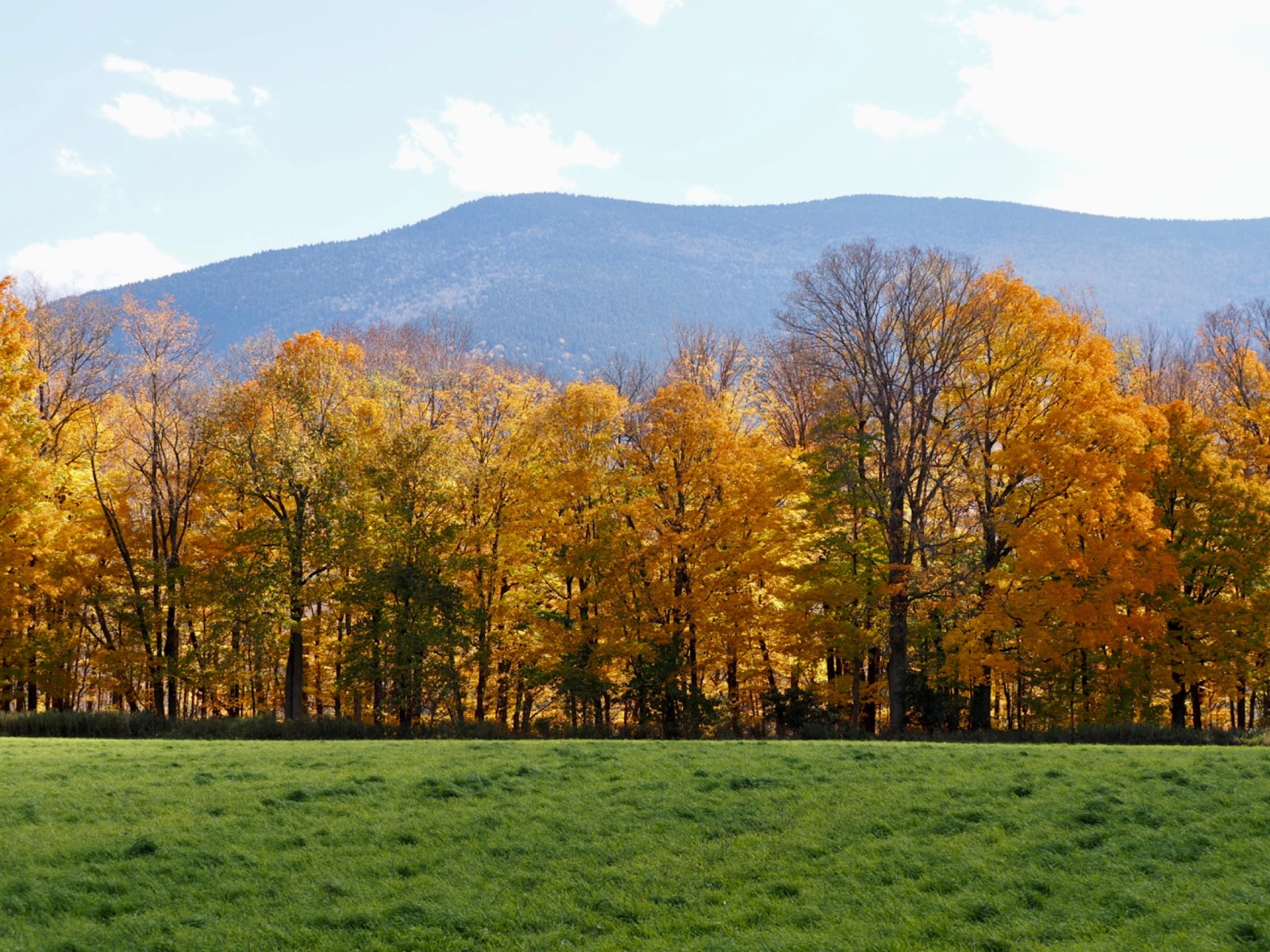
A view of Smokey House Center in Danby, Vermont
Advancing Resilience in Vermont’s Maple Syrup Industry
Vermont Business Magazine Smokey House Center has announced that it has been awarded a three-year grant totaling $500,000 through the U.S. Department of Agriculture’s Acer Access and Development Program. The program promotes the domestic maple syrup industry by funding research, education and sustainability initiatives related to maple syrup production, as well as marketing efforts for maple syrup and maple-sap products.
With the grant, Smokey House Center will launch its Climate Adaptive Maple Program, a groundbreaking research and education project designed to address the challenges facing the maple syrup industry in the context of climate change.
The program will investigate two critical questions: how do different climate-adaptive forest management strategies impact the long-term production and resilience of sugarbushes, and how do various sap extraction techniques affect the long-term ability of sugarbushes’ to respond to climate disturbances while maintaining syrup yields.
“Current sugarbush management guidelines are based on decades of data and experience. However, with recent changes in operational practices like increased sap extraction, single-species stand composition, lower stem densities, changing climate conditions, and increasing pressures from invasive pests, many producers are questioning whether current guidelines will still optimize short-term sugar production and long-term sustainability of their sugarbushes.” said Lee Allen, Emeritus C.A. Schenck Distinguished Professor of Forestry and Emeritus Director of the Forest Productivity Cooperative at NC State and partner on the Climate Adaptive Maple Program.
Despite the urgency, many producers are hesitant to adopt adaptive management practices due to concerns about potential short-term decreases in production and logistical challenges. This program aims to overcome these barriers by providing actionable insights and data, helping the industry adapt sustainably and thrive amid a changing climate.
“Because this project is on Smokey House Center’s property, which is under conservation easement, we envision being able to continue treatments and measurements for decades rather than years. The longevity will allow us to quantify the impacts of year-to-year variations in weather conditions on sugar maple growth, sap production, and seasonal carbon dynamics.” Allen added.
To conduct this research, two research and education sugarbushes totaling approximately 7,000 taps will be established on Smokey House Center’s property. The project will include distinct silvicultural treatments, each representing different approaches to sugarbush forest management. Additionally, four sap extraction techniques–high, medium, low and no extraction–will be tested. Monitoring sites will track a range of indicators, including annual starch levels in individual trees, sap production, sugar content, tree growth, and long-term stand health. These factors will be tracked each sap season, ultimately coalescing into a long-term study that will help producers better understand how to manage sugarbushes in the face of climate impacts.
The program will also serve as an educational resource for the region by offering annual field trainings and workshops for maple producers, foresters, and other industry professionals. An annual internship will further contribute by training local youth in these adaptive strategies, helping to develop the next generation of maple industry professionals.
“In addition to annual measurements of tree growth and sugar production, we will seek additional funds to quantify the seasonal dynamics of tree growth, foliage development and senescence, and carbohydrates production, use, and storage. This information will allow us to develop models that estimate the amount of ‘surplus’ carbohydrate that can be safely extracted from a stand each year while supporting the long-term sugar production, health and sustainability of a sugar bush.” said Allen.
Other partners on the project include Glenn Goodrich of Goodrich Maple Farm, who will design and install the tubing systems to meet both production and data collection objectives and a local syrup producer who will be brought in to maintain and collect sap from the sugarbushes. Tony D’Amato and Ali Kosiba from the University of Vermont Rubenstein School of Environment and Natural Resources, Joe Orefice from the Yale School of the Environment, and Peter Smallidge from Cornell’s Arnot Forest will all advise the direction of research for the project.
About Smokey House Center:
For the past fifty years, Smokey House Center has been successfully dedicated to its mission of maintaining a working landscape that promotes sustainable agricultural and forestry practices while engaging people in meaningful ways.
About Living Lab:
The Living Lab at Smokey House Center exists to conduct applied research and demonstration that focuses on better understanding the ecological, economic, and social impacts of farming and forestry. This work is approached through a collaborative lens that emphasizes the importance of long-term partnerships, cross-disciplinary collaboration, and bottom-up local capacity building. Research, education, and outreach efforts at the Living Lab aim to build ecological and economic resiliency into regional food and forest systems in a way that demonstrates global solutions while securing local community benefits. At the core of this approach is our dedication to continuing the legacy of hands-on learning and work opportunities for underserved youth that has been so central to Smokey House's mission since its genesis.
Sorce: Danby, VT—Smokey House Center
426 Danby Mountain Road Danby, VT 05739
To support vital journalism, access our archives and get unique features like our award-winning profiles, Book of Lists & Business-to-Business Directory, subscribe HERE!