VermontBiz Shelburne Farms Institute for Sustainable Schools has released Learning Locally, Transforming Globally, a free guide for educators that lays out a step-by-step process for shifting schools and communities toward sustainability. As the school year comes to an end, many teachers will be turning their attention to professional development opportunities in preparation for the coming school year. This resource offers a host of resources and ideas for educators interested in a sustainability approach to their teaching.
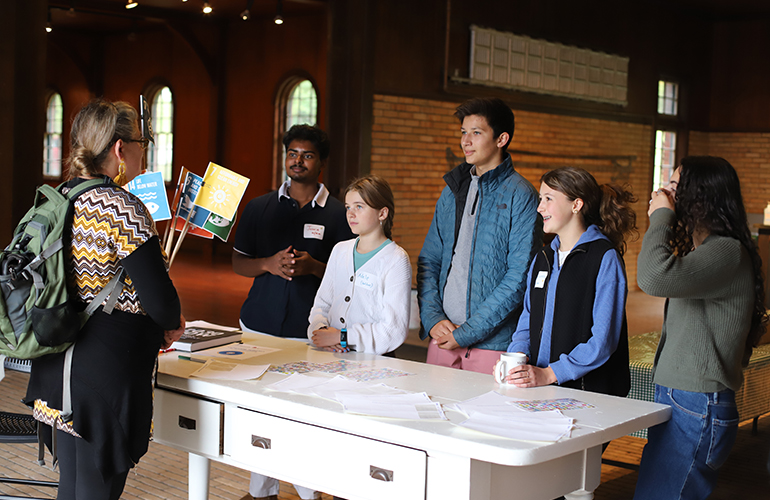
Photo: Cultivating pathways to sustainability. Courtesy photo.
“Learning Locally engages learners in making change on a local or regional level via a school or community action project,” explains Jen Cirillo, director of professional learning at Shelburne Farms Institute for Sustainable Schools, who adapted this publication in partnership with educators. “It’s an Education for Sustainability approach that is paired with the United Nations Sustainable Development Goals, so along the way, learners develop the sense of agency they will need throughout their lives to tackle the challenges we face as a global community.”
Students around the world have utilized the approach outlined in Learning Locally, Transforming Globally. Middle schoolers at the Kopila Valley School in Nepal’s Surkhet District wanted to address plastic pollution and trash burning in their rural community. They learned about the harmful effects of pollution; developed an educational campaign; researched alternatives to plastic; and created and distributed cloth shopping bags. And at Main Street Middle School in Montpelier, Vermont, youth and adults designed and launched a sustainability-focused class. In the class, students learn about issues like local agriculture, food insecurity, and food waste; act on what they learn with local partners; and communicate what they’ve learned to the community.
In 2015, the United Nations established 17 Sustainable Development Goals, which provide a blueprint toward sustainability by setting targets for economic, social, and ecological systems improvement with a deadline of 2030.
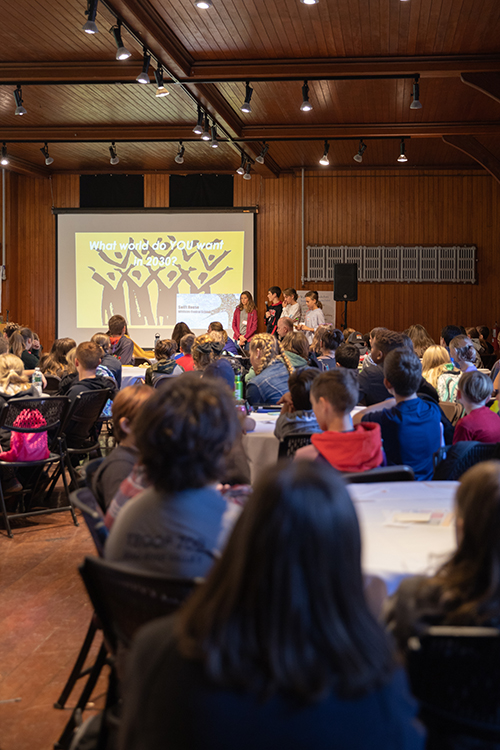
Photo: Cultivating pathways to sustainability. Courtesy photo.
“We’ve seen over and over again that by teaching children about the big ideas of sustainability with a focus on making local connections, we can truly change the world, one community at a time,” says Cirillo. “Tackling complex, global issues like climate change, poverty, food insecurity, and racial inequities can be overwhelming for young people. The Global Goals give young learners a place to start, and this resource provides educators with a roadmap.”
Studies have shown that an Education for Sustainability approach—with a focus on making community connections and generating local solutions—provides a myriad of benefits: increased student achievement and engagement, re-energized educators, improved school culture, even positive impacts on air and water quality and reduced energy use and waste.
The Shelburne Farms Institute for Sustainable Schools is a hub for professional learning programs and resources for preK-12 educators. All offerings prepare educators to facilitate learning experiences for students using a lens of sustainability.
Learning Locally, Transforming Globally is designed for K–12 educators in formal and informal education settings. Download the PDF at no cost or order a spiral-bound copy.
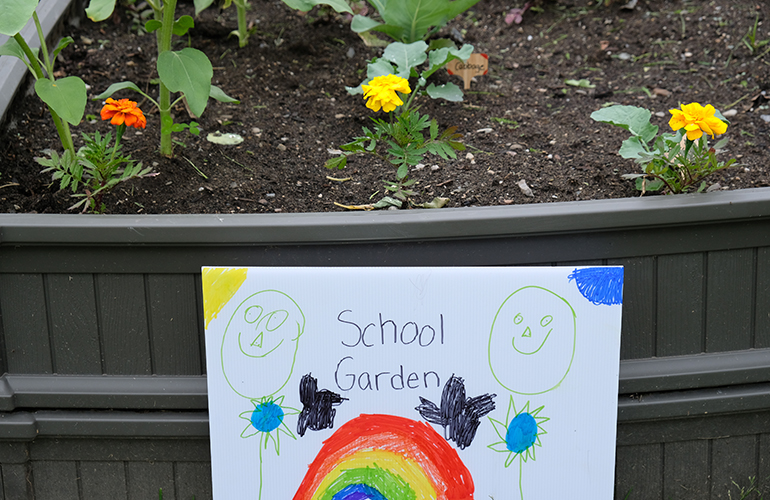
Photo: Cultivating pathways to sustainability. Courtesy photo.
To support great journalism, access our archives and get unique features like our award-winning profiles, subscribe HERE!