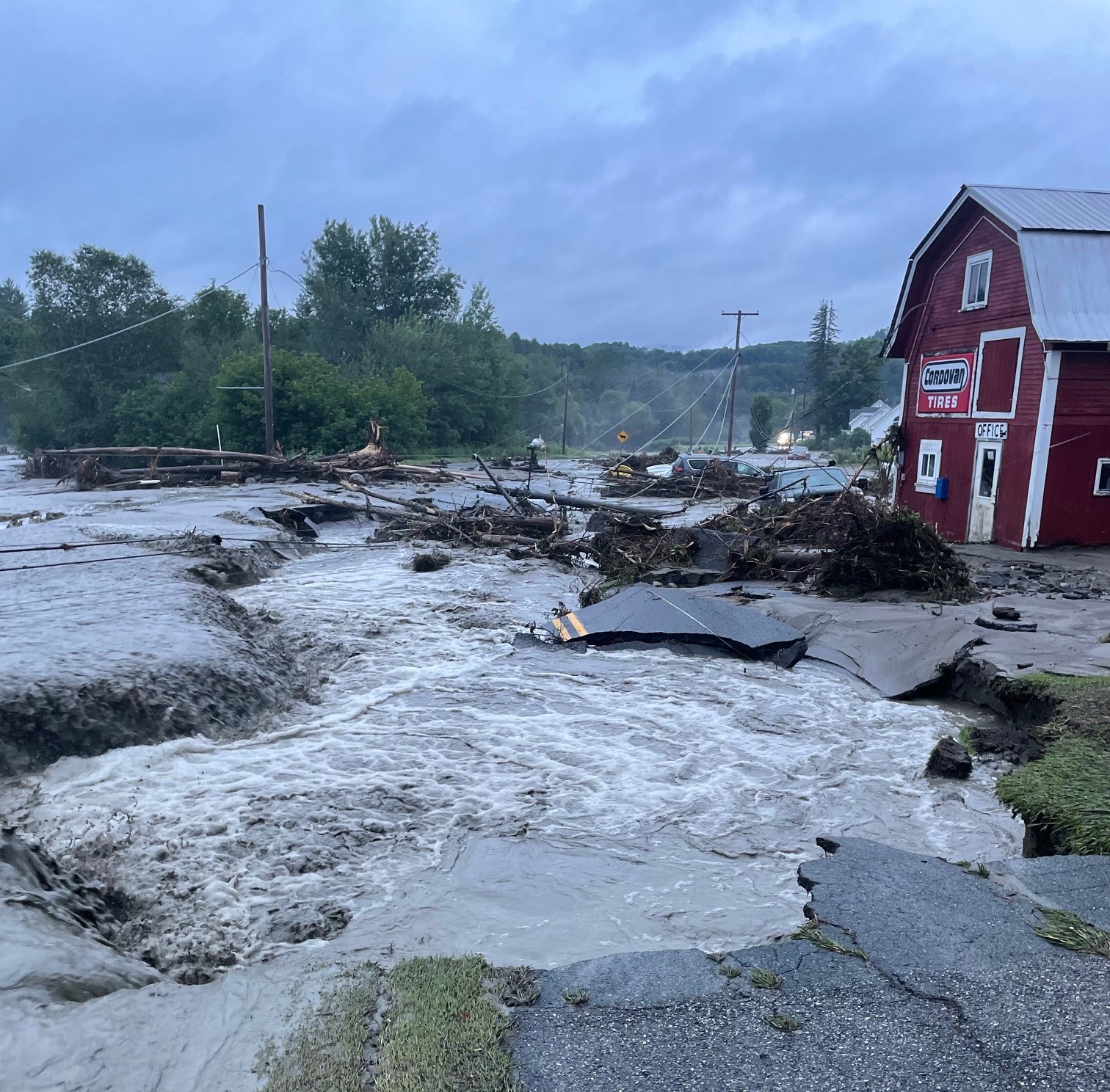
Vermont Agency of Transportation photo from the Northeast Kingdom July 30, 2024.
Vermont Business Magazine Grassroots groups on the front lines of flood relief will gather at the State House Thursday morning to share demands for state-level action towards a just recovery. Speakers will address the relationship between flooding impacts and ongoing climate and housing crises, and present the People’s Demands for a Just Recovery from Flooding, available here and signed by organizations across Vermont.
Who
Representative from Northeast Kingdom Organizing (NEKO)
Michelle Eddleman McCormick, Cooperation Vermont
Amy Lester, Vermont Workers’ Center
Lena Greenberg, Community Resilience Organizations (CROs)
Further speakers to be determined
When
Thursday, August 1 at 9:30am
115 State Street, State House steps
Montpelier
The People’s Demands for a Just Flood Recovery
Grassroots organizations and community mutual aid groups are the first to mobilize when disaster strikes—drawing on relationships, local knowledge, and that combination of grit and care that makes us Vermonters. In a time of ever-unfolding disaster, we recognize the need to balance short term needs and long term transformation.
As informed by our identities, lived experiences, and expertise, we demand that the State of Vermont deliver on key pillars of a just recovery—recovery that goes beyond repairing flood damage to address underlying inequity. Investing in this work will not only make it possible to rebuild from now-recurring flooding, but will set our communities up for a safe, thriving future as the climate crisis continues to unfold.
Housing
Create anti-displacement policies and local emergency housing plans
Vermonters have the right to remain in their towns and neighborhoods as the changing climate increases the frequency of disasters and the loss of housing for poor and working class people. Avoiding displacement increases resilience, health, and capacity of small towns. Create local emergency housing plans that guarantee people will not be displaced in disasters, and enact policies that protect people from unjust removal from their homes.
Invest in housing construction and repair
Build affordable, climate resilient housing for current and future Vermonters. New housing development will offset loss of flood-impacted buildings and tax base. Tax high earners and second-homeowners and invest in workforce development that can shorten wait lists for housing repair programs.
Administration
Appoint staff to support local emergency preparedness and response
Create permanent positions to respond to the needs of Vermonters impacted by climate-fueled disasters like flooding, landslides, heat waves, and more. Add state-supported capacity to implement all stages and functions of climate disaster response, tailored to meet the specific needs of our state’s rural population, and available to support volunteer emergency responders.
Invest in emergency management and planning systems
Connect towns with federal funding sources that can be used for emergency planning, such as Municipal Technical Assistance Program and Community Development Block Grant funds. Support the Vermont Voluntary Organizations in Active Disaster affiliate to more effectively coordinate volunteers throughout the state. Create innovative funding mechanisms for farms, businesses, and individuals to provide immediate support after climate disaster.
Climate adaptation
Ecological restoration of floodplain and management of river corridors
Develop watershed-wide river management and ecosystem restoration plans that account for and minimize flood impacts. Adjust statewide development standards and incentives to prevent new building in floodplains, and incentivize climate-resilient construction. Buy out homeowners who are willing to move.
Investment in infrastructure that will withstand climate disaster
Ensure all new infrastructure is built to withstand flooding and other climate disasters. Invest in roads, wastewater treatment, water systems, and food infrastructure that is reliable under climate stressors and ensures people can meet basic needs during crisis.
The undersigned organizations support this call for a just recovery from flooding:
ACLU of Vermont
Addison County Relocalization Network (ACORN)
Calabash Gardens
Community Resilience Organizations (CROs)
Community Resilience for the Waterbury Area (CReW)
Cooperation Vermont
Cooperation Vermont Community Land Trust
Dad Guild
EmpowR Transformation
Every Town VT
FreeHer
Kingdom United Resilience & Recovery Effort
Northeast Kingdom Organizing (NEKO)
NOFA-Vermont
Rights and Democracy VT (RAD)
Rural Vermont
Tamarack Hollow Farm
United Way of Lamoille County
Vermont Racial Justice Alliance
Vermont Releaf Collective
Vermont River Conservancy
Vermont Village School
Vermont Workers’ Center
Waterbury Area Anti-Racism Coalition (WAARC)
Source: Community Resilience Organizations CROs
To support great journalism, access our archives and get unique features like our award-winning profiles, Book of Lists & Business-to-Business Directory, subscribe HERE!