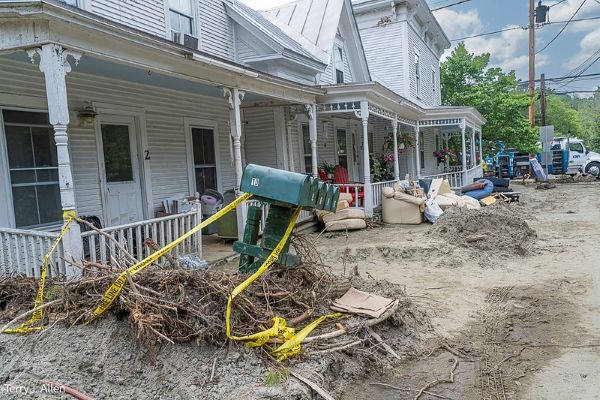
ACCD photo.
Agency of Natural Resources As our communities continue the hard work of digging out, assessing the damage, and rebuilding after the most recent flooding, the Agency of Natural Resources encourages communities, homeowners, and businesses to leverage available resources and information to help them recover.
For Homeowners and Businesses
Cleaning Up After the Flood:
· Flood Trash Guidance: safety precautions and how to separate out hazardous materials.
· Hazardous Spills: call 802-828-1138 to report a spill or to ask for help pumping out contaminated water from your basement.
· River Recovery Work: learn how towns can implement Emergency Protective Measures for river work.
Reporting the Damage:
· Contact 211 by phone or visit 211 online.
· Contact your insurance company.
Beginning Repairs:
· Document the damage by taking photos and making a list.
· Keep receipts for labor and materials.
· Talk with your town Zoning Administrator to ask for guidance on repairs that may need permitting and for help determining FEMA base flood elevations.
Making Your Home or Business More Flood Resilient:
· Find National Flood Insurance Program information for flood-damaged communities.
· Elevate or relocate utilities (such as furnaces, heating systems, or electrical systems) that you replace or repair.
· Use flood-resistant materials that will not be damaged by future weather events.
· If your home heating fuel tank was flood-impacted, follow Aboveground Storage Tank guidelines.
For National Flood Insurance Program Communities
- Assess flood-damaged buildings for Substantial Damage.
- Track post-flood repairs for buildings in FEMA Special Flood Hazard Areas.
- Permit post-flood repairs according to local zoning rules or Flood Hazard Area Regulations.
- Learn more about post-flooding resources for NFIP Communities.
- Learn more about how DEC can help communities be flood ready.
The Environmental Assistance Office is here to answer your questions. Contact the office Monday through Friday from 8:00 am to 4:30 pm at 802-477-2241 or by email at [email protected].
By prioritizing safety and responsible environmental practices, together we can become more resilient and ensure the well-being of all Vermonters.
Report Damages to Vermont 211 – https://vermont211.org/
Volunteer for Storm Recovery – vermont.gov/volunteer
Donate to Flood Response – https://bgs.vermont.gov/flood-response-donations
Visit a State Flood Recovery Center – https://vem.vermont.gov/flood/recovery-center
State of Vermont – https://www.vermont.gov/flood
Vermont Department of Health – healthvermont.gov/flood
Agency of Natural Resources – anr.vermont.gov/flood
Agency of Agriculture – agriculture.vermont.gov/flood
Department of Mental Health – mentalhealth.vermont.gov/flood
Department of Labor – labor.vermont.gov/flood-safety-resources
Vermont Agency of Natural Resources. 1 National Life Drive, Davis 2, Montpelier, VT 05620-3901 Website
Vermonters, businesses, and communities impacted by the July 2024 flood should report damage to Vermont 211. Find resources, guidance and referral information at vermont.gov/Flood. Volunteer to help or donate to the Vermont Flood Response & Recovery Fund to support all those impacted.
To support great journalism, access our archives and get unique features like our award-winning profiles, Book of Lists & Business-to-Business Directory, subscribe HERE!