Coupled with elimination of education property tax, reforms to school funding and healthcare could bring widespread relief to Vermont’s middle class
Vermont Business Magazine In a report released today by the state’s healthcare regulators, Vermonters could have saved over $400 million in hospital costs over the last five years if a reform known as reference-based pricing had been in effect.
The Green Mountain Care Board’s study of the pricing standard – in which the cost of hospital procedures would have been capped at twice the Medicare reimbursement rate – shows that hospitals in Vermont charge educators three times the Medicare rate and state employees nearly as much. Should Vermont adopt reference-based pricing, annual savings for state employees and educators alone could total nearly $80 million a year.
GMCB Executive Summary
In 2023, the Vermont State Employees’ Health Benefit Plan (VSEA) and the Vermont Education Health Initiative (VEHI) requested legislative support to generate savings estimates had reference-based pricing (RBP) been implemented for Vermont hospital services provided to their members; this resulted in Act 113 of 2024, Sec. E.345.2 (a). Language was also added in Sec. E.345.2 (b) that tasks the Green Mountain Care Board with making “any recommendations for legislative action” and “identifying the other aspects of Vermont’s health care system that likely would be affected by the use of reference-based pricing.” The study analyzes commercial medical claims covering inpatient and outpatient hospital services from 2018 through the third quarter of 2023, and findings indicate significant opportunity for cost savings.
Key findings:
• Vermont hospital payments for VSEA and VEHI members averaged 289% of Medicare rates during the study period. Adjusting these payments to 200% of Medicare could have saved the VSEA/VEHI health plans approximately $400 million during the study period, with $79 million of savings estimated in 2022.
• Outpatient services accounted for the majority of estimated savings ($321 million), with the remainder from inpatient services ($78 million).
• Critical Access Hospitals (CAH) and Prospective Payment System (PPS) hospitals showed varying impacts, with most savings occurring at PPS hospitals.
• VEHI and VSEA collectively represent approximately 59,000 beneficiaries.
Commercial prices at some Vermont hospitals are high, and moving to reference-based pricing could mitigate the need for ongoing large tax increases and protect the affordability of healthcare for Vermont teachers and State employees. Moreover, reference-based pricing could protect the solvency of the VSEA and VEHI and the richness of benefits offered. At the same time, Vermont hospitals are experiencing financial strain and if reference-based pricing is pursued the State should do so in a manner consistent with ensuring healthcare access and quality in our communities and to ensure hospitals receive fair and adequate compensation.
The unions representing educators and state employees have long supported reference-based pricing, and this study shows why.
“We know that certain hospitals in Vermont charge more than they should be charging, and all Vermonters pay the price,” said Don Tinney, a high school English teacher who is the elected president of the 13,000-member Vermont-NEA. “Adopting reference-based pricing for state employees and educators makes sense and is a first step in fundamentally reforming our healthcare system.”
In total, healthcare plans for state employees and educators cover 59,000 working Vermonters and their families.
"If State officials and lawmakers are serious about addressing Vermont's ballooning health care costs, the Vermont State Employees Association, like Vermont-NEA, strongly supports them adopting reference-based pricing as a meaningful way to begin," said VSEA President Aimee Bertrand. "All too often, state employee contract negotiations get bogged down by fights over how to pay for rising health care costs. Reference-based pricing would help ease these discussions and remove a huge roadblock to productive contract negotiations.”
She added, "VSEA has already begun educating our members and retirees about reference-based pricing, and we will be enlisting their support to get it adopted as soon as is possible."
Both unions acknowledge that Vermont hospitals provide essential care. Hospitals should be paid a fair price that allows them to provide high quality services while also keeping care affordable for patients and taxpayers. They should not be allowed to continue charging excessive rates for their services, according to the unions.
In other states where the standard has been adopted, the cost savings have been significant and have not had an adverse effect on the financial health of hospitals.
“Middle class Vermonters have been squeezed recently, particularly with outdated approaches to school funding and healthcare spending,” Tinney said. “That is why we are pleased with today’s report that shows implementing reference-based pricing for the two largest pools of public sector employees will bring real relief to Vermonters.”
Last month, the educators’ union proposed eliminating the residential property tax and funding our public schools with an education income tax. Such an approach will bring immediate relief to more than 50,000 middle-class Vermonters while ensuring the state’s wealthiest begin to pay their fair share.
“Taken together, these two approaches will benefit not just our members, but all middle-class Vermonters,” Tinney said. “As a union, we are proud to be on the forefront of these efforts to save Vermonters – all Vermonters – money.”
Primary health insurance types that cover Vermonters include Medicaid (150K people), Medicare (130K) and private health insurance (304K) in 2021. The cohort of VSEA/VEHI beneficiaries in the pricing study includes 59K people (teachers and school staff, state employees, and their dependents combined). There is little change over time in beneficiary counts across the years included in the study.
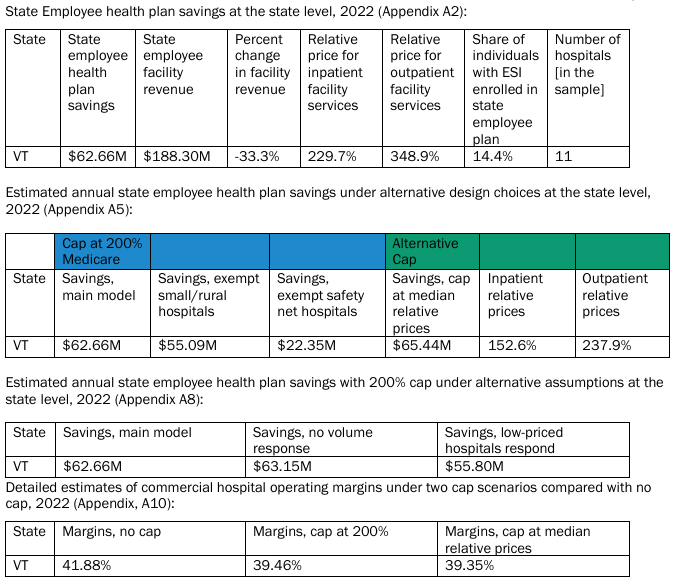
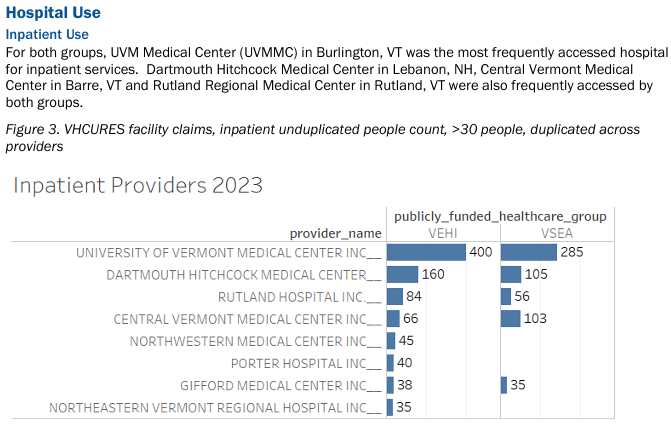
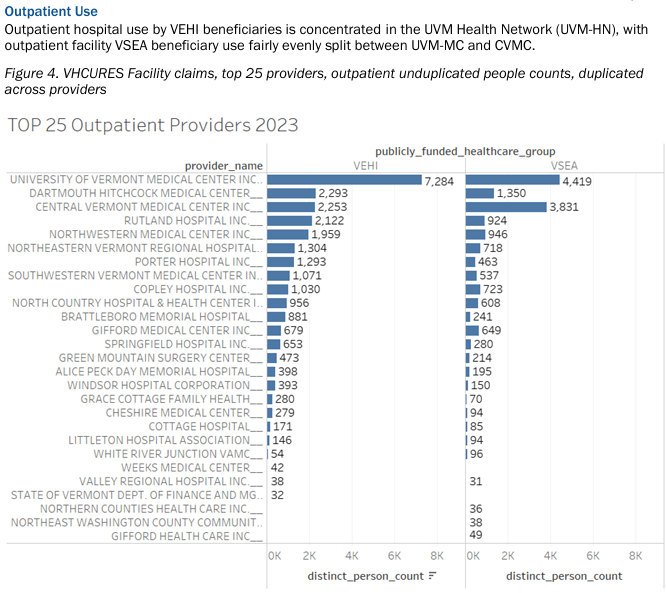
Charts: GMCB Report
GMCB recommends readers review the full report to understand its findings on benefits and arguments raised in response to proposed use of reference-based pricing,33 GMCB further recommends readers consider potential concerns and unintended consequences discussed in the American Hospital Association (AHA) Fact Sheet on Reference-based Pricing.
A copy of the care board’s report can be found here.
Source: 12.17.2024. MONTPELIER – Vermont-NEA. GMCB.
To support vital journalism, access our archives and get unique features like our award-winning profiles, Book of Lists & Business-to-Business Directory, subscribe HERE!