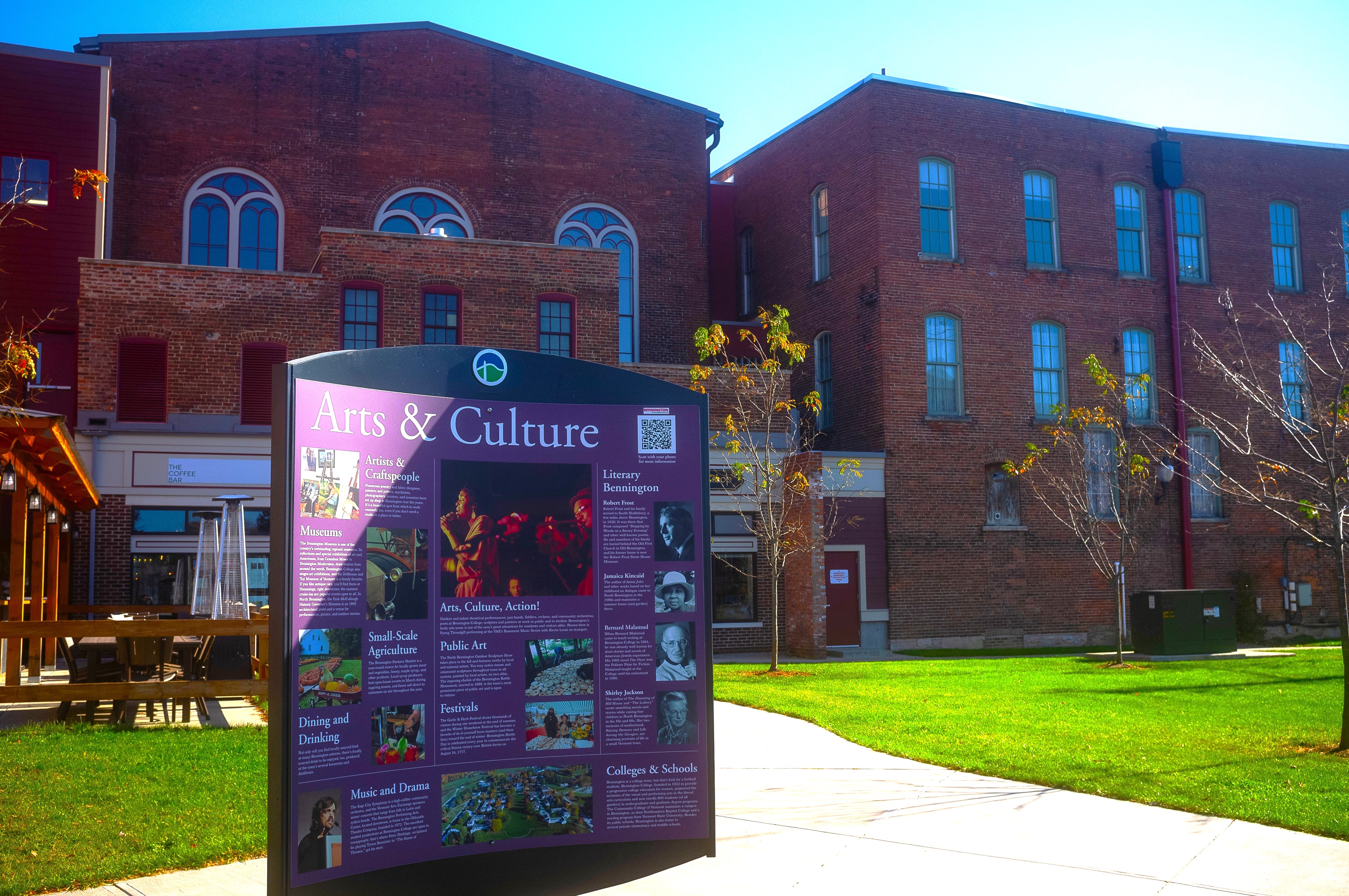
Placemaking through the Putnam Block outdoor gathering space was a key part of the redevelopment plan. Photos by Maia Segura
by Maia Segura, Vermont Business Magazine Jonathan Cooper, Community & Economic Development Program Manager for Bennington County Regional Commission will tell you, “Economic development requires optimism by nature.” The recently revitalized Putnam Block, pulsing at the heart of downtown, represents just one reason for Cooper to be optimistic about post-pandemic Bennington.
Built as Hotel Putnam in 1870, the property anchored the downtown business district for a century before falling on hard times. By the late 1970’s, upper floors were abandoned and struggling businesses revolved below. By the time Cooper moved to Bennington in 2016, he said, “The quietness of the Putnam Block was deafening.”
That same year, the newly formed Bennington Redevelopment Group LLC (BRG) bought a four-acre parcel for $2 million including the hotel, old courthouse, Winslow Building, and three additional buildings which were ultimately demolished. The initial eight partners represented investment from a span of community interests including business leaders, institutions, and private investors. Their vision was to redevelop the block offering retail, services, residential, and outdoor gathering spaces to help make downtown Bennington a compelling place to live, work, and play.
“One of the really valuable things about the Bennington Redevelopment Group is that the entities that made the Putnam Block happen weren’t only traditional real estate developers,” said Cooper. “There were leaders from healthcare, the Bank of Bennington, and colleges, all of whom recognize that their continued success relies on the ability to attract talent, which can be difficult to do.”
To get through the three-phase plan for redevelopment, BRG needed more partners, and a dizzying array of financial resources. In fact, twenty-one stacked funding sources included New Market tax credits; EPA Brownfields, historic preservation, and block grants; VT economic development support; private and community banks; and the Town of Bennington Revolving Fund, among others.
“The [BRG partners] were incredibly patient... You have to get a group of people to agree, to hold fast, and to row in the same direction. That was hard. It took a lot of discipline and self-control,” said Cooper. “And lo and behold, the Opportunity Funds opened up. In so doing, everybody had a full stock of resilience…just in time for the pandemic.”
Ground broke in August 2019. After numerous pandemic-related delays, the Putnam Block reopened in September 2021 with new businesses below and thirty-one mixed income apartments above at 100% capacity and sporting a waiting list. According to residential property manager Ed Gulley, inhabitants range from young professionals with kids and dogs to retired octogenarians and a Pulitzer Prize winner. Bennington College Master of Fine Arts students also occupy a block of apartments held by the college.
One resident, John Staley, waited decades to move in. He said as he passed the Putnam Block in the 1970’s he thought, “Wow. I want to live there some day.” Fast forward to October 2020 when Staley and his wife Patti rolled through town on a foliage tour. “We saw the construction fence and for lease signs and called the agent. After breakfast, we went to his office and signed a lease. I think we were the first tenants,” said Staley. “I am 81. We [just] celebrated Patti's 91st birthday. We both are enchanted with The Putnam. There are no drawbacks. We love every piece of our life here.”
Businesses in the Putnam Block currently comprise The Coffee Bar buzzing with workers tapping into Wi-Fi, Bespoke Salon Suite, The Gift Garden’s Holiday Cottage which is busy all year long, and the Bennington Book Shop relocated from Main Street. Union South, sister to Manchester’s Union Underground, is a 100-seat restaurant open late seven days a week. A large restaurant closing much past 9:00 pm seemed like a radical idea for some.
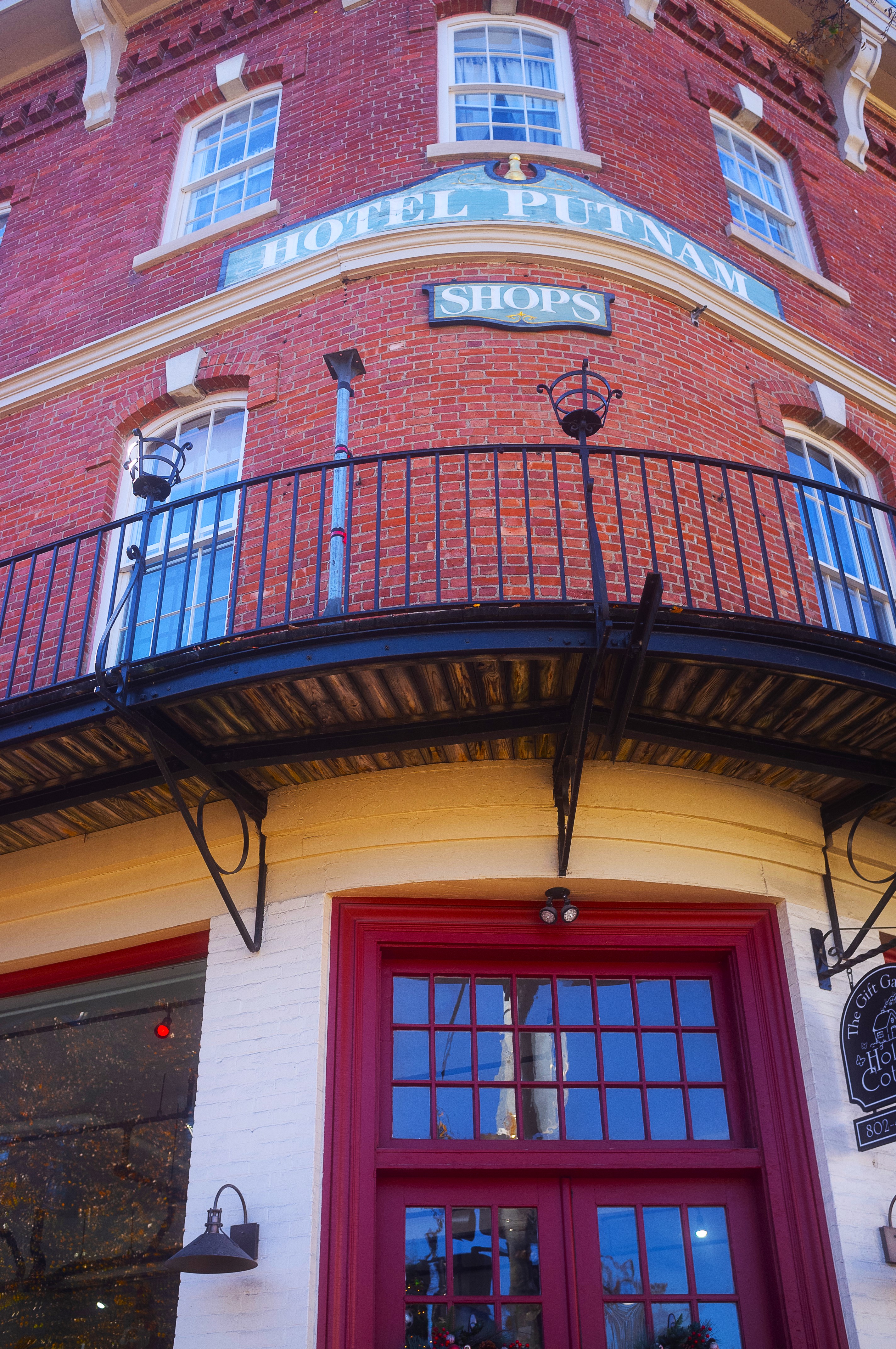
According to Jonathan Cooper, local business owners say that they are inspired seeing lights on in the upper stories of the Putnam Hotel for the first time in their lifetimes.
“An 11:00 pm closing time for a lot of Vermont is as bold as it gets,” said Cooper. “Union South was a sort of swing for the fences. The question was, ‘Can Bennington support a 100-seat restaurant?’ And the answer so far is yes it can. Which is really exciting.”
As the Putnam Block came alive, it became a literal beacon for new businesses during the pandemic. “For local business owners to look outside at nighttime and see life in those windows was kind of striking,” said Cooper.
Across the street, Farm Road Brewing is one of several new upscale downtown establishments that opened during the pandemic. According to manager and assistant brewer Erin Miller, “It worked out being a new business because we had to be at half capacity for the [Covid] guidelines. But as soon as those started rolling back, we were very busy. We have been able to come online at the same pace.”
Another advantage, said Miller, was the activation of Merchants Park behind the brewery drawing local crowds for a free “Thursday Night Live” concert series. Produced by Better Bennington with public and private support, the series brings diverse entertainment to the community, paying artists to perform, and welcoming vendors who had lost traditional sales channels during the pandemic. “As you can imagine with open air events, people drove past. They stopped and pulled in to park. Then people started dancing,” said Cooper. “It's that kind of small town perfect – but not too small.”
While Farm Road Brewing and other new entities may appear to appeal to an upscale crowd and more recent arrivals, other startups are seeking a market of more traditional locals. Philly’s Taste of Philadelphia opened in July with lines regularly out the door and up to an hour wait. The third location of a chain headquartered in Norwalk, CT, the place offers cheesesteaks, nachos, fries, chicken wings, and salads. “We were startled by the love when we first opened,” said manager Ronald “Fox” Smith, “and people’s willingness to wait in line.”
Cooper attributes the success of the restaurant to several factors: the high quality of the fare, the ability to park and sit down to enjoy a meal, and filling a niche that some higher end establishments do not. Despite a sense of gentrification, most folks of working age in Bennington earn between $30,000 and $60,000 per year and may be less interested in frequenting more upscale establishments. “I think it’s absolutely the case that the majority of people in Bennington – and in the world – are not pinkies-out,” he said.
“It’s interesting speaking with people that have been here who can recall a time when you finished high school at Mount Anthony and you got a job with Johnson Controls. You had a middle-class life and could afford a house with that,” said Cooper. “I have to respect that sense of loss, knowing that's no longer the way it works.”
The challenge, says Cooper, is trying to realistically acknowledge these economic and culture shifts while finding an optimistic way through. “We need to ask, ‘What are things that we can control?’ We can control being a welcoming place. We can control helping business owners. And Bennington can control some of its own self-image,” he said. “We need to tell the story in a way that's mindful of who gets to celebrate this with us.”
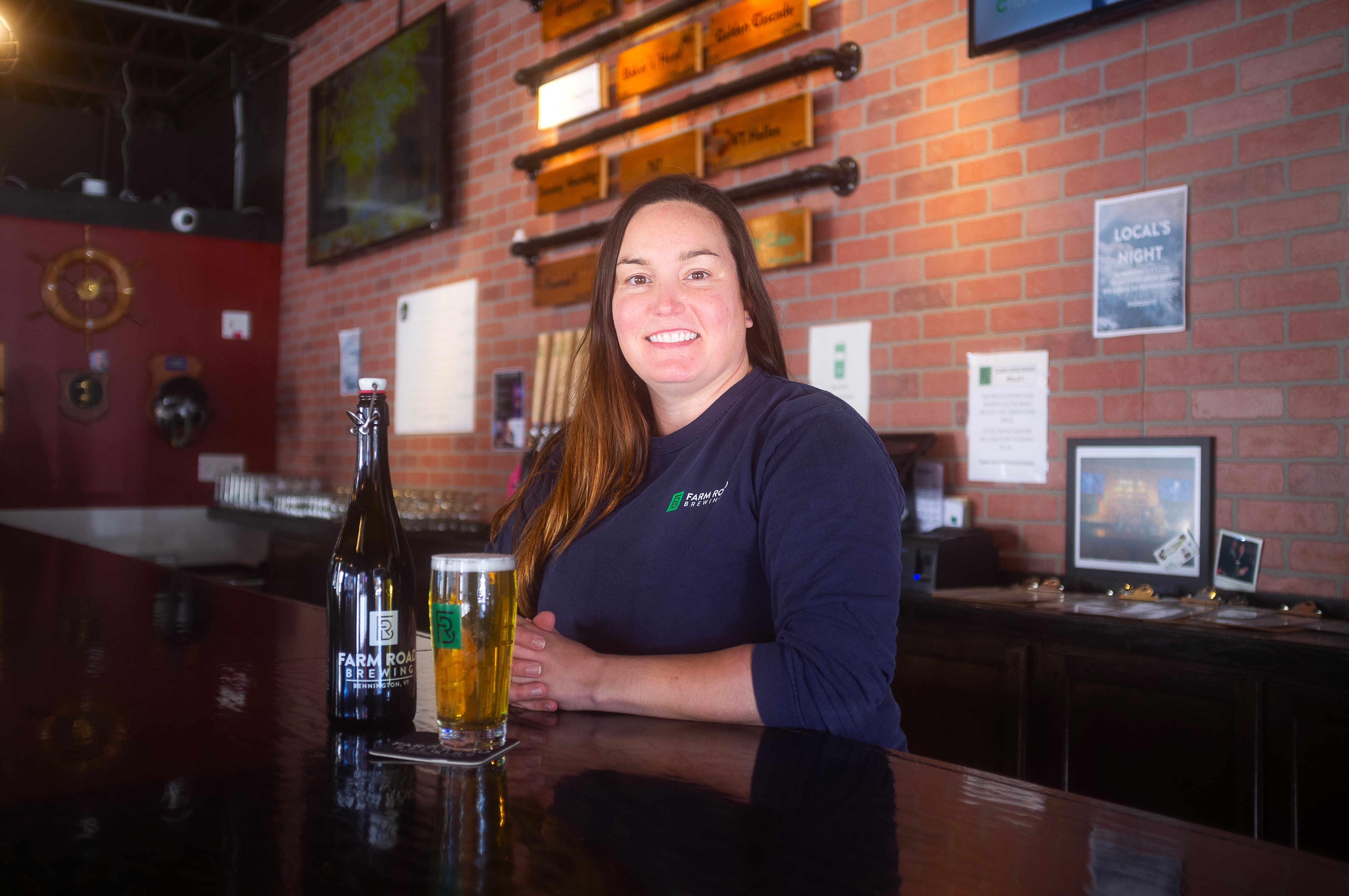
Farm Road Brewery manager and assistant brewer Erin Miller.
One way to do that, said Cooper, is to engage everyone possible in the conversation and include the needs of the full community in planning, participation, and celebration. Local efforts inviting local students to design downtown banners, collaborative partnerships taking aim at meeting critical job training and housing needs, and helping small businesses connect with vital resources, all lean into the kind of inclusiveness necessary for success.
“The pandemic meant that all of a sudden there were a baffling amount of resources. We may not have had all the familiarity with how to get these out the door quickly and ensure broad uptake because a lot of businesses weren’t acclimated to [accessing these] resources. I've heard business owners say, ‘I don't want to take [financial assistance] because someone else might need it more,’” said Cooper. “That sense of self-reliance and being mindful of resource consumption…is very admirable. It's also sometimes pretty frustrating. It speaks to some barriers that we'll need to overcome to ensure that business assistance programs work.”
Many Bennington businesses did take advantage of pandemic resources like PPP or EIDL funds. 431 mostly small businesses received loans totaling $39.7 million, which helped to bring downtown Bennington through the pandemic in better shape than if they were not available. Some downtown businesses like Farm Road Brewing were able to access the town's revolving loan fund and Regional Economic Development Grant Program to get and keep doors open.
Bennington Community Market is another pandemic upstart that utilized the town’s revolving fund, along with a variety of philanthropic, state, and federal funding programs. Kitchen manager Natasha Gardner Littrell provides a “vision tour” of the space to demonstrate ways funding has been, and will be, used. “Everything's still in the process of being moved around,” said Littrell racing through the retail side of the business’s 4500 square feet. She gestures to a future community conference room and introduces two Afghan refugee employees while she shares workforce development training plans, and the workings of an informal collective that she started to help small independent bakers secure better costs by pooling orders to meet supplier minimums. She plans eventually to open the bakery as a commercial kitchen after hours and to leverage assistance programs to lift up other businesses, train workers, and meet the community where it is, which was not always exactly a part of the plan.
“When I first came in, all the products were more high-end, very local, but very expensive,” she said, and which were not affordable or even necessarily of interest to many local customers. “So now I'm bringing in Heinz Ketchup and Coca Cola - recognizable brands. We have to be inclusive. We can’t just target a select market and not do anything for community. We won’t survive. So, there's a little bit that's local, and then there's Heinz ketchup, and that's working out really well.”
The kind of community-mindedness and collaboration embodied by Bennington Community Market and the Putnam Block and others are what has Bennington on track to a bright, inclusive future, according to Cooper. “The rewards are out there. And it's just a matter of time,” he said. “There have been a lot of entities, individuals and businesses, nonprofits and brokers that have recognized the necessity of success here. What we're seeing is how that spreads.”
Maia Segura is a writer from Windham County.