

Chairman Sanders and Former Chair Murray’s Report Finds the End of Critical Relief Funds Will Force Many Child Care Providers to Raise Tuition for Working Families, Reduce Wages for Workers, Serve Fewer Children, or Close their Programs for Good
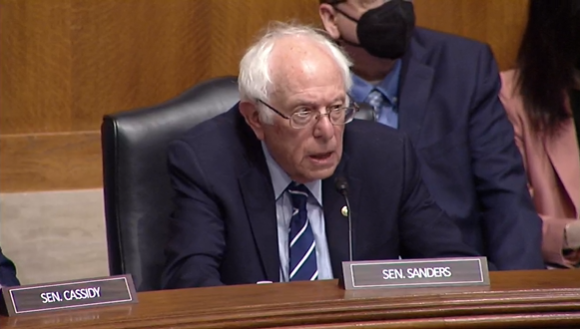
Vermont Business Magazine Ahead of a hearing today in the Senate Health, Education, Labor, and Pensions (HELP) Committee on child care funding, Sen. Bernie Sanders (I-Vt.), chairman of the committee, and Sen. Patty Murray (D-Wash.), a senior member and former chair of the committee, released a stunning new report finding that if Congress fails to act before September 30, 2023, child care across the U.S. could become more expensive and more difficult to find. The critical child care funding Democrats delivered in the American Rescue Plan saved the child care sector from collapse as the pandemic hit – saving high quality child care slots for 10 million children nationwide and 1 million child care jobs. But the funding is set to expire on September 30th, putting access to affordable child care at risk.
According to the report, once these funds run out:
-
1 in 5 child care programs say they will have to serve fewer children.
-
4 in 10 child care programs say they will be forced to raise tuition for working parents.
-
3 in 10 child care programs say they will be forced to cut wages or be unable to sustain any previous wage increases. This will be devastating for a sector that is already short 54,000 workers.
The report details for each state the number of child care programs that received these grants, the number of children impacted, and the amount of funds expiring by September 30th.
“We have a child care crisis in America that we have got to address,” Sanders said. “The American Rescue Plan provided critical funding that made child care available to millions of children and allowed child care programs throughout our country to stay open. If Congress does not act by September 30th to renew these funds, millions of working families with children will be at risk of losing the quality care that they need. We cannot allow that to happen. Not only do we need to renew these funds, we need to make sure that every child in America receives the high quality child care they deserve and that every child care worker in America makes a living wage. In the richest country in the history of the world, that is not a radical idea.”
“Our nation’s child care sector was hanging on by a thread before the pandemic, and it was headed straight for collapse when COVID hit our country and providers prepared to close their doors for good. The historic federal investment in our nation’s child care sector that I fought tooth and nail to deliver saved the child care sector from collapse – keeping 220,000 providers’ doors open and saving child care slots for 10 million kids across our country,” said Murray. “But the funding we provided will expire this fall – which will likely force providers to lay off staff or shut down, force parents to leave work when they lose their child care, and take a wrecking ball to our economic recovery – unless we take action. Failing to invest in child care means failing to invest in our economy – it means worsening an already serious workforce shortage. This isn’t rocket science – businesses are struggling to hire the workers they need, parents need quality child care to get to work, child care workers need a living wage if we want them to take care of our children, and kids deserve a safe place to grow up and learn. I will not let up for one second until we finally fix the child care crisis in America.”
The COVID-19 pandemic pushed the already fragile child care sector to the brink. During the pandemic, child care providers were the workforce behind the workforce – providing child care services for nurses, doctors, first responders, and so many other frontline workers. But child care programs consistently had to do more with less. Providers faced increased costs associated with keeping children and workers safe and healthy, while experiencing severe drops in revenue due to fewer families paying for child care during the pandemic. The nation stood to lose an estimated 4.5 million child care slots, and in June of 2020 fewer than 1 in 5 child care programs surveyed said that they expected their program could survive for longer than a year without significant financial help.
Congress provided over $52 billion in vital support to help stabilize the child care sector and help working families meet their child care needs during the pandemic through funding for the Child Care and Development Block Grant (CCDBG) and funding for Child Care Stabilization grants. According to the Department of Health and Human Services (HHS), Child Care Stabilization funds kept over 220,000 child care providers across the country afloat, sustaining child care for up to 10 million children. One third of child care providers who received a stabilization grant said their child care program would have closed permanently without the grants. States have used supplemental CCDBG funding to make child care more affordable for working families, to increase wages and support for child care workers, and to improve their child care subsidy systems.
Over $37 billion in funding for the child care sector runs out on September 30, 2023, which will leave workers, child care businesses, and working families with young children at risk without more child care funding to meet their ongoing needs, with states such as California, Florida, and Texas losing billions in funding. These historic investments in the chronically-starved child care sector provided a glimpse of what is possible with significant federal funding for child care – and must be maintained.
To read the full report, click here.
Sanders' opening remarks at the hearing, as prepared for delivery:
The Senate Committee on Health, Education, Labor, and Pensions will come to order.
Let me begin by making a few points.
First, I think that all of us pride ourselves as a nation that loves our kids.
We all understand that our children are the future of America.
But, we have a funny way of showing that love.
In America today, we have the highest rate of childhood poverty of almost any major country on earth and, as we’ll discuss today, we have a dysfunctional and broken childcare system.
Psychologists tell us that the years zero through four are the most important years of a human being’s life in terms of intellectual and emotional development. Yet, few can deny that the care we provide our youngest children is totally inadequate in almost all respects.
When we talk about our national priorities and what we value as a nation, I can think of no higher priority than the need to cherish and nurture our kids during their formative years of life and to make sure that we have the best and the most affordable childcare system in the world. But that clearly is not the case today.
In America today, childcare is outrageously expensive, we have nowhere near the slots that we need, and childcare workers are some of the most underpaid people in America.
Today, it costs about $15,000 a year, on average, to send an infant to childcare in our country and in DC it can cost, in some cases, $30,000 a year.
How can a working family, making $50,000 or $60,000 a year, afford to spend $15,000 or $30,000 on childcare?
According to a recent survey, 40 percent of parents in America have gone into debt due to the cost of childcare and nearly 30 percent have had to make the unacceptable choice of paying for childcare or paying their rent or mortgage on time.
That should not be happening in the United States of America, the richest country in the history of the world.
All over America, it is extremely difficult for a family to even find childcare because we don’t have enough slots in America for our children.
It has been estimated that half of our people live in a childcare desert – communities where there are either no childcare options at all or where children outnumber available childcare slots by three to one.
It is no great secret that parents all over this country as soon as they find out that they are pregnant immediately sign up for childcare. And even then many of them are put on waiting lists not knowing if a childcare slot will be available when their baby is born.
Further, the childcare crisis not only impacts little children and their parents, but it has a significantly negative impact on our economy. Bottom line: There are many hundreds of thousands of workers, overwhelmingly women, who would to join the workforce but cannot do that because there are no childcare slots for their kids. It is estimated that the childcare crisis is costing our economy over $120 billion each and every year.
Third point – and this is something that we cannot neglect: Some of the most important work that can be done in our society is caring for and educating our little kids.
And yet, all over this country, childcare workers are paid starvation wages – often less than fast food workers.
In fact, 98 percent of occupations in America today pay higher salaries than childcare workers.
The situation has become so absurd that the average childcare worker in America is paid just $13.30 an hour - less than a parking lot attendant or a doggy day care worker.
What this means, unbelievably, is that over half of childcare workers in America are paid wages so low that they qualify for food stamps, Medicaid and other public assistance programs.
This pathetically low pay is a major reason why childcare workers are leaving the profession they love in droves.
In fact, child care employment is now over 5% below what it was in February 2020, meaning that about 54,000 child care workers have left the sector and have not returned.
And let’s be clear: There was a shortage of child care workers before the pandemic began.
Now, here is the good news. As part of the American Rescue Plan, Congress did the right thing and provided over $24 billion for childcare stabilization grants during the pandemic.
This funding kept over 200,000 childcare providers in business, sustained childcare for nearly 10 million kids and prevented a million childcare workers from losing their jobs.
That is the good news. The bad news is that if Congress does nothing this funding will expire on September 30th of this year, making a very bad situation even worse.
According to a recent survey, if this funding expires:
- One out of every 5 childcare programs in America will serve fewer children.
- 40 percent of childcare programs will have to raise tuition.
- 30 percent of childcare programs will be forced to cut the wages of childcare workers.
We cannot afford to let that happen.
We need to renew this vital funding. But let’s be clear that is not all that we need to do. We need a vision for the future which understands that every family in America has the right to high quality, affordable child care.
That child care workers receive the decent pay and working conditions that their important work demands.
That we must substantially expand the number of child care programs so that every family in America can find a childcare facility that meets their needs.
I look forward to working with all of my colleagues on this committee to make that a reality.
Solving the Child Care Crisis: Meeting the Needs of Working Families and Child Care Workers
Date: Wednesday, May 31st, 2023
Time: 10:00am
Location: 430 Dirksen Senate Office Building
Witnesses
-
Ms. Elizabeth Groginsky
Cabinet Secretary
New Mexico Early Childhood Education and Care Department
Santa Fe, NM
-
Ms. Lauren Hogan
Managing Director of Policy and Professional Advancement
National Association for the Education of Young Children
Washington, DC
-
Ms. Cheryl Morman
Family Child Care Provider and President
Virginia Alliance for Family Child Care Associations
Richmond, VA
-
Ms. Carrie Lukas
President
Independent Women's Forum
Washington, DC
-
Ms. Kathryn Larin
Director in Education, Workforce, and Income Security
Government Accountability Office
Washington, DC
Source: WASHINGTON Senator Sanders
