

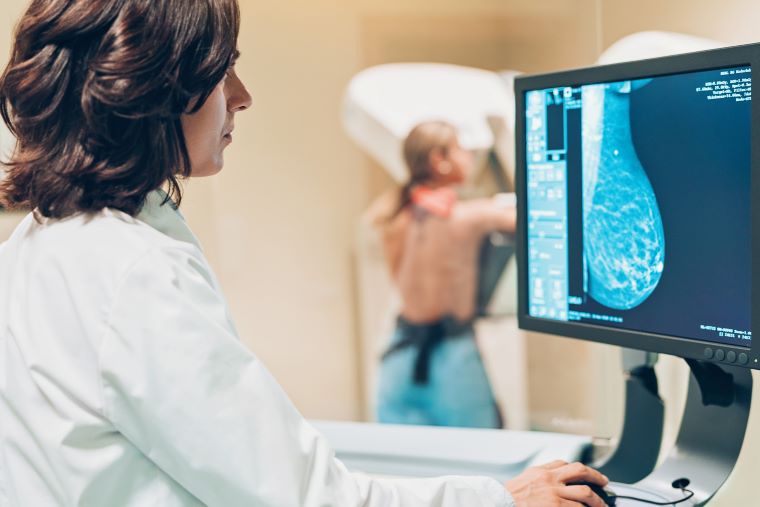
Mammograms are X-ray pictures of the breast and are effective in detecting early signs of breast cancer. New UVM research shows a decline in screenings for the most at-risk group after guidelines were revised. (Getty Images)
Since 2009, Vermont had second largest decline in at-risk screenings of any state
Vermont Business Magazine In 2009, the U.S. Preventive Services Task Force changed its mammography screening guidelines to recommend that routine breast cancer screening start at age 50 rather than age 40, recommending an individualized approach for women ages 40-49. The group cited insufficient evidence for screening women ages 75 and older.
Researchers at the UVM Cancer Center, Sarah Nowak, PhD, and Brian Sprague, PhD, found that the change in guidelines led to a decline in mammography screening rates for all three age groups, including in the 50-74 group most at risk of developing breast cancer and most in need of screenings, an unintended consequence. The researchers coined the term "spillover" for this effect. Vermont had the second steepest drop of any state for all three groups.
Their results were recently published in The American Journal of Preventative Medicine.
Data from 2002 through 2018 illustrates that, after 2009, screening rates have fallen nationally by 1.3 percentage points per year for ages 40-49, .5 percentage points per year for women aged 50-74 years old, and 1.7 percentage points per year for 75+.
In Vermont, these numbers nearly doubled: 2.5 percentage points for 40-49, 1.2 percentage points for 50-74, and 2.9 percentage points for 75+, annually.
“While these percentages may seem small, the cumulative impact over 10 years translates to 2.4 million fewer women in the United States aged 50-74 being up to date with screening mammography,” Dr. Sprague said. The number of Vermont women age 50-74 affected over the 10-year period is approximately 10,000 people.
The research team is currently exploring why spillover is happening. For example, evidence shows that when women know someone personally diagnosed with breast cancer through screening, they encourage others to get screened. Declining screening for women ages 40-49 and 75+ could lead to women ages 50-74 learning about early-stage breast cancer diagnoses in friends and family less often.
“It is especially important to understand why rates of screening are declining for women ages 50-74 in Vermont. Understanding what is happening locally can help us understand what may be happening in the rest of the country in future years,” said Dr. Nowak.
About the University of Vermont Cancer Center
The University of Vermont Cancer Center is Vermont’s only not-for-profit comprehensive clinical and research cancer center. Founded in 1974, the organization is located within the University of Vermont Larner College of Medicine and enjoys a clinical partnership with the University of Vermont Medical Center. Drawing on the expertise of more than 170 research and clinical members, the center works to reduce the burden of cancer in Vermont, northeastern New York and across northern New England, through research, outstanding clinical care, community outreach, and education.
