


The eastern wild brook trout struggles as Vermont’s river temperatures soar; land conservation efforts help protect areas that will keep rivers shaded and cool, giving the fish respite in the warmer months.
Vermont Business Magazine As spring turns to summer and the sun’s rays beat down, it’s tempting to relish afternoons splashing in warm waters – comfortable for an afternoon dip, but life threatening for wildlife. The eastern wild brook trout thrives in water up to 65* and can tolerate a few degrees more. 75* kills.
Last year some of Vermont’s major waterways hit 79*. Too easily dismissed as an uncontrollable effect of climate change, shockingly warm waters are more so the result of how we all treat the land – the hundreds of dams that trap bathtub-warm water and the riverside lawns, fields, roads, and parking lots that deprive banks of shady trees.
Vermont River Conservancy’s mission to protect special lands along Vermont’s waters helps ensure species like eastern wild brook trout can persist long into the future.
This month Vermont River Conservancy played a key role to protect two properties that will create a brighter future for brook trout – places where Vermont’s state fish can count on cool waters year-round.
Erin De Vries, Conservation Director with Vermont River Conservancy says, "We’re excited to have been a part in conserving two beautiful and well-known public places this month. We are happy to forever steward the cold-water fish habitats, wildlife corridors, forest blocks, and riverlands contained within the Ridley Brook, Winooski River, and Otter Creek landscape."
In Duxbury, brook trout in Ridley Brook, a high elevation stream that flows into the Winooski River, Duxbury Land Trust purchased 58-acres that will soon be added to Vermont’s iconic Camel’s Hump State Park. A Vermont River Conservancy easement will ensure river protections and public access.
The steep canyon-like area is a favorite kayaking spot and provides cool high-elevation waters for brook trout.
Dan Cardozo, Vice-Chair of the Duxbury Land Trust said, "We are thrilled with the acquisition of this beautiful land which is at the gateway of Camels Hump State Park. This section of Ridley Brook is a gem and will now be forever protected."
In the Champlain Valley, Vermont’s longest river gets a healthy start in one of Vermont’s few wilderness areas, cascades down the forested slopes of the Green Mountains, then runs smack dab into Route 7, runs a gauntlet of farms and towns, and is “impaired” by the time it reaches Lake Champlain – too hot, too much phosphorus, and too polluted for people and wildlife.
Trust for Public Land partnered with Vermont Fish & Wildlife to purchase 355-acres of unfragmented forest, rare wildlife habitat, and quality outdoor recreational space along Otter Creek in Wallingford.
A conservation easement held by Vermont River Conservancy will provide perpetual protection for the property, which is now part of the state’s Otter Creek Wildlife Management Area. With these formal protections, brook trout and other wildlife will benefit from cool protected wetlands – one more step towards a healthier Lake Champlain.
”As Vermont's forestland is increasingly threatened with fragmentation and development, we were thrilled to partner with Vermont Fish & Wildlife, VHCB and VRC to expand Otter Creek WMA,” stated Kate Wanner, senior project manager for Trust for Public Land. “Not only does it increase climate resiliency in Rutland County but also provides a new place for people to get outside and to connect to nature.”
In 2011, protected wetlands and floodplains further down the Otter Creek Basin prevented $1.8 million of flood damage in the town of Middlebury during Tropical Storm Irene.
With increased precipitation and extreme storm events due to climate change, protecting and restoring wetlands, floodplains and upland forest is critical to protecting local communities, like Wallingford where essential buildings—their fire station, elementary school, and town garage—are all vulnerable to flood risk.
The Otter Creek and Camel’s Hump projects, both funded in large part by Vermont Housing and Conservation Board and to be managed by departments within the Vermont Agency of Natural Resources, will have public access for outdoor recreation like hiking, snowshoeing, fishing, and wildlife watching.
In the face of climate change, Vermont is likely to experience more drought, more floods, and warmer water temperatures – directly impacting waterways, wildlife, and riverside homes, roads, and businesses. Vermont River Conservancy’s work to protect land along rivers helps mitigate these effects.
The organization’s protected areas help shade and cool rivers, and filter and absorb water in wetlands and floodplains, benefitting brook trout and other wildlife species, and helping keep communities safer during high waters.
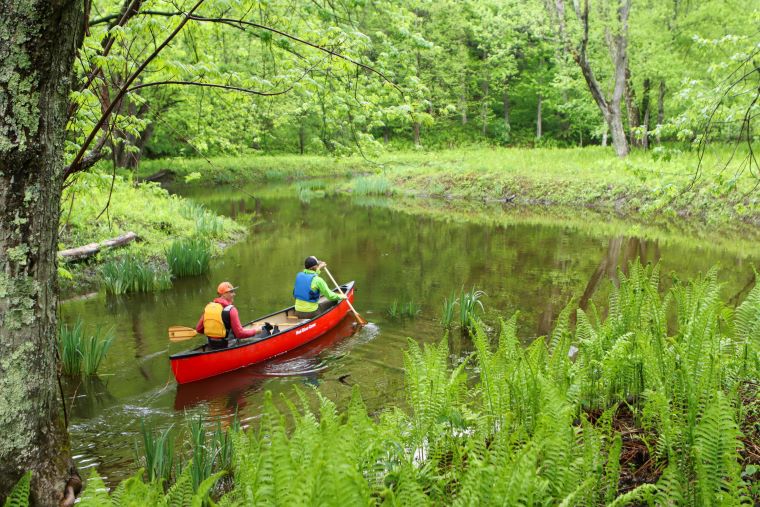
PHOTOS: Ember Photography courtesy of Trust for Public Land
About Vermont River Conservancy
Vermont River Conservancy protects special lands along rivers. We engage communities to protect and restore Vermont rivers for kids, communities, and wildlife. Our work started more than 28 years ago when Vermont River Conservancy protected its first swimming hole, a place that had hosted generations of swimmers cooling off, anglers casting for trout, and paddlers launching kayaks. Today, our work includes projects to conserve floodplains, protect headwater forests, and remove dams. To learn more, visit vermontriverconservancy.org.
Source: Duxbury, Wallingford, Manchester Vt. – 6.2.2023. Vermont River Conservancy. Montpelier vermontriverconservancy.org
