

Vermont Business Magazine State Auditor Doug Hoffer released a new audit today of Vermont’s Dam Safety Program. Housed within the Department of Environmental Conservation, the Dam Safety Program is responsible for overseeing more than 1,000 known dams across Vermont.
“When Vermonters think about public safety, dams probably don’t come to mind, and I suspect that won’t change unless one fails causing significant property damage, or in a worst case, loss of lives,” Hoffer said. “While they may not be front of mind, it’s essential that state government protect people from the risks they pose, especially in light of the fact that the median age Vermont’s dams is 77 years old.”
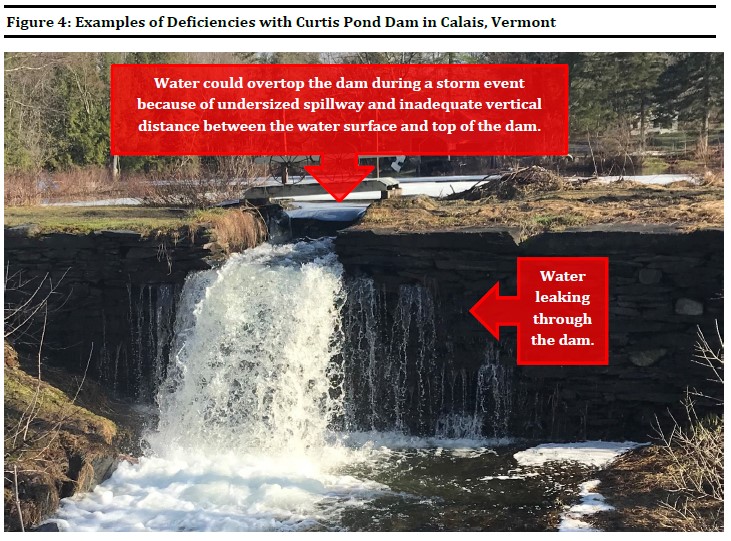
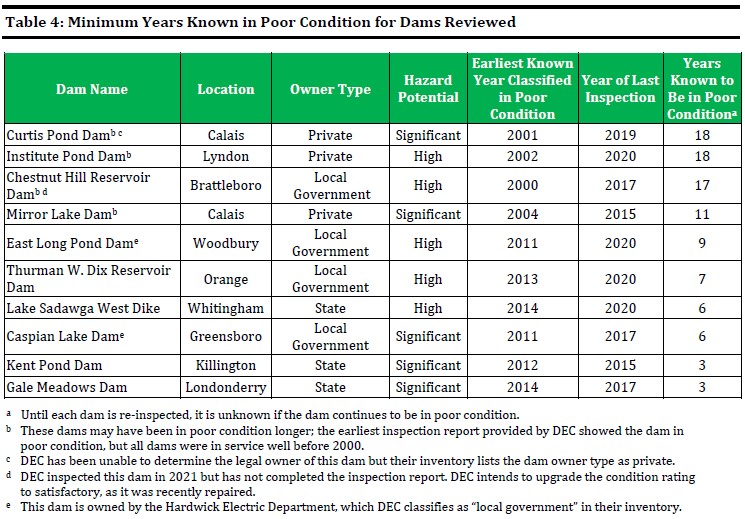
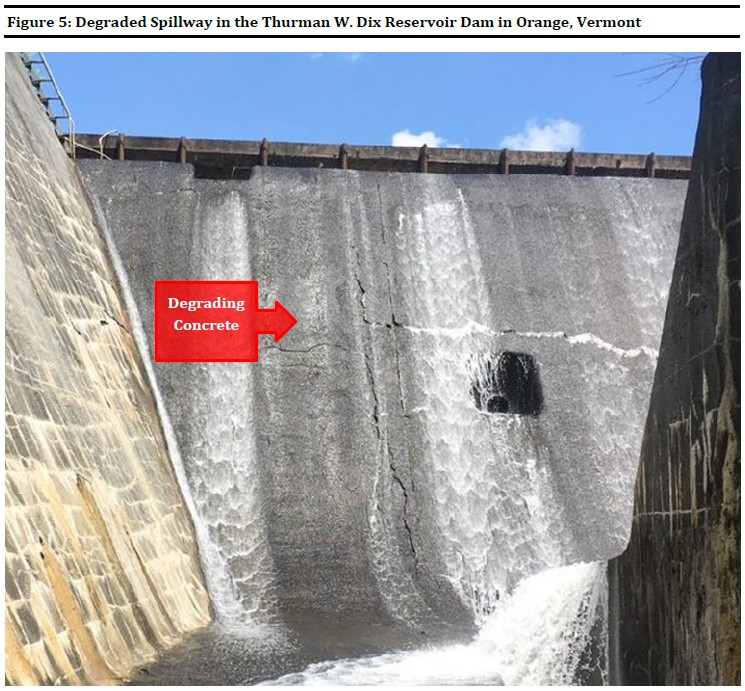
The audit found that the 10 dams in poor condition that were selected for review, which included state-owned dams, lingered in poor condition, some for more than 18 years.
While the Dam Safety Program recommended that dam owners make needed improvements, suggested timeframes were not provided to do so and follow-up didn’t occur until the next inspection of the dam, which in some cases was more than five years later.
Other findings include:
- The Dam Safety Program has not been completing inspection reports and providing them to dam owners in a timely manner, even when it is another state agency that owns the dam.
- The DSP’s centralized dam inventory does not include complete and accurate condition and hazard potential ratings.
- The DSP has not been inspecting all dams within the required timeframe and has not recorded all inspections in their inventory database
- The Public Utility Commission, which oversees power-generating dams, uses different standards for hazard potential and requires less frequent inspections than the DSP, providing different levels of protection for Vermonters based merely on which state agency is overseeing a particular dam.

Hoffer added: “When a dam is ‘high hazard’ it means a failure would result in loss of life, and when a dam is in ‘poor’ condition it means it could fail under normal conditions. So, state government must improve its oversight to keep people and property safe.”
The report includes overhead video photography of each to the ten dams reviewed to provide a sense of each reviewed dam’s scale, and to depict the surrounding areas that could be impacted by a failure.
In response, the DSP noted that:
- A recent regulatory change gives it more authority but that it is still in transition.
- The DPS is short-staffed, as the audit report notes.
- There is limited funding for what can be expensive and highly technical inspections.
- The DPS is indeed focusing on the most potentially hazardous dams.
To view the report, please click here.
2.14.2022. MONTPELIER, VT – State Auditor