

Vermont Business Magazine The Vermont House today gave final approval to H.688, the Global Warming Solutions Act, on a vote of 102-45. The House concurred with the Senate proposal of amendment and the bill will now be sent to Governor Scott. The governor suggested at his press conference Tuesday that he would veto the bill if it came to his desk without changes, which were not forthcoming. On a strictly party-line vote, the Democrats would be able to override a veto. Scott does not explicitly comment on whether he will sign a bill or not until it reaches his desk. The bill will need to go through the usual legal vetting process first.
“Climate change is one of the most critical issues impacting our future,” said House Speaker Mitzi Johnson (D-South Hero). “This bill converts goals for greenhouse gas emission reductions into requirements, establishes a planning process to achieve the emissions reduction requirements, and defines a 'Cause of Action' that allows citizens to hold their government accountable for action. The Global Warming Solutions Act ensures accountability and resiliency for our future. Climate change is real, the climate crisis is here, and Vermonters cannot afford to wait any longer to address it.”
“The Global Warming Solutions Act is about protecting Vermont’s most vulnerable citizens and communities,” added Representative Tim Briglin (D-Thetford), Chair of the House Committee on Energy & Technology. “It’s about planning for increasingly severe weather events, and preparing for the opportunity and transition to a clean energy economy. It’s about state government being accountable to Vermont citizens. If we have learned anything from the pandemic of the last six months, we know hope is not a strategy. Neither is fear. The climate crisis is upon us. We need to plan. We need to prepare. And, we need our government to be accountable.”
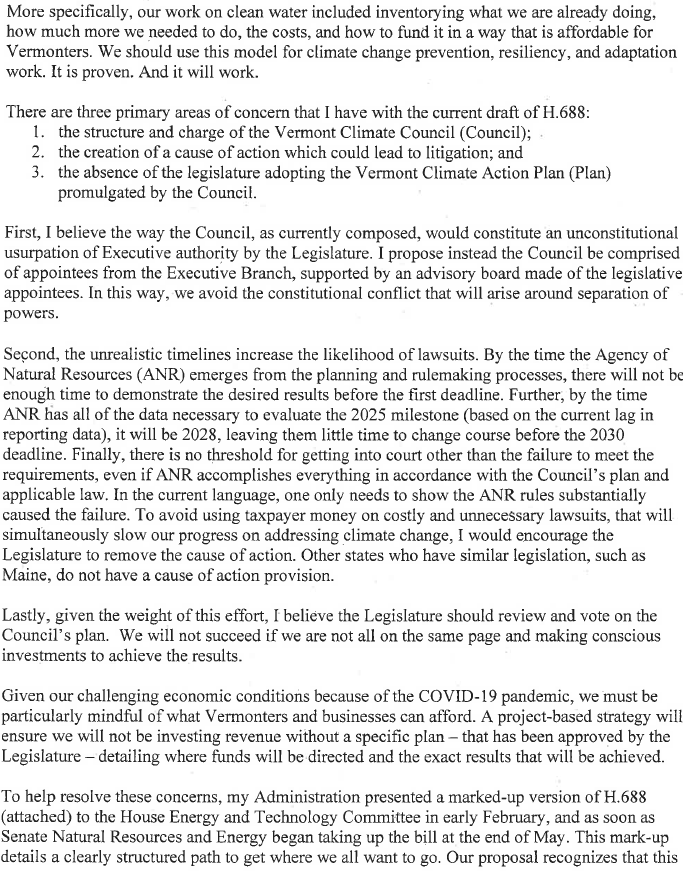
The biggest sticking point for the governor, who largely agrees with the goals and the move toward a sustanable energy policy, is the ability of the individuals to sue the state if certain environmental goals are not met.
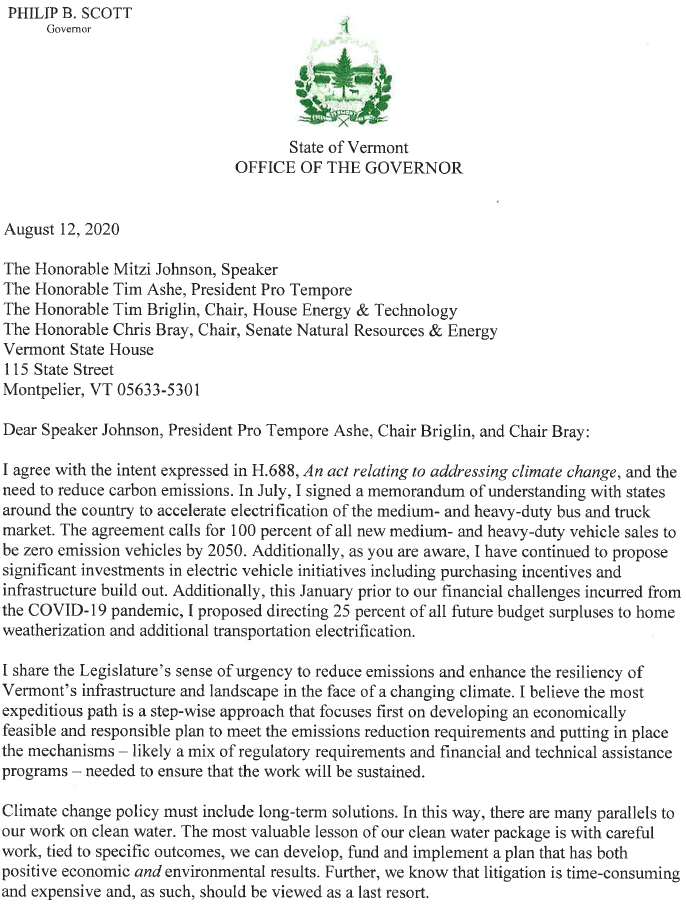
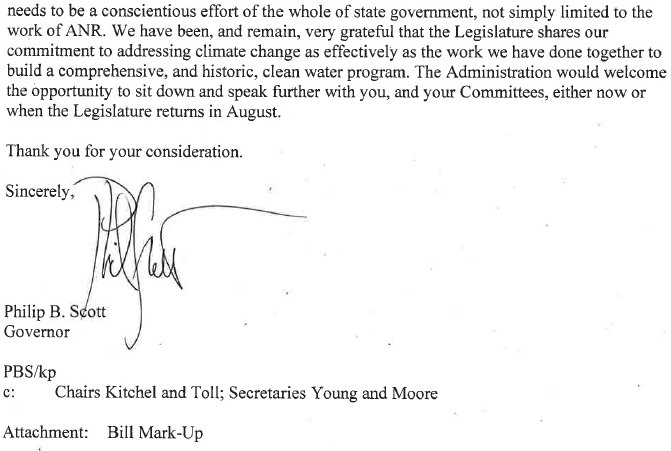
In an August 12 letter to legislative leaders (see below), he said the lawsuits would be time and money consuming and the deadlines imposed would not allow for enough time to even attain the goals.
He also questioned the constitutionality of the proposed commission.
Source: MONTPELIER - Speaker of the House 9.9.2020