

Daily Update on Novel Coronavirus (COVID-19)
December 11, 2020
New or updated information is in red and bold.
This update is available online at healthvermont.gov/covid19
Click the “See the Latest Update” button.
Please visit the Vermont Department of Health’s COVID-19 web and data pages healthvermont.gov/covid19
Vermonters should continue being cautious as cases remain high
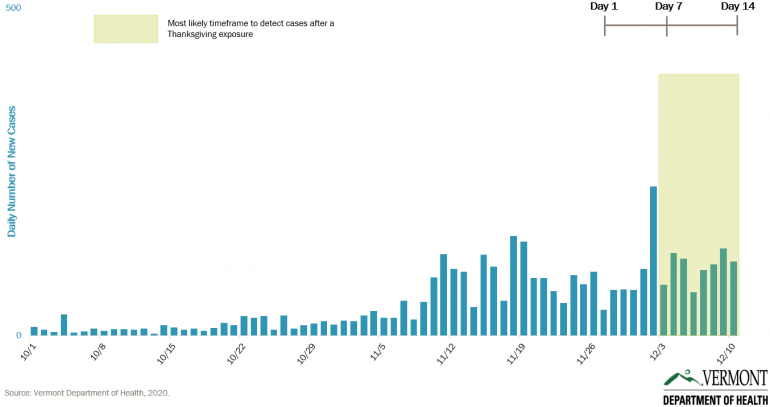
Health Commissioner Mark Levine said at Friday’s press conference that it’s now been about two weeks since Thanksgiving, but so far, we have not seen a “surge on a surge” of COVID-19 cases.
COVID-19 cases remain relatively high and there have been several recent deaths, with four more reported today for a total of 93. However, the number of cases per day has remained flat. There were 113 today. There were 26 hospitalized with five in the ICU and none on a ventilator.
“None of our recent contact tracing efforts have revealed clusters of cases coming from this holiday,” Dr. Levine said. “We hope this means that Vermonters either avoided Thanksgiving gatherings or kept them small… and we truly appreciate that.” However, said Dr. Levine, “these numbers are not something we should develop a new comfort level around.”
Our neighbors in the region continue to experience rising cases and positivity rates. Notably, the death this week from COVID-19 of the newly elected Speaker of the New Hampshire House of Representatives. In Vermont, we are still seeing more than 100 cases each day, affecting our schools, work sites and health care facilities, including long-term care facilities.
“There are simply more people with COVID-19 in our communities right now, and more potential for exposure,” Dr. Levine said. “We need to take that into account as we plan for and celebrate the holidays. As the CDC, and our current guidance says, staying home is still the best way to protect ourselves, our families and others right now.”
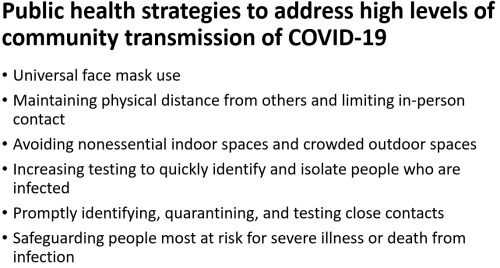
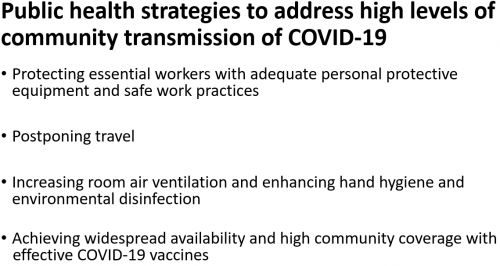
Dr Levine offered 10 bullet points to stay safe (see below).
Find Opportunities to Support the COVID-19 Response
Human Services Secretary Mike Smith announced Friday a new website where Vermonters can step up and help with the COVID-19 response in long-term care facilities and other areas.
Clinicians with additional capacity are especially needed – in either paid or volunteer roles, he said. But anyone including part-time workers, retirees, unemployed individuals, college students can help fill short-term gaps in the system caused by COVID-19 outbreaks.
Visit www.covidstaffing.vermont.gov for more information.
Stay Informed with VT-ALERT
To help Vermonters stay up to date on the latest COVID guidance and information, Governor Scott today encouraged Vermonters to register for Vermont Alert (VT-ALERT), the State’s emergency notification system.
“As COVID-19 continues to be prevalent in the state, Vermonters need convenient access to the information that will help keep themselves and their neighbors safe, and VT-ALERT is a great way to use existing infrastructure to get it out there,” said Governor Scott.
Since 2012, VT-ALERT has warned Vermonters of potential and imminent hazards. Vermonters can now use the system to receive important COVID-related updates, though VT-ALERT will not replace more comprehensive resources like healthvermont.gov or accd.vermont.gov.
Vermont Emergency Management Director Erica Bornemann said “the system will send out important updates to the Governor’s Executive Order, and other announcements that will directly impact Vermonters.”
Vermonters can register for VT-ALERT by visiting www.vtalert.gov and selecting the alerts they would like to receive (COVID information is listed under “Health Alerts”). Current subscribers may update their notifications by visiting www.vtalert.gov. Notifications are available via email, text, phone and the Everbridge mobile app. Users may specify geographic areas for which they want to receive alerts (i.e. the town or county where they live or work).
New at healthvermont.gov
Nearly 60% of Vermonters with COVID-19 have a pre-existing health condition or are at least 60 years old. These two populations are at the highest risk for serious COVID-19-related outcomes. Learn more in the latest Weekly Data Summary Spotlight.
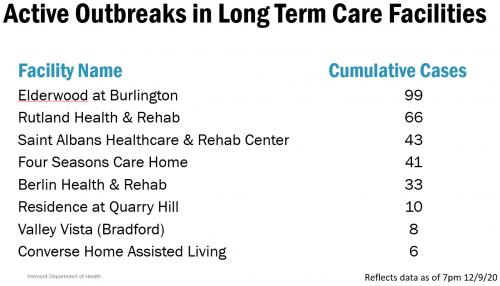
- New table of active outbreaks in long-term care facilities
- New FAQs added about the Rate of Recent Cases by Town Map. The map now reflects the rate of cases of COVID-19 among Vermont residents per 10,000 people, by town of residence, from the past two weeks. Rates are commonly used because they allow us to compare the number of cases across towns that have different population sizes.
- The table of the cumulative number of cases in since March by town is now below the map. The map and the table are updated weekly.
Case Information
Current COVID-19 Activity in Vermont
As of 12 p.m. on December 11, 2020
|
Description |
Number |
||
|
New cases* |
113 (5,541 total) |
||
|
Currently hospitalized |
26 |
||
|
Hospitalized in ICU |
5 |
||
|
Hospitalized under investigation |
0 |
||
|
Percent Positive (7-day average) |
2.4% |
||
|
People tested |
240,475 |
||
|
Total tests |
608,412 |
||
|
Total people recovered |
3,322 |
||
|
Deaths+ |
93 |
||
|
Travelers monitored |
185 |
||
|
Contacts monitored |
172 |
||
|
People completed monitoring |
11,338 |
* Includes testing conducted at the Health Department Laboratory, commercial labs and other public health labs.
+ Death occurring in persons known to have COVID-19. Death certificate may be pending.
Hospitalization data is provided by the Vermont Healthcare Emergency Preparedness Coalition and is based on hospitals updating this information.
Find more data at: healthvermont.gov/currentactivity.
Guidance for Vermonters and Businesses
Health information, guidance and data: healthvermont.gov/covid19
Sector guidance: accd.vermont.gov/covid-19
Modeling: dfr.vermont.gov/about-us/covid-19/modeling
Governor’s actions: governor.vermont.gov/covid19response
Get the information you need at our Frequently Asked Questions.
School & Child Care Guidance
- Strong and Healthy Start: Safety and Health Guidance for Vermont Schools
- Mental Health: A Strong and Healthy Start: Social, Emotional and Mental Health Supports During COVID-19
- Child care: Health Guidance for Child Care and Out of School Care
More resources on the Your Community web page.
Take Care of Your Emotional and Mental Health
If you or someone you know is in crisis or needs emotional support, help is available 24/7:
Call your local mental health crisis line.
Text VT to 741741 to talk with someone at the Crisis Text Line.
Call the National Suicide Prevention Lifeline at 1-800-273-8255.
For more information visit healthvermont.gov/suicide.
Visit our Coping With Stress web page.
Get connected to Alcohol and Drug Support Services at VT Helplink.
Get self-help tips and connect to mental health services at COVID Support VT.
Need to be connected to food resources?
One in three Vermonters are at risk for food insecurity, struggling to find help feeding their families.
If your financial situation has recently changed, you may now qualify for Vermont nutrition and food programs. They include: WIC program (Women, Infants and Children), 3SquaresVT/SNAP, and more. Newer programs such as Farmers to Families and Everyone Eats are helping to fill the gaps. All these programs can help keep healthy food on the table.
Contact the Health Department, Hunger Free Vermont, or call 2-1-1 for more information.