

Vermont’s Taxing Dilemma: A Long-Term View
Vermont Business Magazine The Vermont Futures Project presents a white paper, Vermont’s Taxing Dilemma, to look beyond our immediate circumstances to understand how our current taxation structures can either drive or inhibit long-term economic recovery and growth.
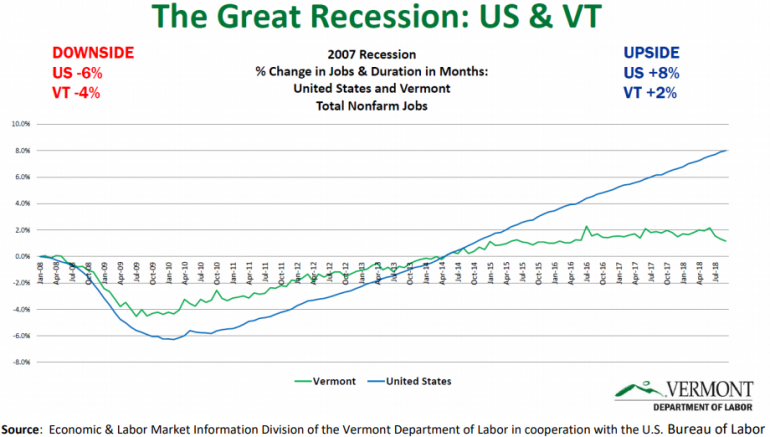
Since its inception four years ago, The Vermont Futures Project has closely monitored Vermont’s modest economic rebound as it slowly recovered from the 2008 recession.
Today, with the onset of COVID-19, Vermont has seen a significant drop in state revenues, further challenging the state’s future economic security.
The State of Vermont is facing a deep budget deficit due to the global pandemic. Now more than ever is the time to refrain from burdening our economy in ways that will short-change our future.
Growing Vermont’s future tax base, and not just the current tax rates, must be foremost in our dialog and actions.
Key Observations:
• Research from several comprehensive national studies proves that Vermont already has one of the most progressive state tax structures in the United States and is a leader in reducing the tax burden on its lowest-income families.
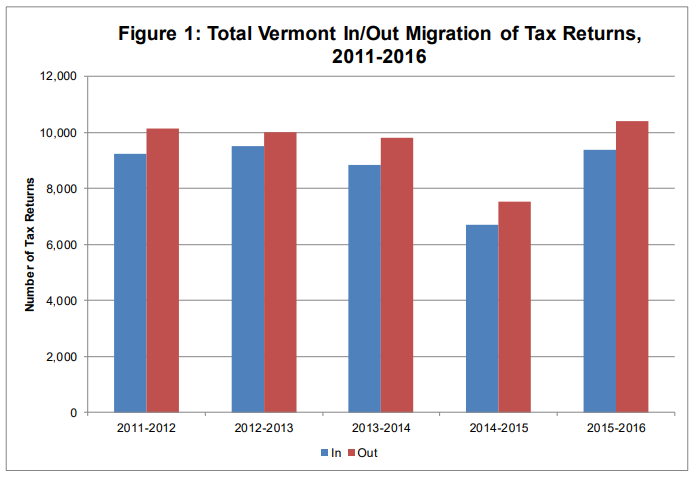
• The Vermont JFO report showed that over the 2011 to 2016 period, Vermont lost 4,167 taxpayers to migration. Could in-migration due to COVID-19 could impact our tax base in positive ways?
• The most recent Institute on Taxation and Economic Policy (ITEP) tax inequality report ranks Vermont as having some of the highest taxes in the country in key tax areas.
Has Vermont reached a tipping point that the tax burden has become so high that there is little capacity for further increases and that further hikes will result in diminishing returns, especially during these hard times?
To address these question and others, the Vermont Futures Project offers the following:
Goals and Recommendations:
1. Commission a Tax Incidence Study: This study would highlight the burden of state and local taxes across various income and demographic groups and would address the important question: “Who pays Vermont’s taxes?”
2. Establish a Goal for Vermont’s Tax Structure to Be in the Middle of Surrounding States: Shift the Vermont tax structure over time to the middle of the surrounding states for the percentage of taxes per average Vermonter’s income.
3. Grow Vermont’s Tax Base: Grow Vermont’s tax base by attracting and retaining Vermonters seeking a simpler, more rural lifestyle with opportunity, affordability, and racial diversity.
Read the white paper HERE.
About the Vermont Futures Project
The Vermont Futures Project promotes the long-term economic health of Vermont through leadership, research, and education. The Vermont Futures Project seeks to inform the conversation about Vermont’s economic future and demonstrate how a healthy economy contributes to Vermont’s vibrant communities and unique quality of life.
Source: Montpelier, VT (August 20, 2020) – Vermont Futures Project