


Vermont Business Magazine According to the Vermont Department of Health, tick-borne illnesses are on the rise in Vermont. In an effort to address the many tick-related questions clinicians from Southwestern Vermont Medical Center’s (SVMC) have partnered with Keith Michl, MD, to offer a special presentation: What You Need to Know about Tick-Borne Illness: Answers to Frequently Asked Questions. The talk is scheduled for 5:30 – 6:30 p.m. Thursday, July 27 at the Manchester Community Library in Manchester, VT.
Attendees will get expert answers to the most common tick-related questions, including:
· How do I prevent tick bites?
· What should I do if I find a tick on me or a member of my family?
· What are the tick-borne illnesses and how do I recognize them?
· What are the treatments available?
· What if I still don’t feel good after treatment?
Speakers include: Marie George, MD; infectious disease specialist at SVMC Infectious Disease, now part of SVMC Multispecialty Practice; Keith Michl, MD, internal medicine physician in private practice in Manchester, VT; Bradley Tompkins, an infectious disease epidemiologist at Vermont Department of Health; and Trey Dobson, MD, emergency medicine physician, chief medical officer at SVMC and medical director of Dartmouth-Hitchcock Putnam Physicians.
About the Presenters:
In addition to his leadership roles, Dr. Dobson is an emergency medicine physician at SVMC. He received his bachelor’s degree in physics from The University of the South in Tennessee, a master’s degree in geology from the University of Wyoming and his medical degree from The University of Tennessee. He completed his residency in emergency medicine at the University of Virginia.
Dr. George studied at the University of Connecticut and received her medical degree at Georgetown University School of Medicine in Washington, DC. She completed her residency at St. Elizabth’s Medical Center and a fellowship at Tufts University, both in Massachusetts. She is certified by the American Board of Internal Medicine.
Dr. Michl is a member of the Department of Medicine at SVMC. He is an affiliate of MDVIP, a network of physicians providing personalized primary care medical and wellness services. He attended Middlebury College in Vermont and University of Cincinnati College of Medicine in Ohio. He completed his residency at George Washington University in Washington, DC, and is certified by the American Board of Internal Medicine.
Bradley Tompkins is an infectious disease epidemiologist at Vermont Department of Health in Burlington, where he leads the Enteric, Zoonotic & Vector-borne Disease programs. He received his master’s in epidemiology from Louisiana State University Health Sciences Center in 2009, a master’s in biology from Wake Forest University in 2003 and a bachelor’s in environmental biology from Millersville University of Pennsylvania in 1999.
Types of Ticks in Vermont
Thirteen different species of ticks have been identified in Vermont (click here (link is external) for the full list). Of these 13 species,five are known to bite humans andfour of thosefive can transmit diseases. However, over 99% of all tickborne diseases reported to the Vermont Department of Health are caused by only one tick: the blacklegged tick.
Blacklegged Tick
Name: Blacklegged tick (Ixodes scapularis)
Distribution: Blacklegged ticks can be found throughout Vermont.
Transmits: Lyme disease, anaplasmosis, babesiosis, Powassan virus disease, and Borrelia miyamotoi disease.
Hosts: white-footed mouse, deer mouse, chipmunks, shrews, white-tailed deer.
Activity: in Vermont, blacklegged tick activity fluctuates throughout the year. After laying low during the cold winter months, these ticks usually become active in late March or early April. Their peak activity typically occurs in May and June when nymphal ticks are looking for a host.Tick activity increases once againinOctober and November when adult ticks are looking for another host before cold winter temperatures set in once again.
Although blacklegged tick activity typically follows this pattern, it is important to note that these ticks might be encountered at any time of year when the temperature is above freezing.
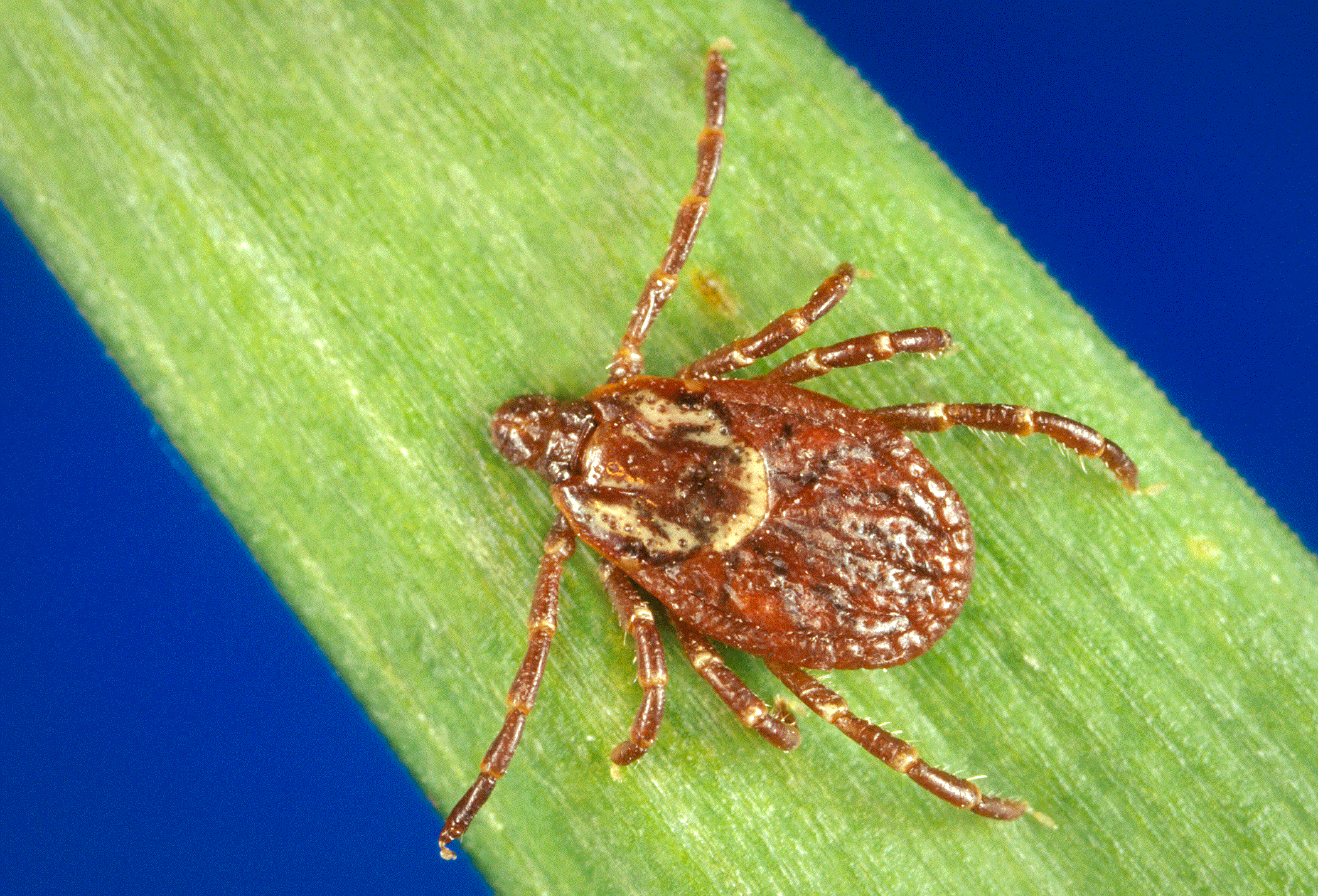
Distribution: American dog ticks can be found throughout Vermont.
Habitat: found mostly in grassy fields and other areas with little tree cover
Hosts: feeds on small rodents and medium-sized wild mammals, domestic cats, dogs and humans
Transmits: in Vermont the American dog tick can transmit tularemia, but human cases are extremely rare. Both adults and nymphs can transmit tularemia, although nymphs rarely bite humans.
Active: from April through September
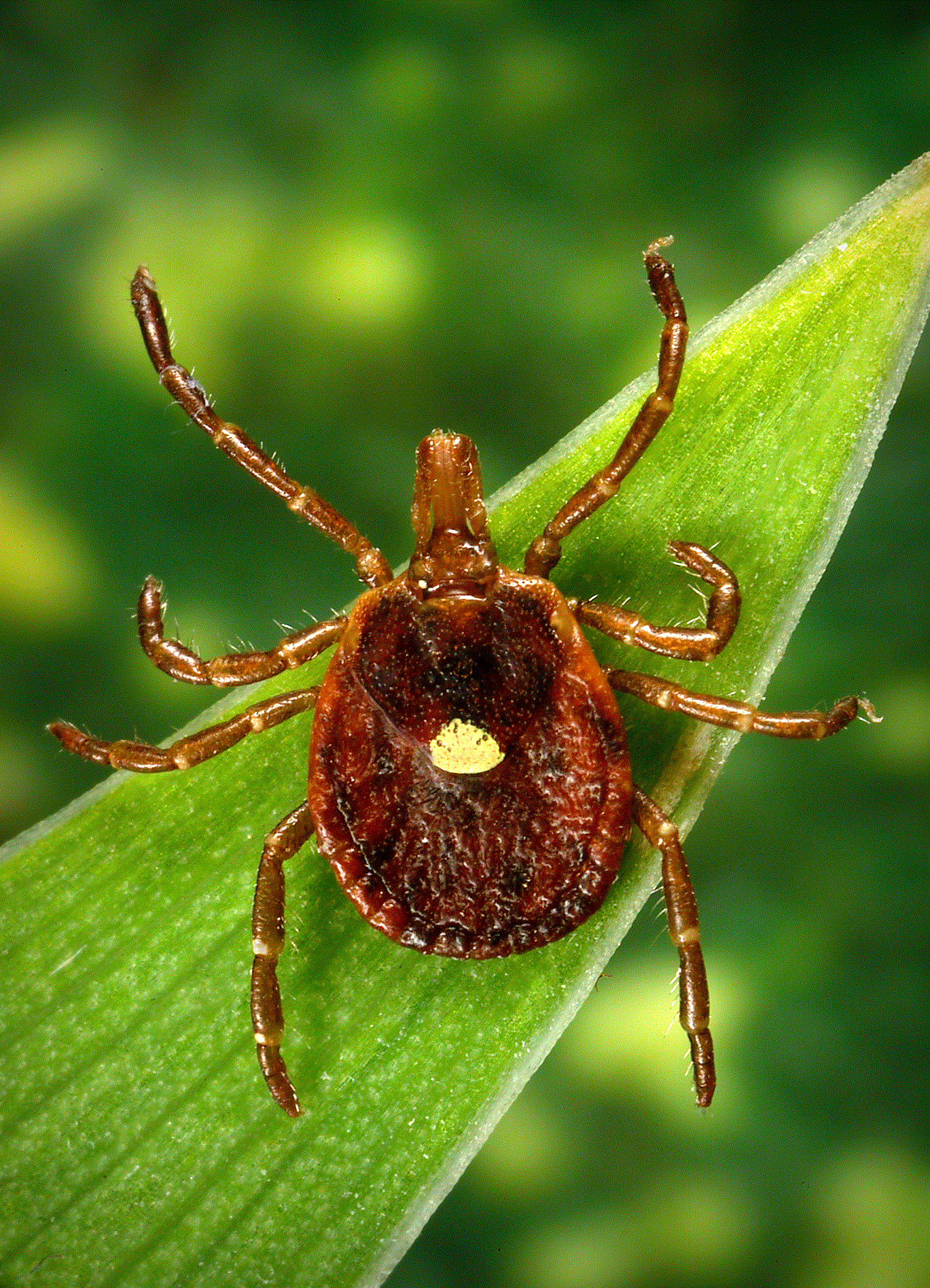
Name: Lone star tick (Ambylomma americanum)
Distribution: Lone star ticks are found primarily in southern Vermont.
Habitat: woodlands with plenty of undergrowth
Hosts: feeds on squirrels, raccoons, deer, cattle, some bird species, cats, dogs and humans
Transmits: The Lone star tick is responsible for transmitting ehrlichiosis in Vermont. Both nymphs and adults can transmit disease. Larvae cannot transmit disease.
Active: April through September
Name: Woodchuck tick (Ixodes cookei)
Distribution: Woodchuck ticks can be found throughout Vermont.
Habitat: generally found in the burrow of its host animal, rarely found on vegetation
Hosts: woodchucks, foxes, skunks, weasels, porcupines, small mammals, some bird species, raccoons, cats, dogs and humans
Transmits: Powassan virus disease, although this disease is extremely rare in Vermont
Active: generally in the summer months
Name: Brown dog tick (Rhipicephalus sanguineus)
Distribution: Brown dog ticks can be found throughout Vermont.
Transmits: The brown dog tick will bite humans, but there is no evidence that it transmits diseases in Vermont.
Hosts: mostly dogs
Habitat: Generally brown dog ticks can be found wherever humans and dogs live. Unlike other tick species, the brown dog tick is well-suited for living indoors.
Active: may be active throughout the year
Pathogen prevalence in blacklegged ticks
The Vermont Department of Health has collaborated with colleagues at the Vermont Agency of Agriculture (link is external) and Lyndon State College (link is external) to determine the prevalence of disease in Vermont's blacklegged tick population. Over 2,000 ticks were collected and tested between 2013 and 2016.
| PAthogen | Percentage of ticks that tested positive |
|---|---|
| Anaplasma phagophytocilium | 7.0% |
| Babesia microti | 0.8% |
| Borrelia burgdorferi | 52.9% |
Over 60% of the ticks collected as part of this initiative tested positive for at least one disease. A small sample of these ticks was also tested for Powassan virus. Approximately 1% tested positive for Powassan virus.
Blacklegged ticks can carry more than one pathogen at the same time. Almost 5% of the ticks tested positive for two or more pathogens. The most commonly found combination (4.0%) found in ticks were the pathogens that cause anaplasmosis and Lyme disease.
About SVHC:
Southwestern Vermont Health Care (SVHC) is a comprehensive, preeminent health care system providing exceptional, convenient, and affordable care to the communities of Bennington and Windham Counties of Vermont, eastern Rensselaer and Washington Counties of New York, and northern Berkshire County in Massachusetts. SVHC’s providers are members of the Dartmouth-Hitchcock Putnam Physicians, a multispecialty medical group operated in partnership with Dartmouth-Hitchcock. SVHC includes the Centers for Living and Rehabilitation, a 150-bed long- and short-term care skilled nursing facility; the SVHC Foundation; and Southwestern Vermont Medical Center (SVMC), a 99-bed community hospital. SVMC’s services include an emergency department staffed by physicians each of whom is board certified in emergency medicine; the Southwestern Vermont Regional Cancer Center, which is accredited by the American College of Surgeons Commission on Cancer and managed by Dartmouth-Hitchcock; and a fully-digital imaging department. SVMC also includes 19 primary and specialty care practices and primary care offices in Bennington, Manchester, Pownal, West Dover, and Wilmington, VT. The hospital is accredited by the Joint Commission and is the state’s first Magnet Center for Nursing Excellence, a designation it has held since 2002. To learn more, visit svhealthcare.org. For news and updates, visit facebook.com/svmedicalcenter.
To reserve a seat online, visit svhealthcare.org/tick. For more information, call 802-447-5019 or e-mail [email protected].