

by Timothy McQuiston Vermont Business Magazine As part of the effort to reduce pollution in the state's waterways, and in particular Lake Champlain, agricultural and environmental leaders want to better manage agricultural water management with respect to what is commonly known as "tile drains." On Tuesday, they issued an interim report on the agricultural practice. Ceramic pipes are no longer installed to capture surface or subsurface water on fields, but the system of now corrugated, perforated plastic pipes is still referred to as tile drains (According to the 2012 agricultural census, 4.8 percent of Vermont's total acres used for cropland is drained using either random/target or pattern/systematic systems.) Tile drains can help make planted fields more productive and even help manage runoff, but they can also send excessive water and nutrients into waterways.
Vermont’s Secretary of Agriculture, Chuck Ross, and Vermont’s Secretary of Natural Resources, Deb Markowitz, jointly submitted on Tuesday the interim report on subsurface agricultural tile drainage to the Vermont General Assembly. The Subsurface Tile Drainage Interim Report is a summary of the progress the two agencies have made in preparing a final report on tile drainage, which is due to the Legislature in January 2017.
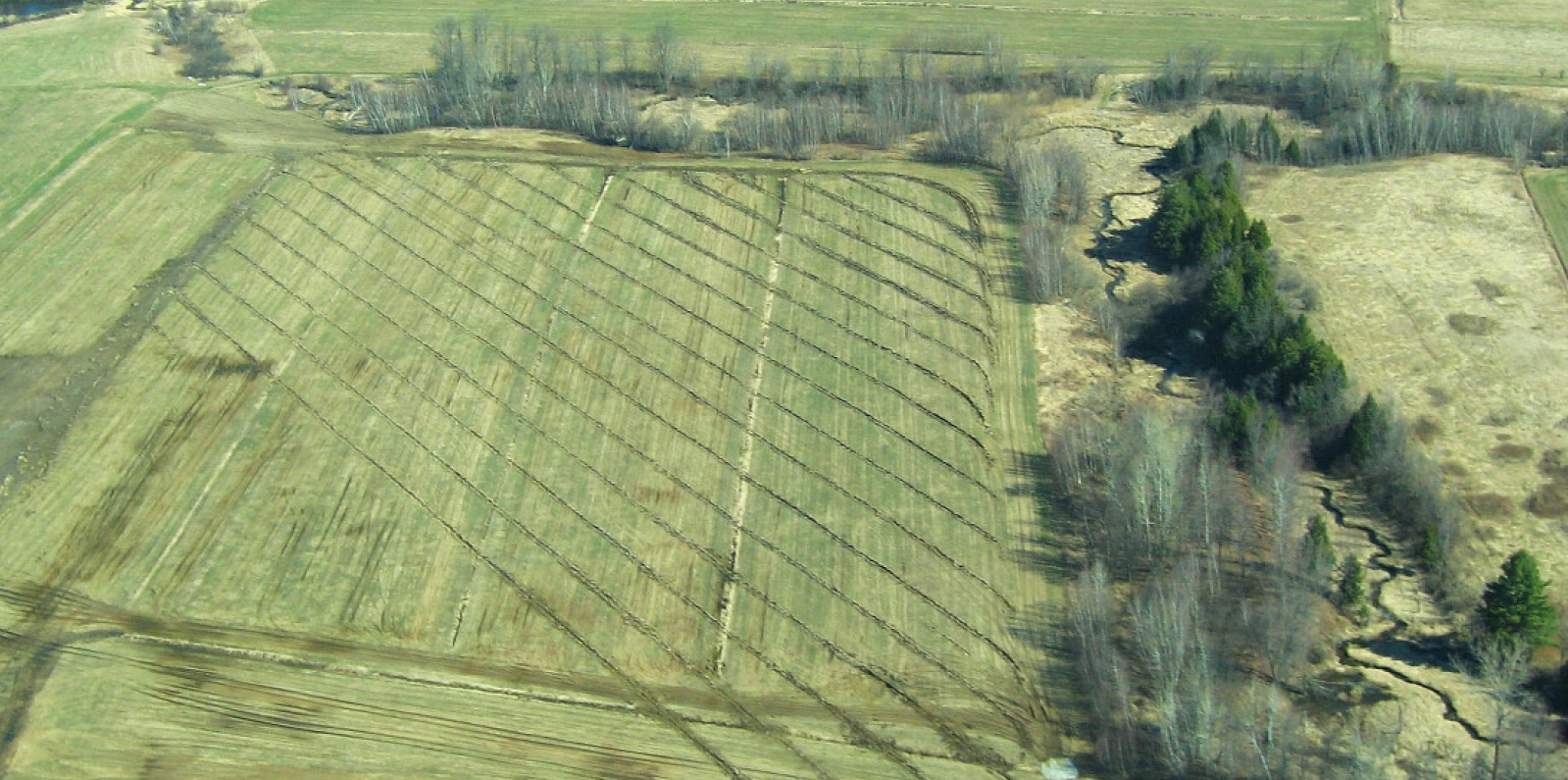
 The interim report is available now on the Vermont Agency of Agriculture, Food and Markets (VAAFM) website. Click on picture to access the PDF report. VERY TOP PHOTO: A field with a modern tile drain system. In the past, tile drains could be random and dump runoff directly into waterways. Courtesy photo.
As requested by the General Assembly, the interim report summarizes assumptions and facts about the use and impact of subsurface tile drainage on Vermont’s farms and waters. A literature review of current research around North America, and ongoing studies in Vermont, will further inform recommendations for management of tiles drains in the final report. The Lake Champlain Basin Program is funding a tile drainage review of literature, which is due in the spring of 2016. The Interim Report provides context regarding the use of subsurface agricultural tile drainage in Vermont, outlines changes in the practice over time, summarizes the benefits and impacts of tile drainage, and outlines management strategies currently available and being researched.
“This joint Interim Report continues the ‘all in’ collaboration that the two Agencies have delivered over the past five years to develop goals and strategies to clean up Lake Champlain and implement the Vermont Clean Water Initiative,” said Markowitz. “Vermont’s Clean Water Initiative addresses all sectors impacting our waters—roads, wastewater treatment facilities, developed lands, forests and farms—and strategies are in place across those sectors to protect and improve Vermont’s water resources.”
Prospective Benefits
Agronomic & Economic
• Increases soil aeration which promotes microbial activity and deeper root growth
• Improves soil porosity & tilth
• Enhances soil structure
• Promotes warmer soil temperatures which can lead to earlier spring sowing and germination of seeds, along with a longer growing season
• Improves soil trafficability due to drier soils
• Decreases soil compaction
• Increases adaptation to climate variability
• Decreases susceptibility to disease and pests due to less moisture • Increases crop yields (up to 5-25% annually)
• Reduces risk of crop loss amid climate variability
• Allows higher value crops to be planted where it would otherwise be too wet
• Reduces labor time and minimizes fossil fuel consumption due to drier soils
• Return on tile drainage investment can range from 1 year to 10 years. depending on weather and cost of installation Due to the removal of excess water in the soil profile that subsurface drainage achieves, it has been demonstrated that there can be agronomic, economic and environmental benefits for farmers to maintain and/or install subsurface drainage.
Environmental
• May increase soil storage capacity of water due to improved soil structure and less compaction
• Potentially allows more water infiltration which in turn reduces surface runoff (up to 65%) containing sediment, nutrients and pollutants
• Properly functioning subsurface drainage may reduce peak flow volumes up to 50%
• Increased crop yields are assumed to potentially increase uptake of nutrients from the soil.
Environmental Impacts
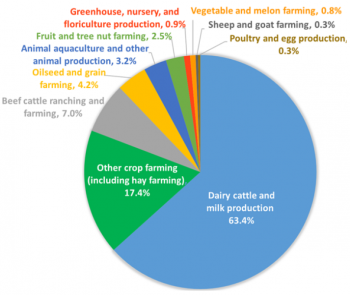 Out of 4.8 percent (23,552 acres) of tiled fields; 80 percent of those fields are devoted to supporting milk production, as farmers use their land to grow corn as grain or silage, and to grow grass for pasturing and hay.
Although much is unknown about subsurface drainage and its environmental impacts in Vermont, the final report will reference several partially completed Vermont research studies.
Hydrology Impacts
• Has contributed to the loss of wetlands
• Alters field and watershed hydrology by increasing water yields and stream baseflow
• Although total peak flows decrease when fields are tiled, over 90% of the peak flow has the potential to drain out of tile outlets
• Preferential flow pathways (including macropore flow) in soil profiles can provide a direct conduit to tile for pollutants, and can increase concentration of phosphorus in tile water after a storm event and/or nutrient application.
Nutrient Impacts
• Tile outflow has the potential for higher percentages of dissolved phosphorus than surface runoff
• Total phosphorus levels from tile outlets may exceed critical levels necessary for accelerated eutrophication (0.02-0.03 mg L )
• Elevated phosphorus levels in soils lead to greater and stronger correlation of dissolved phosphorus in subsurface drainage
• Phosphorus levels can be greater on clay loam tiled fields than sandy loam tiled fields
• Depending on management, nutrient source and soil type, flow from outlets can account for 17-41% of total phosphorus and 16-72% of dissolved reactive phosphorus of peak flow
• In some settings, tile may export equal or greater amounts of phosphorus as surface runoff
• Loss of nitrate-nitrogen is greater.
Questions remain about many aspects of tile drainage, despite the fact that it has been installed in Vermont for over 80 years. It is important that future recommendations and policies include region-specific information, based on Vermont’s soil types, slopes and agricultural management. Some areas where additional information is needed are outlined below. It is also important to note that resources do not currently exist to evaluate these questions.
Research Needed in Vermont
Cover cropping on tiled fields: Will it reduce phosphorus concentrations in water coming out of tile drains?
• Tilling methods: What methods are effective and ineffective for breaking up preferential pathways and lowering phosphorus concentrations on fields drained by tile?
• Manure injection: Can it increase the connection between manure and preferential pathways? Can manure injection allow for high phosphorus levels in tile outlets?
• Nutrient application rates and timing: Should application rates depend on soil types? Should nutrient application rates be reduced on tiled fields, and by how much? When mild rain events are predicted should nutrient applications be avoided?
• Constructed wetlands and saturated buffers: Can either practice be an effective way in treating the dissolved phosphorus coming from tile outlets?
Information Needed
• Amount of subsurface drainage systems in impaired watersheds
• Amount of standpipes in impaired watersheds
• Concentrations and loading rates of outlet flows specifically in Vermont relating to soil types, cropland practices, crop rotations, existing soil test phosphorus levels, nutrient source of phosphorus (manure, fertilizer or compost) and nutrient application rates/methods, as well as timing of applications in relation to weather conditions
• Net impact of subsurface drainage on phosphorus losses
• Effectiveness of management and structural practices to control and reduce phosphorus loading coming out of outlet systems on varying fields
• Modeling tools designed to predict phosphorus losses from subsurface drainage in combination with a variety of better management practices
Background
As early as the 1830s, subsurface drainage (also known as tile drainage) was installed around the country to remove excess water from the soil profile (or subsurface) through a network of perforated tubes installed at varying depths below the soil surface. These subsurface drainage systems were made of clay tiles and were spaced randomly in fields to target and drain wet spots. For this reason, these systems were called random/target tiling.
Today, subsurface drainage is widely used across the United States because it is a practice critical to producing crops and can often be the difference between having a crop and not having one. Current systems are made of corrugated and perforated plastic tubing, and are usually installed in a systematic pattern throughout entire fields.
For this reason, they are named pattern/systematic drainage systems. According to the 2012 agricultural census, 4.8% of Vermont's total acres used for cropland is drained using either random/target or pattern/systematic systems. This practice allows farmers the opportunity to get on their fields earlier, reduce compaction, increase crop yields, decrease susceptibility to disease and pests, and reduce crop risk loss amid climate variability.
Due to the agronomic and economic benefits, the United States Department of Agriculture (USDA) encouraged, and provided technical assistance and cost-share payments to farmers for installing subsurface drainage from 1935 into the 1980s. In the 1970s, the federal government started to realize that subsurface drainage had adverse effects. Wetlands, critical ecosystems that provide water quality protection, flood storage and habitat, had been converted into agricultural fields and development properties with the help of subsurface drainage systems. In fact, half of the wetlands in the United States and 35% of the original wetlands in Vermont have been converted. Research in recent years has also shown that subsurface drainage alters watershed hydrology, and depending on management, nutrient source and soil type, has the potential to export equal or greater amounts of phosphorus and nitrates as surface runoff. Questions remain about many aspects and adverse effects of subsurface drainage and more research needs to be completed, despite the fact that it has been installed in Vermont for almost a century.
Interim Report
While this report provides an interim assessment of the benefits and costs of tile drainage for farms and impact on waters, the final report will more fully describe current scientific research relating to the environmental management of agricultural tile drainage and how tile drains contribute to nutrient loading of surface waters. The final report will also include recommendations on how to best manage tile drainage to prevent or mitigate the contribution of tile drainage to water quality in Vermont’s surface waters. Likewise, the final report will identify knowledge gaps and areas where further study is needed, as well as opportunities for further investment in this field of research.
As required by Act 64 of 2015, the Vermont Agency of Agriculture, Food and Markets (VAAFM) will be revising the Required Agricultural Practices (RAPs) in 2018 to include requirements for tile drainage on Vermont’s agricultural land. Secretary Ross elaborates, “This interim report is an important step towards delivering a final report in 2017 which will frame the RAP tile drain rule revision process.” Ross continued, “Agricultural tile drainage is a common practice in Vermont and throughout the United States. Balancing the agronomic need and economic benefits of the practice with a thorough review of the environmental impacts of tile drainage and strategies to prevent and mitigate the potential effects is at the core of the process VAAFM and Vermont Agency of Natural Resources (VANR) are currently engaged in as we work to develop recommendations for the management of tile drainage for the final report in 2017.”
Over the next year, VAAFM and VANR seek to bring together a working group of farmers, industry professionals, academics, and other stakeholders to review research, the use of tile drainage in Vermont, and management strategies available to farmers. This working group will help inform recommendations VAAFM and VANR will be making to the legislature in 2017.
VAAFM and VANR remain firmly committed to the collaboration required to successfully implement the Environmental Protection Agency’s Lake Champlain TMDL, Vermont’s Phase I Implementation Plan for cleaning up Lake Champlain, the Vermont Clean Water Initiative, the development and implementation of the Required Agricultural Practices, and to addressing water quality issues throughout the State. For a copy of the Subsurface Tile Drainage Interim Report, visit: http://agriculture.vermont.
Source: Vermont Agency of Agriculture, Food and Markets. 2.17.2016