

by Erin Mansfield vtdigger.org The largest membership organization for family doctors in Vermont is encouraging political leaders to not cut Medicare payments. They also endorse a sweetened beverage tax and universal background checks for gun sales.The Vermont Medical Society passed resolutions calling on GovernorPeter Shumlin’s administration to not cut any payments that Medicare makes to Vermont doctors for senior citizens’ health care.
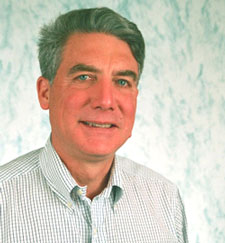
Vermont Medical Society executive vice president Paul Harrington. Photo courtesy of the Vermont Medical Society.
The organization, which has 2,000 members, also endorses universal background checks on Vermont gun sales as a public health measure, and a 2 percent excise tax on sugar-sweetened drinks and artificially sweetened drinks to help combat obesity.
The administration continues to negotiate with the Centers for Medicare and Medicaid Services for waivers, including one with Medicare, that would allow it to set payment methodology and create a so-called all-payer model. (The agreement being negotiated is also often called an all-payer waiver or a Medicare waiver.)
“We’re concerned that the state, in an effort to set up the all-payer model, enters into an agreement that actually decreases the amount of money coming in for Medicare in the state,” said Paul Harrington, the executive vice president of the Vermont Medical Society.
“The resolution we passed lays out a number of principles that the medical society believes should be reflected in an all-payer waiver,” Harrington said. Currently, the only other state with any all-payer system is Maryland, which uses it to set uniform rates at hospitals.
Vermont’s per-beneficiary Medicare costs are 70 percent of Maryland’s, according to Harrington. He said if Vermont cut that number it would have to make up for it somewhere else in the health care sector of the economy — such as by increasing commercial insurance rates.
The all-payer agreement has been under negotiation for most of 2015, and it’s still unclear when a preliminary agreement will be reached. Michael Costa, the deputy director of health care for the Agency of Administration, told the Legislature’s Health Reform Oversight Committee on Friday, “No commitments have been made. No guarantees have been issued.”
The Shumlin administration describes the agreement as a vision to pay doctors for making patients better, not for performing unnecessary tests that drive up how much insurance companies pay them. In health care jargon, it’s called value-based medicine. The administration has said several times that it does not intend to affect Medicare beneficiaries.
Ena Backus, the deputy executive director for the Green Mountain Care Board, told the Health Reform Oversight Committee that one goal of the all-payer model would be to move Medicare payments away from fee-for-service, which pays doctors for services like an a-la-carte menu, toward another payment method.
Costa said the federal government would not agree to issue a Medicare waiver to create the all-payer model unless the state can prove it would provide savings to the federal Medicare trust fund.