

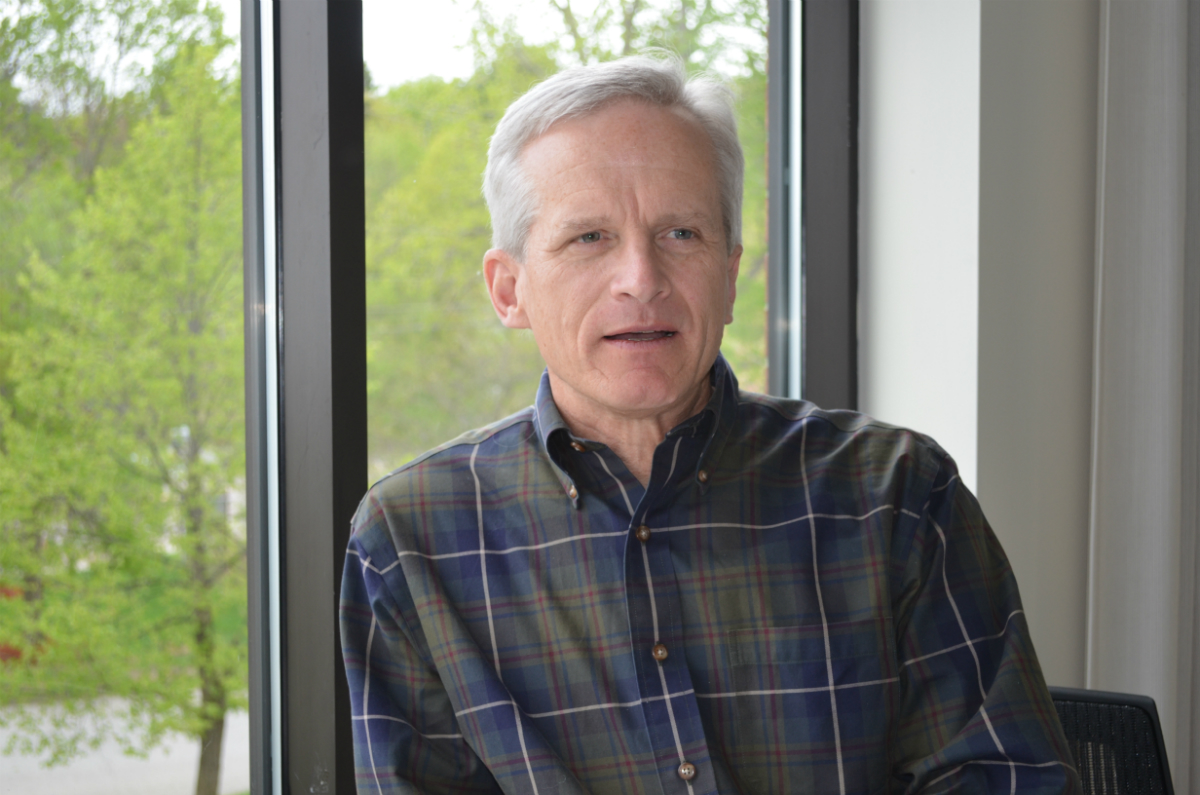
by Timothy McQuiston Vermont Business Magazine As the Public Service Board considers whether to re-open the case for Vermont Gas Systems' Addison County pipeline project, Vermont Business Magazine is re-publishing an interview it conducted with Vermont Gas CEO Don Rendall, which ran in the June issue of the magazine. The PSB technical hearings are scheduled toconclude today and a decision is expected later this summer.
Don Rendall was hired by Vermont Gas last November and officially took over leadership from long-serving president Don Gilbert on January 1, 2015. The transition took place during a time of great tumult for the company, which had for the vast majority of its 50-year history quietly served customers in Franklin and Chittenden counties.
What seemed like a relatively logical step in the company’s growth, and for the state’s economy, to extend the gas pipeline farther south almost immediately turned ugly.
The plan was to run the pipeline to Middlebury, then hook up a big account by running the line under Lake Champlain to the international Paper Company plant in Ticonderoga, NY, and then use that subsequent revenue to help pay for eventually bringing natural gas down to Rutland.
The plan received the nearly universal blessing of local politicians, including Governor Shumlin, and the overwhelming support of the business community.
But some landowners and environmentalists almost nearly as quickly lined up in opposition. Initially it was the landowners whose property would have to be dug up that first questioned the plan. The digging also concerned others who saw it as damaging the environment in a rural part of the state. Then came opponents to hydraulic fracturing (fracking) who saw the plan as aiding and abetting what they view as the environmental disaster of this mining practice, because at least some of the gas would be sourced from fracking.
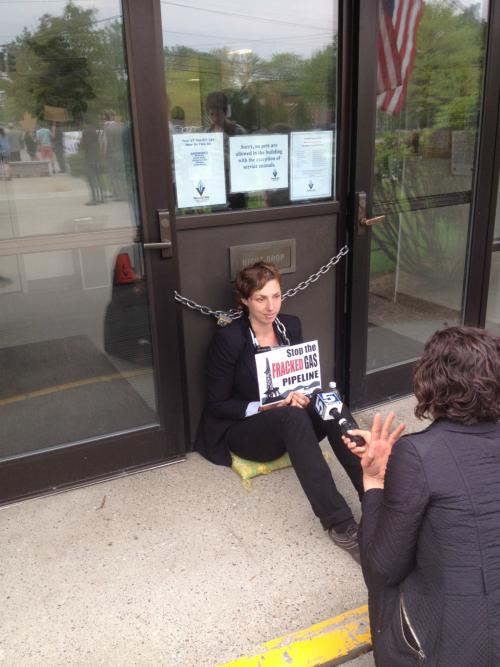 Photos by Vermont Business Magazine
A year ago protesterswere able to climb to the top of Vermont Gas’ headquarters in South Burlington and hang a huge anti-fracking sign from the roof as their colleagues protested down below. A young woman chained herself by the neck to the front door. A few protesters were taken into custody. Protesters also marched through the Williston staging area. Two even chained themselves together in a trench at another location. Last October they even occupied the reception area to the governor’s office in Montpelier, before being peacefully removed by police.
But it was not for those reasons that some in Vermont vehemently balked at the plan. It was the finances. A huge cost increase forced International Paper to back out of the deal. It even led to AARP vociferously opposing even the extension to Middlebury.
What? Seniors don’t want lower cost heating? Environmentalists don’t want less carbon emitted?
From AARP’s view, current ratepayers are (and will be) paying for what they see as a fiasco and are among those asking for regulators (the Vermont Public Service Board) to ditch the whole thing before it costs everyone even more.
Regulators are expected to decide this summer whether to revisit the entire Certificate of Public Good. If it does reopen the case, it could rule to either let the current CPG permit stand as is, modify it, or cancel it.
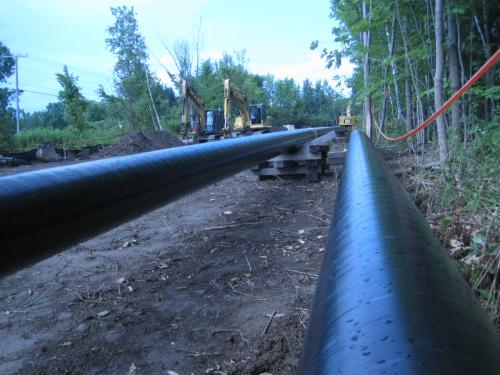
For now, Vermont Gas is proceeding with business as usual and still plans to finish the Middlebury leg of the project on-time and – with the caveat of two increases in projected costs (from $86 million to $121.6 million to now $154 million) – on-budget next year. In the mean time, Vermont Gas is hoping to add another 1,200 customers within its existing service territory this year.
Into all of this has stepped a low-key attorney originally from western New York.
Don Rendall has been leading Vermont Gas now for nearly six months. He missed most of the headline-grabbing, film-at-11 stuff that transpired last year, but had a pretty close view of it from his position as a senior VP at Green Mountain Power.
Green Mountain Power and Vermont Gas are both owned by Quebec’s Gaz Metro. While the companies maintain that there is not much “cross pollination” between the two companies, it should come as no surprise that the new leader of Vermont Gas would come from its sister company, which is widely regarded as one of the best-run utilities in the US.
Vermont Gas, with 150 employees, further changed the tone of the conversation by reshuffling its public relations, again like GMP, by hiring a young woman, a former WCAX-TV reporter and a Vermont Business Magazine “Rising Star” (Kristin Carlson joined GMP early in 2014 and Beth Parent joined VGS late in 2014).
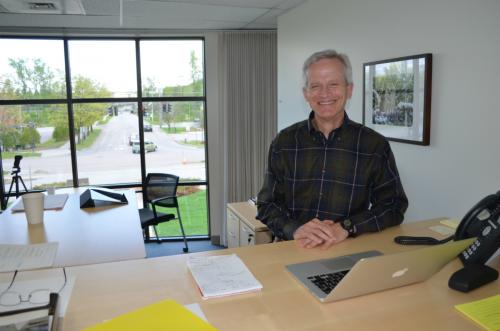
Rendall is very much part of the new vibe of openness and transparency. Even his office is just a wide, open landing on the second floor.
He said that even knowing there still will be “bumps along the way,” that they’ve turned the corner on this project.
Indeed, the protests have quieted some and communications have improved, but Vermont Gas still has much work to do to convince the PSB, ratepayers, landowners and others that the pipeline is still a financially sound and environmentally beneficial development for Vermont.
Rendall, 59, is a Dartmouth College grad who earned his JD at Duke University. He eventually made his way to Vermont and did work with Green Mountain Power as a partner with the Burlington law firm of Sheehey Furlong & Behm, before being hired by GMP in 2002.
He enjoys skiing and biking (and looks it) and he and his wife have three grown children. He was interviewed in his office by VBM editor Timothy McQuiston in mid-May.
VBM: Sell me the pipeline extension, like I’m a regular customer.
Rendall: The pipeline extension is an important opportunity for Vermont to extend our natural gas infrastructure to a part of the state that is really anxious to have the opportunity to use natural gas, to have natural gas service. It will serve important employers in Addison County. Agri-Mark and Middlebury College being two of them. To bring the benefits of natural gas service to more than 3,000 new customers in Addison County and to extend the natural gas infrastructure, which is limited to Chittenden and Franklin counties, south, as a step along the way as we build toward that clean energy future that natural gas is such an important part of. It’s a great opportunity for new customers to have the opportunity to save significantly on their on their heating costs. The average Vermont Gas customer saves something like $2,000 a year compared to if they were limited to oil or propane as their heating source. Obviously a much bigger potential savings for important employers in Vermont. We’ve had a lot of economic development success in Franklin and Chittenden counties over many years and this is one of the attributes of Franklin and Chittenden counties that we are trying to extend to different parts of the state.
As you may know, nationwide, natural gas serves more than 60 percent of all homes and businesses across the country. In Vermont we’re hovering around 10 percent. We are an outlier and this is a big opportunity to take a big step in extending that service to new customers, to new businesses, to working families who are struggling to make ends meet.
Infrastructure like this is a long-term investment. And it’s expensive. And it’s a big challenge to build infrastructure like this anywhere, and certainly here in Vermont as well. The project has faced some challenge, as you might expect for a significant infrastructure project, whether it’s an electric transmission line, an electric generation facility, a new highway. We’ve been working really hard to address those challenges and we’re confident that we can and we’re on track to get this project completed in 2016.And really looking forward to bringing all the benefits that a natural gas pipeline will bring to Addison County.
Right now, just in the next couple of weeks, we’ll be delivering service to the “distribution island” that we’ve constructed in Middlebury for Middlebury College. We’ve got Agri-Mark already served off that island. We have a wonderful collaboration with NG Advantage, Tom Evslin’s compressed natural gas business, to use that as a transition to get natural gas flowing down there. And we’re all looking forward to getting the pipeline, which will bring the costs down and really make the difference for Middlebury.
(For NG Advantage, natural gas is compressed into specialized truck trailers which hook either into a station or island that further distributes it locally or the trucks are hooked directly into a plant; several trucks are typically used for an industrial customer. It was announced in May that NG Advantage, using Vermont Gas, would directly serve the International Paper plant, by trucking CNG from Milton, Vermont, to Ticonderoga, NY. Even before this new contract, NG Advantage was Vermont Gas’ biggest customer.)
VBM: The end-game for Governor Shumlin and the state was for the pipeline to make it to Rutland. What do you tell people in Rutland, who were really hoping for it probably more so than the people in Addison County, what do you tell those people?
Rendall: So, a couple of things. First, I’m thrilled to report that we’re getting natural gas to Rutland today. We have a system up here that allows NG Advantage to succeed in their business. NG Advantage has several customers in Rutland and it’s great to see natural gas as an option for business customers in Rutland, albeit without a pipeline. We’re working with Tom Evslin and with business leaders in Rutland to replicate our natural gas island concept in Rutland and look forward to coming up with a plan for one or more of these natural gas islands that will really help to bring natural gas to business customers down there, with the attendant opportunities for economic development there.
The pipeline is a challenge because, as we’re seeing, the cost of this kind of infrastructure, is higher than the company estimated it would be when Vermont Gas embarked on this expansion a couple of years ago. We’re headlong in to a review of what it will take to get to Rutland from Middlebury, as we speak, and we’re working with both business leaders in Rutland, who are part of that effort, and with a group of very talented people here at the company and with some outside folks to see what it will take to get to Rutland, what that will look like to evaluate it in a very clear-eyed way. And we’ll take it from there. We all want to understand how we can get there. We all want to understand how much it will cost us to get there. We all want to understand what the best alternatives are for taking natural gas service beyond Addison County in the future. And to evaluate how we proceed from here based on what those alternatives are and what the economics are and what the benefits are.
VBM: The CNG model works best with industrial customers. The governor and local officials in Rutland really want natural gas to get to residential customers.
 Rendall: We’re really focused on how we can expand natural gas to more homeowners, more families and small businesses. Down in Rutland in particular we’re looking at how we can use the gas island concept to essentially aggregate smaller commercial customers. Yes, right now that model works best for large customers, and we’re testing how much penetration we can do, economically, where it’s good for the customers as we look to how we can bring natural gas to smaller commercial customers. A pipeline certainly is a preferred solution for residential customers who don’t have an alternative heating source, that can’t be interrupted, who must have a reliable source 24/7. That’s part of what we’ll be evaluating. We’ll be very open and direct about what our work reveals and we’ll see where it leads. I’d be thrilled to sit here and say that it’s, oh, easy, we’ll get it done. I think it’s important for us to have a practical and reliable understanding of what it will cost and what the impacts will be on the community along the way and proceed from there.
VBM: So the economics for Rutland where in large part dependent on bringing it down to Ticonderoga?
Rendall: The Ticonderoga leg was going to contribute if it were constructed as originally envisioned, at the original cost levels. It was going to bring a contribution that would have paid down effectively part of the cost of bringing it from Middlebury to Rutland, yes.
VBM: NG Advantage has a contract with International Paper. Ultimately, would that have been cheaper for the paper mill?
Rendall: I’m not privy to IP’s internal economics as to what works best for them. The pipeline expansion project for them, from Middlebury to Ticonderoga, was one they were going to pay for. They were in a position in having to evaluate paying for that against their economic model against paying for that paper plant on their investment cycle using whatever assumptions they use for the time frame over which they would want to have paid for the investment. It’s a very different set of economics for a working plant down there rather than looking at infrastructure for communities as we think of pipelines in Vermont. It’s wonderful to see they have a natural gas alternative. It’s wonderful to see a Vermont company, NG Advantage, having the opportunity to serve them. And it’s wonderful to be a close business collaborator with NG Advantage. (The discussions with IP and the natural gas pipeline precede NG Advantage, which only began operating in 2014.)
VBM: So why did the cost of the pipeline increase so much and why that wasn’t anticipated?
Rendall: Vermont Gas has 25 years of experience of expanding our system incrementally over time, in a variety of different ways, as we expand to new communities. We are up to almost 50,000 customers and that’s from a beginning 50 years ago of serving just a few thousand customers in Burlington and up through Franklin County. So the company had a lot of experience in building new legs of new transmission line or of distribution on the system. Those were relatively small projects and had a cost range that the company was comfortable with. The company hired some pros to help them estimate the cost of the pipeline and the costs came out where they came out, which was way lower than they are today. They did not reflect the real cost of a project of this scale over this time frame. This included the practical cost of the construction of a pipeline over 40 miles. It included the cost of dealing with all the landowners along the way, it includes the time over which the project is built, the very appropriate and intensive permitting and engineering that goes into a project like this. And if you look at all those aspects of the project, the time, the construction costs, right-of-way costs, the permitting costs, the development costs, those costs have turned out, both in terms of what the company has spent and what the company is estimating what it will take, those costs were all quite a bit higher than the original estimates.
VBM: How were the construction costs themselves higher?
Rendall: The estimates then compared to the estimates now were different. They’re higher now than when the project was first estimated. That’s a function of having good contractors who can get the job done. It’s a function of the landscape in which the project is being built. One thing I’m learning as a new member of this team is that when you’re building something underground like this, there’s a whole variety of construction challenges that you have compared to the construction challenges that you have compared to the challenges you would have in building an overhead transmission line, for example. Or if you’re building in a closed space versus if you’re building a long, linear project where you don’t have access to all the property all of the time, because you’re still working with landowners over access and right-of-way. The amount of rock in the ground. The challenges of building through rock and ledge is just one aspect of it. That’s a pretty significant variable in the cost of construction.
VBM: Is the supply and demand nationally of construction firms and labor play into it?
Rendall: It no doubt has. There’s a tremendous amount of natural gas and associated pipeline work going on all the time all over the country, all over North America. And that ebbs and flows. It has been very intensive. With the drop in oil prices, that has dropped off a little bit on that side of it in the short term. But we’re not seeing a significant downward change in expected pricing for natural gas transmission pipeline projects. There’s still a lot of work going on. As you know, there’s a lot of that working being planned in New England. Construction costs move up and down. I haven’t had a chance to have a lot of experience here, but what I can tell you is that what I see out there is a lot of variability in construction costs at any given time.
VBM: I noticed a number of out-of-state license plates at the staging area in Williston: New York, Massachusetts, even Texas. It seems that the labor costs must be very high if you’re having to bring workers from out-of-state.
Rendall: This is specialized work. And we’ve got a variety of work going on in Williston. The company building the M&R (substation) is from out of state. The company that was doing pipeline work last year was from New York state. ECI, a local firm, is doing quite a bit of our horizontal drilling work. Yes, the labor costs are high.
VBM: Did labor contribute to the higher costs?
Rendall: No, not by itself. It’s an illustration of the fact that we’re building this project with resources for which the supply and demand is not just Vermont, it’s not just New England, it’s the Northeast, it’s the country. It’s the continent.
VBM: Is the Middlebury leg still economically feasible from your point of view?
Rendall: Oh, yeah, yes. And as you know, we’ve committed to a very open and transparent look at those costs and at the cost/benefit evaluation in front of our utility regulators, the Public Service Board. We’re in the middle of that regulatory cycle now. The Public Service Board is looking at those costs. We’ve made our submission to the Public Service Board. We’re very confident in that submission and very confident that the project still remains a good deal for Vermont, a good deal for Vermonters, both for the new customers that we will serve and the state as a whole, and the right thing to do for our existing customers.
VBM: And do you have any timetable for the Rutland leg?
Rendall: We’re aiming to have a good look at the Rutland question late summer. That’s what we’re aiming for, is to get some preliminary numbers. We’ve learned our lesson here. We haven’t picked a route. We’re not going to have a particular route. We’ve got a lot of work to do before we would ever have a route for a project like that because that involves sitting down with communities and landowners and individuals to see how that would work. But we should have – let’s call it a 40,000-foot view – by the end of the summer.
VBM: When do you anticipate that the regulators will rule on the Middlebury leg?
Rendall: The Public Service Board has a schedule, which they set, and the schedule calls for some hearings in the third week of June and then some time for the other parties to the proceeding– there are a number of them– to make some additional submissions after the hearings. I would expect to have the Board be able to make a decision after those submissions are in. So I would expect in late summer, late summer timeframe. Up to the Board, of course.
VBM: What are the couple most important points you will be making in this process?
Rendall: The tremendous benefits to Vermont, to the communities that we will serve with this project. This project is going to bring significant benefits to Addison County and to new customers. It’s going to bring significant carbon reductions to Vermont. It’s going to advance our state energy plan, which is to significantly reduce carbon over time and to do it through a variety of means, including renewable energy on the electric side and increasing the penetration of natural gas to displace, principally, fuel oil. So, we’ll have significant energy savings for customers, we’ll have significant carbon savings, we’ll be bringing natural gas to working families in Vermont that don’t have access to it, who will have the opportunity to save real money, put important dollars in their pockets, both to improve the quality of their lives and to improve our economic vitality.
VBM: AARP, as one important example, has said the cost increases of the project will back up onto existing ratepayers. What do you say to them?
Rendall: Let’s start by looking at how we got to where we are. We are so fortunate to be serving 50,000 customers in Vermont today. And we got there by expanding our system over time and those expansions have a cost associated with them. The investment in the infrastructure. And most of our customers today have the opportunity to have natural gas because we’ve expanded that infrastructure. To take AARP’s point of view, it would really be to say, Let’s not do that anymore. Let’s stop expanding because every time you expand you add investment which all customers pay for. That’s how the utility compact works, with communities, with states, with customers. It’s why we all have electricity. It’s why we all have telephone service. It’s why as many of us, who have natural gas service, have it. We’re very confident that our customers are very supportive of expanding natural gas to allow more families and businesses to have the benefits that we have had as Vermont Gas has expanded.
More specifically, yes, we will be using this investment, which will be borne by all of our customers, to expand natural gas and we are confident that we will continue to have a competitive and affordable rates for our customers. As you know, Tim, one of the advantages for our natural gas customers is that rates are regulated by the Public Service Board, different from oil or propane, where there’s not regulation. And that regulation means that the regulators will see us as an open book. Have the opportunity to look at our costs. And have the opportunity to decide what’ s the right thing to do for all of our customers, for our existing customers. And we’re confident that as we work through that process that our existing customers will be well served at competitive prices and will not see the kind of sticker shock that AARP is suggesting from their point of view.
Bluntly, we disagree with them. We’re confident our existing customers will be well served and we’re confident that our existing customers will remain as supportive of this company as they have been for many years.
VBM: There must have been some lost costs with the International Paper project, legal, engineering, etc, who bears that?
Rendall: International Paper. So the company has a contract, it’s called a facilities development agreement, with International Paper and their responsibility in that agreement was and is to fund that pipeline, if it had been constructed, and to fund the development costs of that project. Now that project has been terminated and we’re working with International Paper right now to settle up on the cost of that development, which they are responsible for, in the main.
VBM: So current ratepayers won’t bear the cost of that development?
Rendall: Current ratepayers won’t bear the cost of the development that were on IP’s side of the contract. There were some portions of the project that were being built for the benefit of both our customers and for IP and for those we had a sharing arrangement, but IP will be responsible for those portions of the project that related to them.
VBM: But the cost increase of just the Middlebury leg will affect rates to current customers.
Rendall: Those rates will reflect the cost of that project. Our rates are made up of many different cost centers, the cost of natural gas being the biggest single component of customer rates. And, yes, our capital investment is a portion of those rates, and, yes, those costs ultimately will be reflected in rates over time. We have many different ways to look at how rates are set as we present them to our regulators and as our regulators approve them (utilities might ask the PSB for a rate increase and the PSB typically approves a lower increase). I’m very confident that our customers will continue to see very competitive rates, along with the expansion of the system and our investment in the pipeline to bring natural gas service to Addison County.
VBM: What do say to property owners who were not happy with this process, and have been very vocal about that?
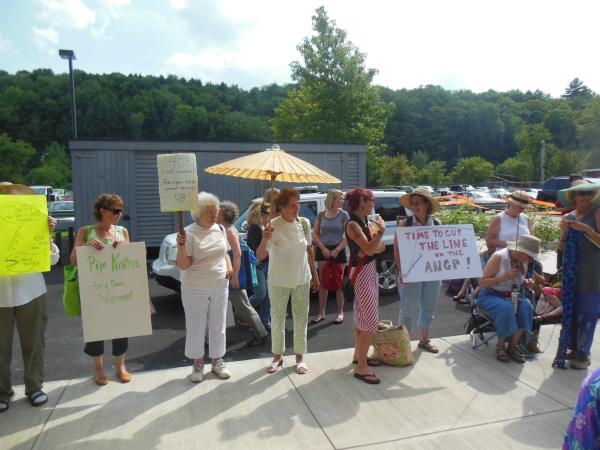 Rendall: First, we’re very pleased to be able to say that 90 percent of property owners along this expansion have made agreements with Vermont Gas to give us access to their property, to give us easements, in some cases to convey their property to us. We’re 90 percent of the way home. We have a few property owners with whom we have not yet reached agreement and we look forward to continuing to make every effort to reach agreement with them and we’ve been very successful in reaching agreement with property owners.
It’s a very small group of property owners compared to the total that are opposed to the project or that are unhappy with either the way that we’ve approached them or with the potential terms of our obtaining access. We’re listening to them. We’re working with them and we’re making progress with them and for those who ultimately don’t find it possible to work with us, we do have a process for addressing that for infrastructure projects – like electric transmission lines, like telephone lines, like roads and bridges and other infrastructure – and that is to ask the Public Service Board, in this case, to resolve our differences through the eminent domain process.
VBM: There was a lot of land taking when the Interstate highways were built and, now, many years later we’ve all accepted that and moved on. Do you think we’ll all move on from this?
Rendall: We are very respectful of every landowner’s viewpoint and the importance every landowner puts in their property. That’s an important part of our culture here in Vermont, and everywhere. Our property is important to us. That said, yes, I am confident that when all is said and done that the landowners that we have impacted, the communities that we have impacted will get very comfortable with this. Will see the benefits. And that we’ll be in the same place with respect to this project as we have been with other in-the-moment controversial projects that we’ve had over decades in Vermont: highways; I’m thinking of the Northwest Reliability transmission project that VELCO built here, what, a dozen years ago now, and there was quite a bit of intense scrutiny and controversy around that project. From my perch as I sit here it feels like we’ve made a lot of progress in putting that behind us. I’m saying that understanding that impact on land is a very personal thing.
VBM: What do say to the people who are vehemently against hydraulic fracturing? The anti-fracking movement is very vocal. How do you speak to them?
Rendall: First, it’s important for us all to understand where we are with hydraulic fracturing. Most of the oil and gas products that we use today are in part manufactured in that way. It’s not just a natural gas challenge, it’s a petroleum challenge as well. When we’re filling up our tanks; when we’re filling up our oil tanks to heat our homes; when we’re filling up our; when we’re filling up our propane tanks to heat our homes, we’re talking about hydraulic fracturing in all of those contexts. It’s important for us to understand that in its full context. We’ve got a lot to do as a country. We’ve got a lot of work to do as a continent to build confidence, to have confidence that we’re using good environmental practices in the production of natural gas and in the production of all petroleum products. And I stand with those who believe we have effective, and responsible regulation of oil and gas extraction wherever it’s being done. It’s an important issue and it’s an issue I’m confident that we as a nation will tackle and that is what we should be tackling at the national level.
VBM: Were you and the company surprised by the level of opposition to the pipeline?
Rendall: I couldn’t be surprised by it because it had unfolded by the time I had got here. It’s understandable that individuals and groups here, who have very passionate views about the landscape, who have very passionate views about the environment, who have very passionate views about the way that we as Vermonters should be treated by our institutions, by our utilities, by our businesses should feel strongly about the project. Certainly not a surprise to me as I sit here.
It’s important for everyone, who agree and disagree with the choices that we make, have the opportunity to make those views known. We live in a place where it’s really important for us to have a forum to do that. Those who are against the project have that forum, have used that forum, and I’m sure they will continue to do so.
From our standpoint here, it is so important that we are respectful, on both sides of the views of those that we disagree with, and that we be respectful of the way we all go about doing our work. I look forward to every debate, whether it’s about this project or whether it’s about our company or about how we’re going to heat our homes and businesses as we move forward in time and welcome the views of everyone.
We will not always agree. And that’s OK.
VBM: Former president Don Gilbert and communications chief Steve Wark are no longer in the positions they were in when the gas pipeline project began and when all the opposition grew. Explain why these personnel changes were made.
Rendall: The company has made a variety of changes as we’ve gone along and the big change of course is that Don retired at the end of the year and I have succeeded him as the CEO of Vermont Gas. We’ve got a variety of folks who’ve been working for us for a number of years and some of their roles have changed and we’ve got a different team working on the outreach and community involvement area now than we had last year.
VBM: You brought in Beth Parent, who’s a superstar in communications, and it seems to me that the tone of the discussion is quite different than it was several months ago. Was this intentional?
 Rendall: This company has new leadership. We, as a team, have focused very much since I arrived on how we can communicate really effectively both among ourselves and with all of our customers and with all of our stakeholders with the public. And I’m very pleased with how well our team is doing in communicating in a forthright, direct and honest way. And I’m heartened by the response that we are getting from who we’re communicating with, who tell us, all the time, that not only is that what they expect, but that they appreciate the way that we’re doing it.
For us it’s getting the facts right, communicating them effectively and it’s listening to those who are interested in what we’re doing and being responsive to them in a direct and honest way as we move forward.
VBM: One of my neighbors chose not to hook into the natural gas line in our neighborhood because of the fracking. What do you say to that potential customer?
Rendall: Our job is to give customers choices. There’s no requirement that a customer, even where our service is available, that a customer choose it. And there could be a variety of reasons why a customer would make a choice. We hope that a customer would choose natural gas. We think it’s a great deal. We think it’s a great environmental step forward. We think we have the opportunity to help our customers become more energy efficient through our excellent energy efficiency services. And we do everything that we can to lead a customer to make a choice that we think is great for the customers and that is, of course, part of our business. For those customers that have personal or other reasons why they’d like to stick with what they’ve got, that’s fine too.
We’re pleased to be able to bring the opportunity to Vermonters. That’s really what we’re about.
So often we talk about the tradeoffs between improving our environment, moving to a cleaner energy future and the benefits of doing so. Here we’re fortunate to be able to say you can save money and reduce your carbon footprint. You can save money and take advantage of our energy efficiency services. And I hope that’s an effective sales pitch. It’s a fabulous product and a fabulous opportunity to contribute to the well being of Vermont families and contribute to economic development and to our communities in Vermont.