

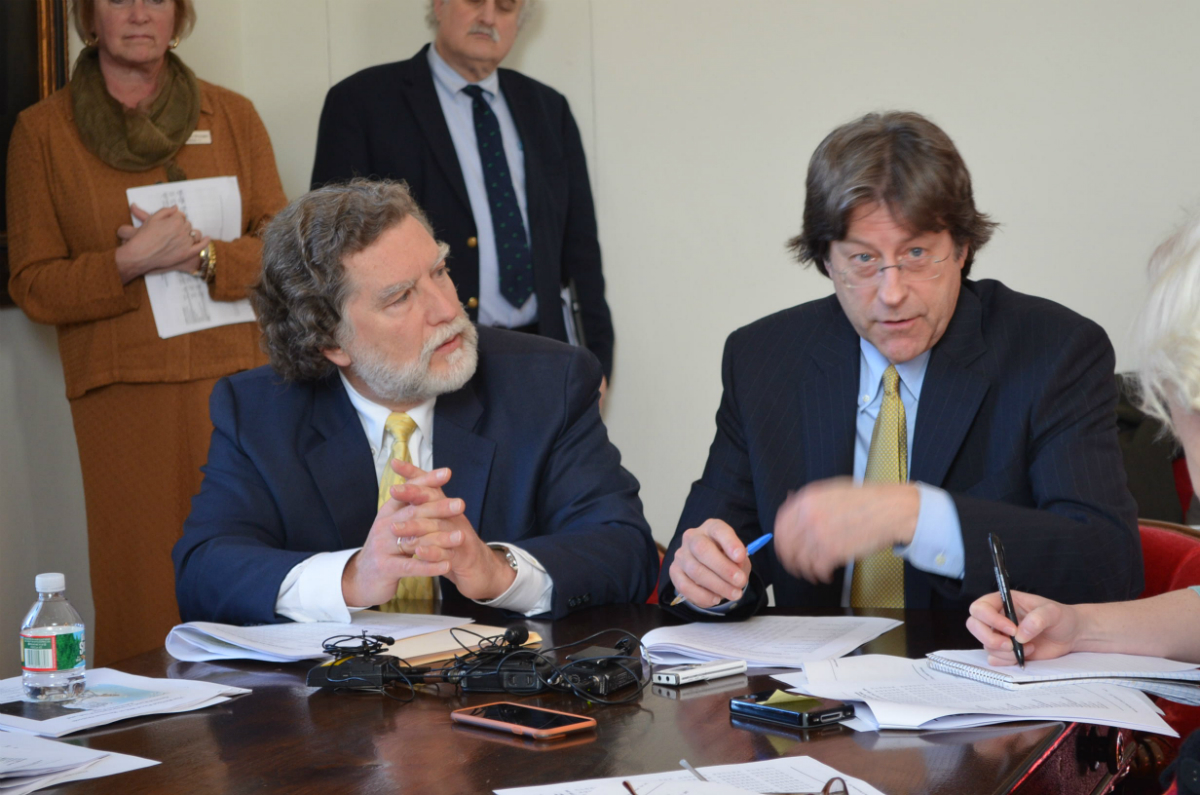
Vermont Business Magazine We all knew that a steep drop in gasoline prices would put more money in our pockets and help stimulate the economy. What we didn’t know is how profound that impact could be until today. Economists Jeff Carr and Tom Kavet briefed the state’s Emergency Board on current and expected tax revenues at the State House this afternoon. Governor Shumlin’s administration has already proposed $14 million in cuts to the current budget and the economists projected that that should be more than enough to cover what they see as a shortfall in the fiscal year 2015 revenue projections of $10 million.
Carr, on behalf of the administration, and Kavet, on behalf of the Legislature, offer their projections twice a year so the governor and lawmakers have a guide on how to budget. The E-Board is comprised of Shumlin and the chairmen of the four money committees in the Legislature.
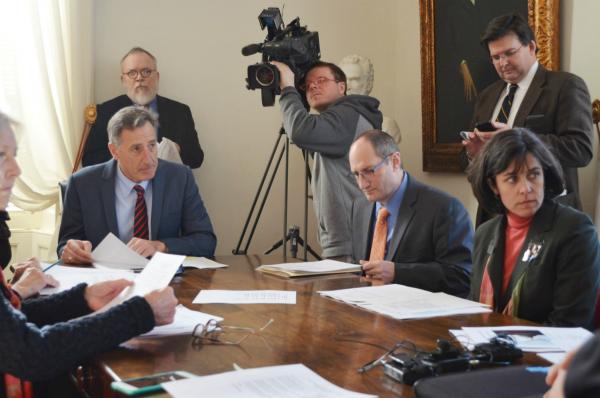 Governor Shumlin, new Administration Secretary Justin Johnson and new E-Board member Representative Mitzi Johnson (D-South Hero) listen to Tom Kavet (above left) and Jeff Carr offer their tax revenues projections. VBM photo.
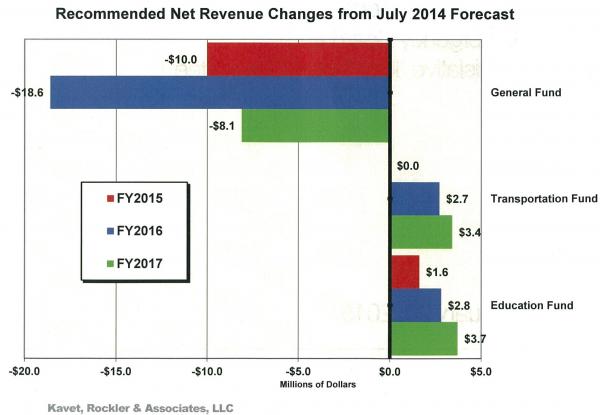
What they presented for the coming two years would seem otherwise bad news when just looking at the numbers. Along with this year’s General Fund lag, revenues are expected to be $18.6 million below their previous July 2014 forecast for FY 2016 (which begins July 1, 2015) and $8.1 million less than targets for FY 2017.
Here is where the gasoline prices start to make things look better.
 CLICK CHART FOR FULL REPORT.
The economists project that the average Vermont household will get a windfall of $2,500 a year at currently projected gas prices. This is after tax money that consumers have and will plow back into the economy. Gasoline is not much of an investment in the economy, they pointed out, because the vast majority of the cost goes out of state.
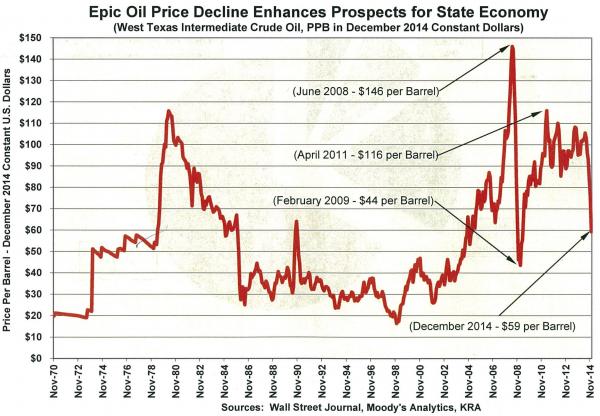 But as consumers have more money to spend, they will spend it more locally, they said.
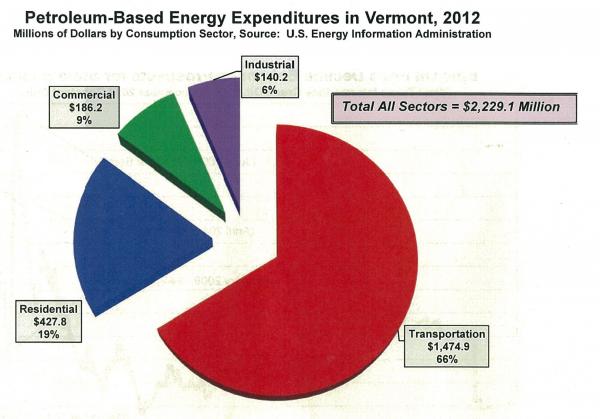 For that reason, they are projecting the consumption taxes to do better than expected over the next two-and a-half years, from motor vehicles, to rooms and meals to, yes, even cigarettes. While some of the benefits will go back into the General Fund, The Education Fund, to some extent dependent on consumption taxes like the sales tax, will be up over targets by $1.6 million this fiscal year, up $2.8 million next year and up $3.7 million in FY 2017.
The Transportation Fund, meanwhile, is likely to break even this year, but be up $2.7 million and $3.4 million the coming two years.