by Kaura Krantz vtdigger.org Governor Peter Shumlin was re-elected to a third term Thursday morning in a secret ballot by a joint assembly of the Vermont Legislature. Shumlin beat Republican Scott Milne in a 110-69 vote. In a rare but not an unprecedented procedure, the Legislature chose a governor because no candidate garnered more than 50 percent of the vote in the November 4 general election. Milne said shortly before the vote that "lightning could strike." But it did not.
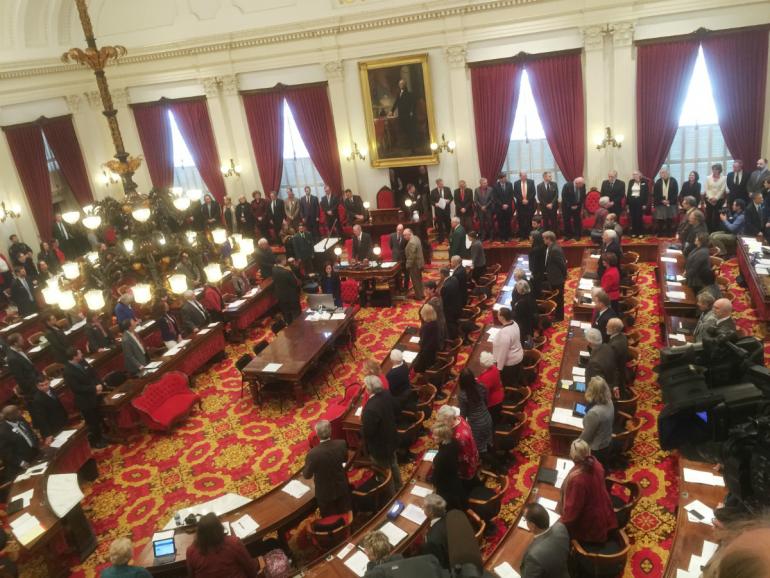
 Three sets of "tellers" count and verify the votes (green ballots) in the Hosue Chamber. Photos by Vermont Business Magazine.
Shumlin beat Milne by 2,434 votes but because of votes for third-party candidates, neither frontrunner received a majority. Shumlin won 46.4 percent of the vote, while Milne received 45.1 percent. Milne acknowledged that Shumlin received the most votes but did not concede the race.
Under the Vermont Constitution, if no candidate wins the plurality, the Legislature votes by ballot. Lawmakers on Thursday chose between the top three vote-getters, Shumlin, Milne and Libertarian candidate Dan Feliciano. Feliciano, who drew less than 5 percent of the vote in November, received no votes from lawmakers Thursday.
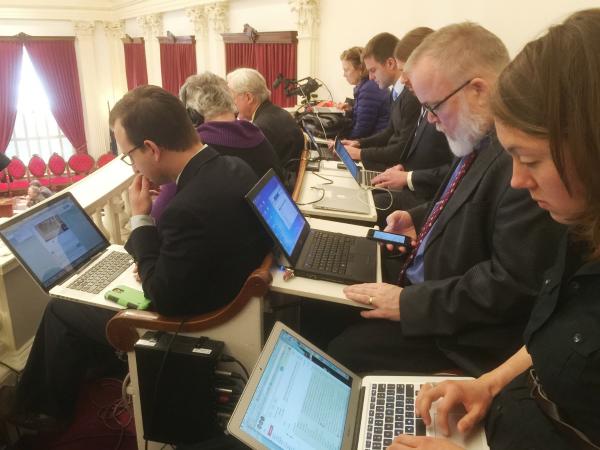 Reporters prepare for the vote from the balcony.
These circumstances have happened before in a Vermont gubernatorial election, most recently in 2010 when Shumlin was first elected governor, but traditionally the second-place candidate has conceded and asked the Legislature to support the winner.
In the weeks leading up to the Legislature’s vote, a group called Vermonters for Honest Government ran TV and social media ads urging voters to ask their representatives to vote for Milne.
The group’s spokesman, William Round, said Thursday that the group is disappointed with the results.
“(Vermonters for Honest Government) hopes Gov. Shumlin will be disciplined in his recent commitment to listen and be more accountable to Vermonters,” Round said in a statement.
The vote Thursday morning took place in the House chamber, with senators filling ceremonial red seats across the front of the room.
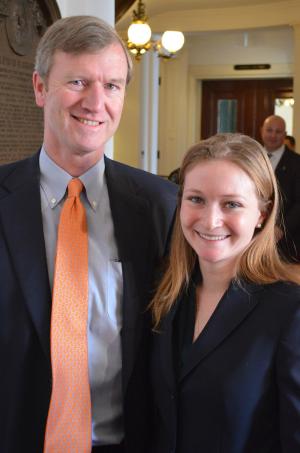 Scott Milne and daughter Elise, a student at Vermont Law School, shortly before the vote.
The ballots cast were secret ballots, so it is unclear how each legislator voted. In weeks approaching Thursday’s vote, debate swirled over whether lawmakers should be forced to reveal how they voted. Controversy also ensued over whether lawmakers should vote according to their conscience, party line or choose the candidate who got the most votes in their district.
Senate Secretary John Bloomer, however, is relying on historical precedent that interprets the word ballot to be secret.
Shumlin issued the following statement after the vote:
“It’s been an incredible honor to serve as Governor of Vermont, and I am so grateful for the opportunity to continue serving this state I love. I expect this will be a productive session addressing the issues Vermonters care about so deeply. In my Inaugural and Budget Addresses, I will offer my proposals to help expand our economy, grow jobs and increase affordability, because I know that many in Vermont still are not feeling the benefit of our economic recovery. I will also propose ways to address the challenges and opportunities that lie ahead in making sure state government operates at a price Vermonters can afford, while providing critical services to our most vulnerable. Vermont continues to be the best place in America to live, work and raise a family, and we need to fight hard every day to make that a reality for every single Vermonter. I look forward working with Vermonters and legislators to do just that.”
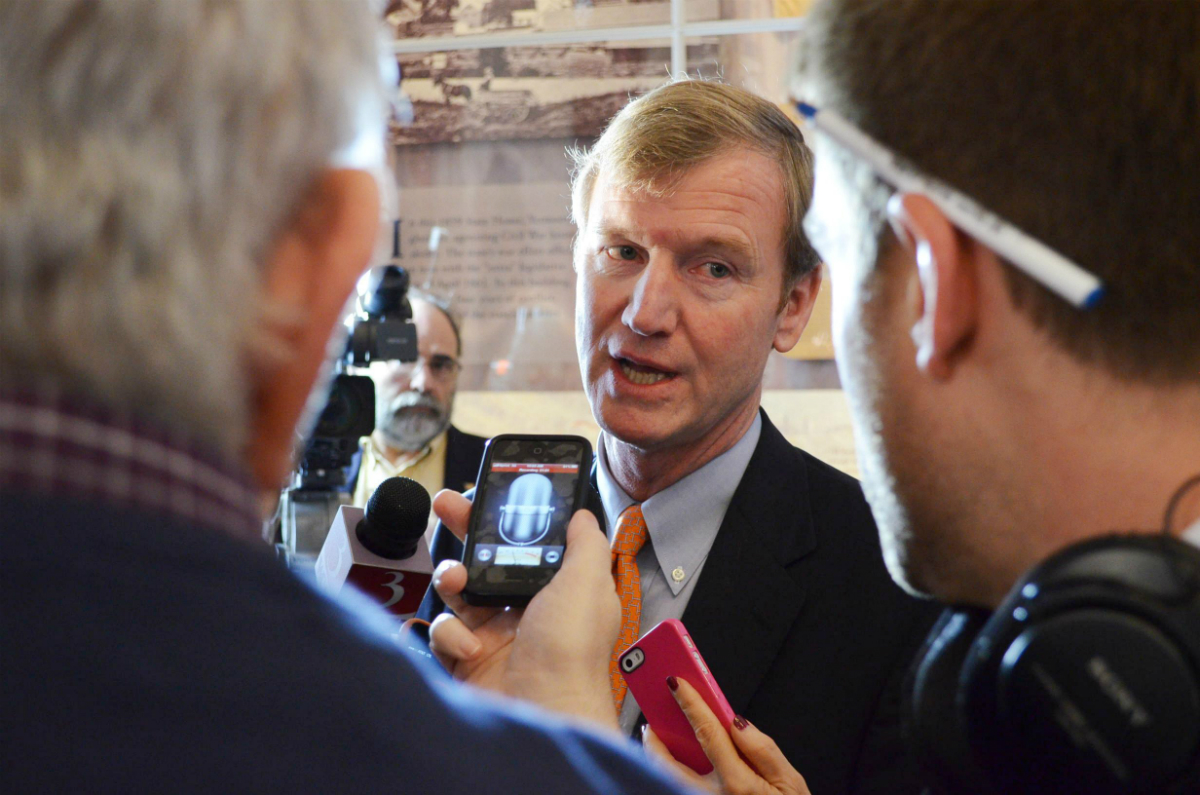
VERY TOP PHOTO: Milne is interviewed by a crush of reporters after the Legislature elected Peter Shumlin governor. BELOW: House members stand as senators arrive for the joint session that would confirm the election of the state-wide races. Only the governor's race required a vote as the Lieutenant Governor, Attorney General, Secretary of State, State Treasurer and Auditor of Accounts all received majorities at the time of the General Election.