

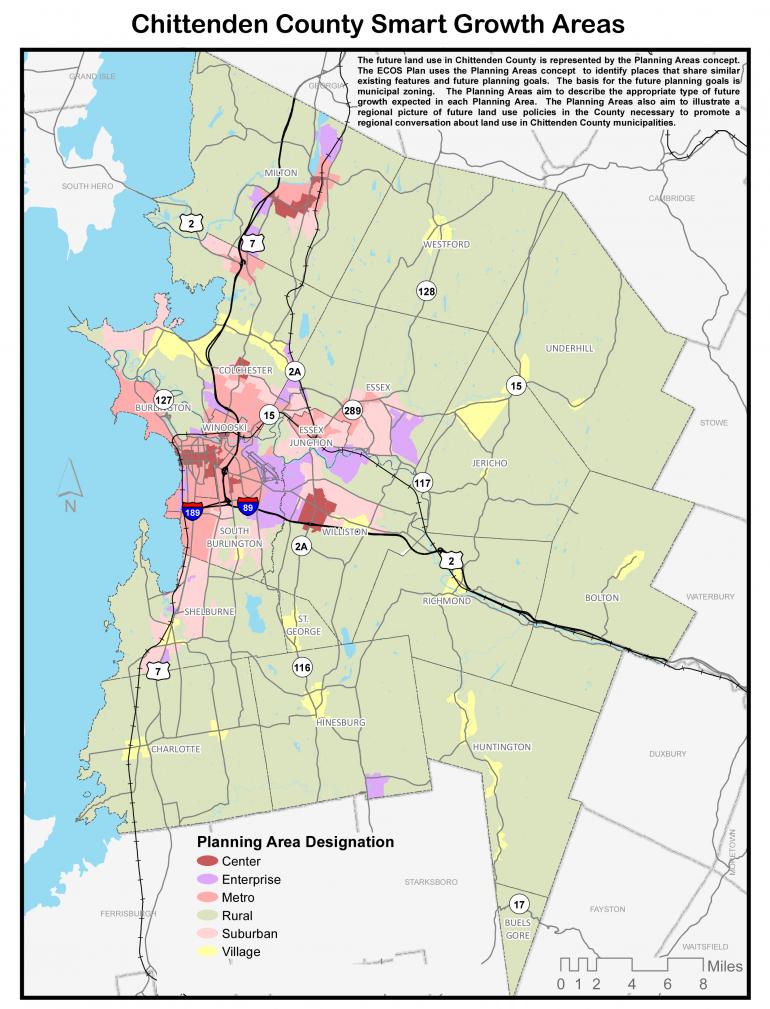
For the third year in a row, Chittenden County has exceeded its goal for 80 percent of development occurring in areas planned for growth. In 2013, 85 percent or 373 of the total 439 units of new housing development occurred in the areas planned for growth. The goal of 80 percent was set in the 2013 ECOS Plan, the combined Regional Plan, Metropolitan Transportation Plan, and Comprehensive Economic Development Strategy for Chittenden County. It is one of 8 strategies of the Plan.
According to the Chittenden County Regional Planning Commission, this is important because focusing development of new housing in areas where the infrastructure, services, jobs, and transit options are close by will create and sustain a built environment that is more valuable. SEE MAP BELOW
“Smart growth uses less energy, maintains historic settlement patterns and preserves Vermont’s renowned agricultural and natural lands,” said Andrew Montroll, Chair of the Chittenden County Regional Planning Commission Board of Directors. “We are pleased to see this trend, and it is a testament to the focused work of our municipalities and development community.”
Developing in areas already planned for growth:
- Improves transportation choices. When communities support development and growth within defined centers near access to transit and sidewalks, residents, employees and visitors have a greatly reduced need to drive their cars – or even own a car at all.
- Helps the economy. Employers identify the lack of housing options as a real barrier to employee recruitment. Building more housing in our urban areas helps address this need and make the housing market more affordable.
- Makes the air cleaner. Greenhouse gas emissions from transportation contribute the highest percentage of Chittenden County’s overall emissions (48%). For perspective, the next is heating (38%), followed by agriculture (6%), and electricity (6%). The less we drive, the cleaner the air.
- Preserves the environment. Focusing over 80% of development in urban areas means the rural and natural landscapes of Vermont are better preserved for recreation, agriculture, tourism, and the environment Vermont is famous for.
- Saves money. When what we need is nearby, we spend less on transportation. Living and working in an urban area also results in more customers supporting our existing sewer, water, and other public services – helping to keep costs lower.
In an effort to track progress made on this and all ECOS goals, the ECOS Partnership monitors 90+ indicators over the year and compiles the ECOS Annual Report: The State of Chittenden County, a summary that highlights a number of regional accomplishments, trends, and high priority actions.
New this year, all indicators have been moved to an interactive online platform called the ECOS Scorecard, which promotes easy and efficient access to the data that monitors how Chittenden County is doing with regard to achieving ECOS goals related to the economy, environment, quality of place, and community. The ECOS Scorecard provides decision-makers, partner organizations, and the public with needed information to help focus limited resources on the areas that most need additional attention. The indicators are drawn from the most reliable statistics, objectively based on substantial research, and intended to be understood by broad audiences.
“The ECOS Scorecard significantly improves the efficiency of monitoring our progress toward achieving the goals set in the ECOS Plan,” said Charlie Baker, CCRPC Executive Director. “Hosting this data on a simple online platform will make it widely accessible and easier to update, monitor, and report on going forward.”
 The ECOS Partnership background
Following the adoption of the ECOS Plan in 2013, the ECOS Partnership formed to keep the focus on implementation. The Partnership includes the Chittenden County Regional Planning Commission, the City of Burlington, Greater Burlington Industrial Corporation, Lake Champlain Regional Chamber of Commerce, United Way of Chittenden County, University of Vermont, University of Vermont Medical Center, and the Vermont Department of Health. The Partners remain committed to working together to build upon collaborative successes and address areas of concern.
Source: Chittenden County Regional Planning Commission. 2.5.2015. To access the new online platform and track how Chittenden County is doing on a wide variety of topic areas, visit: ecosproject.com/2014-annual-report.