

by Anne Galloway vtdigger.org Vermont could be the first state in the nation to impose a payroll tax to fund Medicaid. The 0.7 percent payroll tax proposed by Governor Peter Shumlin to close the Medicaid reimbursement gap is anomalous nationally. The tax would raise $90 million a year. It would be the biggest tax increase since Governor Jim Douglas increased the sales tax in 2006 from 5 percent to 6 percent to help shore up the Education Fund.
Lawmakers say passage of Shumlin’s payroll tax, which would introduce a new broad-based tax on all employers, is a “heavy lift.” It would be applied to the payroll for all employees who now qualify for unemployment insurance.
State payroll taxes are uncommon. Four states — California, Rhode Island, New York and New Jersey — charge a payroll tax to pay for mandatory disability insurance. Oregon imposes a payroll tax to pay for public transit.
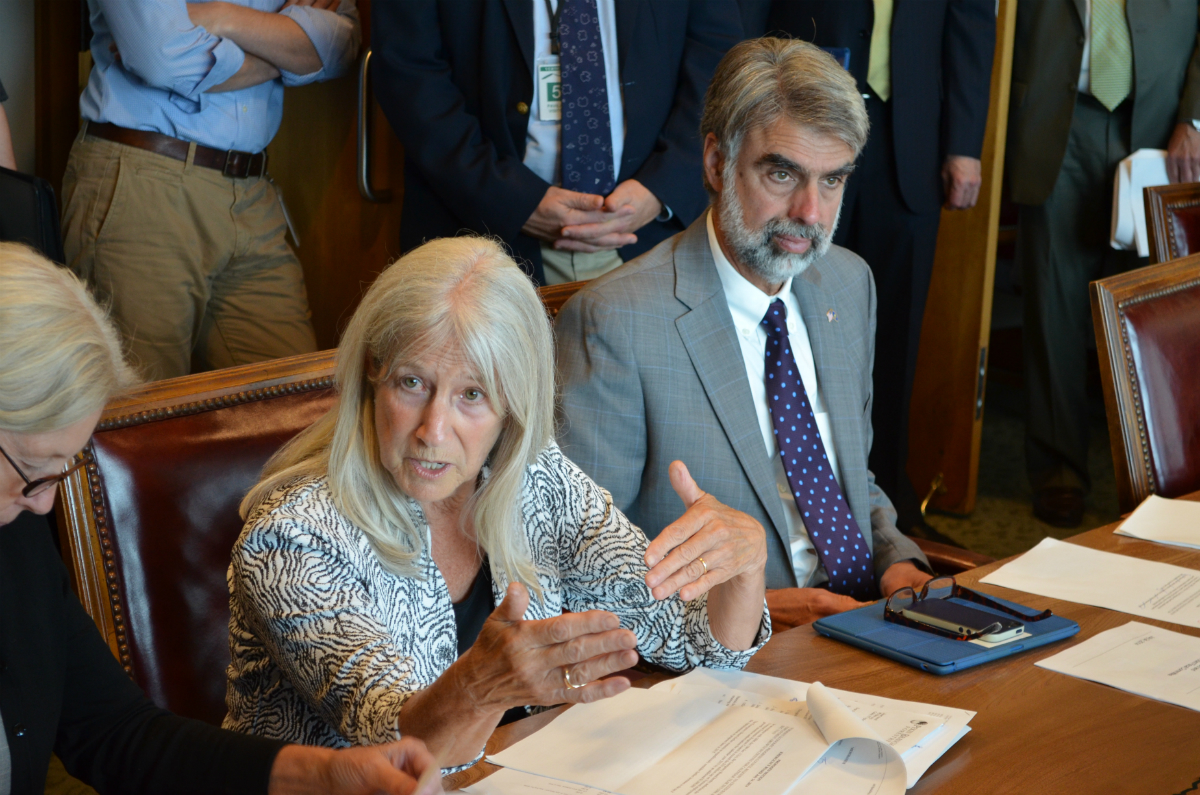
Representative Janet Ancel, D-Calais, the chair of the House Ways and Means Committee, is less than enthusiastic about the new tax.
“The questions raised in the committee around the perception that Vermont would be the only state with a payroll tax,” Ancel said, and that fact gives the members of the committee “pause.”
Lawmakers are worried that the payroll tax would hurt the state’s ability to recruit new businesses. They are also concerned about whether a payroll tax is the fairest way to raise revenue, Ancel says, “given what we want to do with the money.”
Annualizing $90 million in taxes “is big and it’s new and it’s a heavy lift,” Ancel said.
Shumlin pitched the payroll tax in his budget address as a way of reducing the cost shift in which privately insured Vermonters pick up the tab for Medicaid patients through higher insurance premiums.
In a rare appearance at the House Democratic Caucus last week, the governor implored lawmakers to consider his proposal. In a half-hour visit to Room 11 in the Statehouse, Shumlin took questions and then launched into a speech about the payroll tax. He said the higher Medicaid reimbursement rates available through the so-called “Leahy bump” through the Affordable Care Act disappear this year. Fewer Vermonters are uninsured and more than ever qualify for Medicaid through Vermont’s health care exchange, but doctors can’t afford to see those patients, Shumlin said.
“If you’re a Vermonter and you have a Medicaid card in your pocket, you find you have insurance for your family, but guess what? Good luck now you’ve got an insurance card finding someone who can afford to treat you,” Shumlin said.
“From our perspective as Democrats, we’re talk about the people who need us the most, who finally got insurance and finally think they’re problems are solved and they’re going right back to where they started, that’s just the truth,” the governor continued.
Medicaid pays doctors 60 percent of the cost of providing services. The governor’s plan would raise $90 million in new revenues and draw down $100 million a year in federal funding. Together, the money would be used to increase Medicaid reimbursement rates to Medicare levels, which pay providers 80 percent of the cost of health care services. The combined $190 million will also go toward covering Medicaid’s increased caseload and other initiatives to strengthen the delivery system, such as boosting Blueprint payments.
But Al Gobeille, the head of the Green Mountain Care Board, has offered no guarantee that increasing Medicaid reimbursement rates will lower premium increases attributed to the cost shift. The higher payments could actually result in more spending across the health care system, according to an economist from the Joint Fiscal Office.
Rep. Patti Komline, R-Dorset, a member of House Ways and Means, says while she wants to eliminate the cost shift, she is concerned “that we have to go through that Rube Goldberg contraption and on the other end bring out a positive.”
“It could raise the cost of health care if we don’t do it right,” Komline said, and after the Shumlin administration’s bungled handling of the Vermont Health Connect website, she doesn’t “have confidence they can deliver on this.”
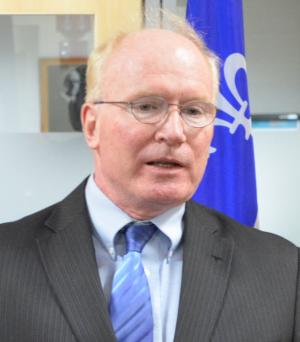 Senator Kevin Mullin, R-Rutland, compares the payroll tax for Medicaid to the sales tax that was put into place as a temporary revenue source. A 3 percent sales tax was imposed in 1969. The tax is now 6 percent.
On principle, Mullin says doesn’t want to create a new broad-based tax.
“I think what he’s trying to do is correct,” Mullin said. “We need to end the cost shift, but to create a new tax that I don’t trust the people in this building to say this seven-tenths of a percent is enough, the next thing you know we will need to add another 10th of a percent on that.”
One way or another, lawmakers will have to find a way plug a $16 million hole in the Medicaid budget. The governor’s 0.7 percent payroll tax covered the cost of the gap.
PHOTOS: Senator Kevin Mullin. Top, Janet Ancel, with former Administration Secretary Jeb Spaulding, makes a point during the Emergency Board meeting last July. Vermont Business Magazine photo.