

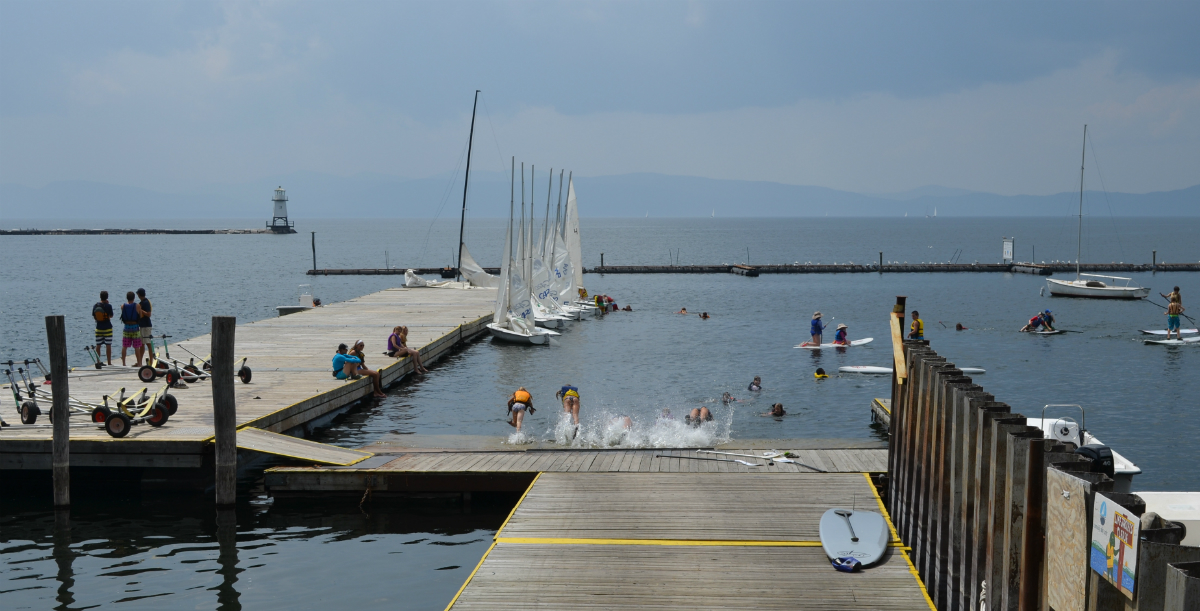
Vermont Business Magazine The Shumlin Administration is proposing to raise approximately $1.5 million in new taxes and fees to help pay for a plan to cleanup the state's waterways and ultimately Lake Champlain. A 1 percent excise tax on fertilizers ($450,000) and fees on impermeable surfaces ($1 million) would be used in conjunction with updating farming and stormwater runoff rules. The state hopes to leverage another $45 million in public and private funding for the effort. Vermont’s Clean Water Initiative was released Monday by the Agency of Natural Resources. Required by the Vermont General Assembly, this report outlines the priority actions needed to improve water quality statewide and recommends funding options to meet the first stage of funding needs for these improvement programs. This report also fulfills an obligation to the United States Environmental Protection Agency (EPA) which is overseeing Vermont’s efforts to control pollution into Lake Champlain.
“Clean water is essential to all Vermonters,” said Governor Peter Shumlin. “This report is another important step forward in our effort to protect our streams, rivers, ponds and lakes.”
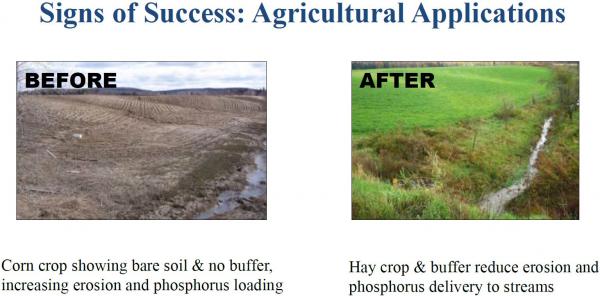
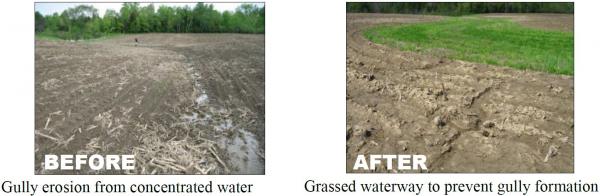
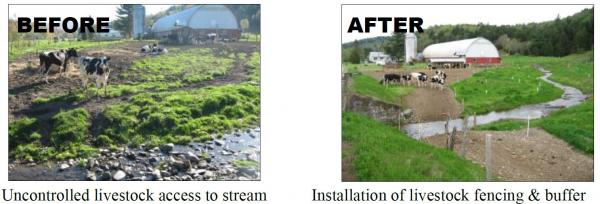
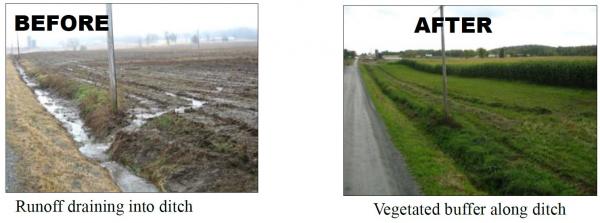 Over the last decade, the State of Vermont has invested millions in the form of grants and low-interest loans to local governments, farmers, watershed groups, conservation districts, regional planning commissions and others to protect and restore water quality. For example, the State of Vermont has invested roughly $100 million to support municipal wastewater treatment infrastructure, $24 million in grants under the Ecosystem Restoration Program and $26 million in grants and technical assistance to farmers. Vermont has also, over the past decade, strengthened the programs for controlling polluted stormwater runoff for both farms and developed land.
Written in collaboration with the Agency of Transportation, the Agency of Commerce and Community Development, and the Agency of Agriculture, Foods and Markets, the report summarizes lessons learned from previous clean water efforts and recommends strategies for building on those lessons to restore and protect the state’s waters.
The strategies include:
- increasing the capacity of state and local partners to meet clean water goals;
- updating accepted farming and logging practices;
- improving stormwater runoff management in parking lots and roads;
- restoring and protect river corridors, floodplains, wetlands, and forest cover; and
- increasing investments in municipal wastewater treatment infrastructure.
Implementing these practices will benefit water quality, safeguard Vermont’s tourism industry, and create new jobs. The report also outlines potential funding initiatives, including a mix of federal, state, and private funds, for the legislature to consider.
ANR, VAAFM, and VTrans continue to seek additional federal resources to support planning clean water actions, including the following opportunities:
• In August, 2014, USDA Secretary Vilsack announced that his agency would make $45 million available over the next five years through the Natural Resource Conservation Service (NRCS) to continue to support implementation of agricultural nonpoint source controls specifically in the Lake Champlain Basin. Approximately $7 million of the $45 million represents new funding.
• In September, 2014, VAAFM submitted a $20 million, 5-year proposal to the NRCS Regional Conservation Partnership Program, in collaboration with the State of New York, to increase implementation of agricultural water quality projects in the Lake Champlain Basin. If successful, this grant will allow Vermont to leverage up to $25 million additional dollars from a variety of public and private partners for a total $45 million investment in water quality protections.
• In November, 2014, ACCD, with VTrans and ANR, submitted a threshold request to the U.S. Department of Housing and Urban Development pursuant to the National Disaster Resilience Competition Notice of Funding Availability (NOFA). If selected to continue in the next round of the competition, Vermont anticipates presenting a proposal to fund resilience efforts in eligible communities, with expected benefits for water quality.
• ANR, VAAFM and VTrans will continue to work closely with the EPA-funded Lake Champlain Basin Program, which supports a number of important clean water initiatives, grant and loan programs.
Shumlin's budget for next year will also include state funding sources:
- A Simple Impervious Cover Fee, applied to Commercial, Industrial, Institutional, and Agricultural Parcels in the Lake Champlain Basin
This financial tool would apply a simple tiered fee system applicable to commercial, industrial, institutional and agricultural land use categories within the Lake Champlain Basin. The fee would vary, based on the relative size of the parcel and the land use category. For farms, the size of the parcel would be limited to the farmstead, where most of the farm’s impervious cover is located, and would not include fields. The benefit of an impervious cover fee is the association of the fee with the factors that influence the generation of stormwater runoff, i.e. impervious areas and agricultural lands (parking lot, building footprint, driveways, and barnyards).
REPORT: Vermont's Clean Water Initiative
Agricultural nonpoint sources represent the largest source of nutrient and sediment pollution in the Lake Champlain basin and statewide. Likewise, although commercial, industrial and institutional land uses represent a relatively small fraction of the overall impervious acres in the Lake Champlain Basin, commercial, industrial and institutional parcels are typically more intensely developed. The median percent impervious for commercial properties is nearly 50 percent, meaning that nearly 50 percent of the land area on commercial properties is impervious.
Using this approach to raise $1 million, annual impervious cover fees applied to commercial, industrial, institutional, and agricultural parcels would range from $100 to $400 per ERU depending on how the fee is structured. For each additional $1 million increment sought to be raised, the fee would need to be increased accordingly. Most commercial properties have the equivalent of three ERUs (Equivalent Residential Unit).
- Phosphorus and Nitrogen Fertilizer Charge
Another financial tool closely linked to water quality would be a charge on fertilizers. Nearly every state imposes a fee on fertilizers, and many assess those fees on fertilizers at a higher rate than Vermont. A focus on fertilizers makes sense because of the heightened risk of water pollution associated with the application of nutrients to land (e.g., fertilizer application on farm fields or gardens), and monitoring data shows that phosphorus and nitrogen are the two major nutrients of concerns for Vermont’s surface waters. Nutrients in fertilizers are of a particular concern, since they are in the chemical form that is more readily assimilated by algae, which can result in excessive algae growth and increased incidence of algae blooms.
Currently, agricultural fertilizers used on Vermont farms are exempt from a sales or excise tax. Since the majority of fertilizers sold in Vermont are imported, the added benefit of placing an excise tax on fertilizer products would be to use price to influence the amount of fertilizer being imported into the basin and improve nutrient management by encouraging field-specific application of fertilizers. A 1 percent excise tax on all fertilizers, including the non-agricultural fertilizer use (already subject to an excise tax) would raise approximately $450,000 annually.
- In September, 2014, the Vermont Agency of Agriculture, Food and Markets submitted a $20 million, 5-year proposal to the NRCS Regional Conservation Partnership Program, in collaboration with the State of New York, to increase implementation of agricultural water quality projects in the Lake Champlain Basin. If successful, this grant will allow Vermont to leverage up to $25 million additional dollars from a variety of public and private partners for a total $45 million investment in water quality protections.
“The people of Vermont care deeply about clean water and are committed to protecting it -- we are responding to that sentiment in releasing this report,” said David Mears, Commissioner of the Vermont Department of Environmental Conservation. “The report provides a map to achieve our goals and we look forward to discussing it with the Legislature this session.”
Vermont’s Agriculture Secretary Chuck Ross agreed. “Clean water is a critical priority to everyone in the Vermont community. Only through a concerted, collective effort will we meet
our goals. That’s why I’m so pleased so many stakeholders in our community are joining in this initiative – by working together, we will find ways to improve the water quality of our state.”
State agencies will be working with federal partners, municipalities, farmers, businesses, loggers, environmental advocates, and landowners to implement the priority actions as part of the clean water initiative to reduce phosphorus runoff in the Lake Champlain Basin and statewide. These coordinated efforts will serve as a model for water quality actions to be applied across the state.
On a related note, the US Environmental Protection Agency (EPA) recently announced that it will be holding public meetings in western Vermont on November 17–19 to discuss the next steps in the Lake Champlain cleanup process. As part of those meetings, the priority actions in this report that affect that process will be reviewed in greater depth.
For more information about the EPA’s November meetings and to download the report, go to the Department of Environmental Conservation’s Restoring Lake Champlain website at http://www.watershedmanagement.vt.gov/erp/champlain/-