

The US Environmental Protection Agency (EPA) is hosting a series of public meetings this November to outline the next steps in Vermont’s efforts to restore water quality in Lake Champlain. The meetings will be moderated by the Lake Champlain Basin Program, and will include both afternoon and evening sessions to encourage participation by all interested persons. The November meetings have three major goals: EPA will provide a technical update on the phosphorus reductions Vermont needs to make, share the process and timeline for completing and implementing the plan, and outline a draft framework for monitoring progress. EPA is working closely with the State of Vermont in preparing a formal plan to reduce phosphorous runoff into Lake Champlain by developing a “Total Maximum Daily Load” (TMDL) that will place a cap on the maximum amount of phosphorous that is allowed to enter the Lake and still meet Vermont’s water quality standards.
“As we continue to explore options for restoring Lake Champlain, we look forward to engaging Vermont’s citizens fully in the process,” said Curt Spalding, U.S. Environmental Protection Agency’s New England Regional Administrator. “During the meetings, we will update the public on how we are working with state environmental officials to develop a TMDL that will protect Lake Champlain and ensure the lake supports a vital and healthy ecology for our children and grandchildren.”
The greatest threat to a healthy Lake Champlain is phosphorus pollution caused by stormwater runoff, nonpoint source pollution and erosion. Excess phosphorus can cause algae blooms, which disrupt fishing and other recreational uses, threaten drinking water supplies, lead to decreased property values, and pose threats to animal and human health. Phosphorus pollution also harms local streams and rivers that feed into Lake Champlain.
“Vermonters love Lake Champlain and truly care about the health of the streams that flow into it,” remarked David Mears, Vermont’s Department of Environmental Conservation Commissioner. “The State is committed to working with EPA to ensure that the most strategic, cost-effective practices are featured in our plan to restore the lake. We eagerly anticipate the discussion.”
Agriculture Secretary Chuck Ross agreed, “Vermont’s Implementation Plan unites everyone – farmers and businesses, municipalities and towns, loggers and landowners – to work together for a healthy Lake Champlain and a sustainable ‘farm and forest’ working landscape,” he said. “The next set of meetings provides an important opportunity for EPA to keep the public informed and engaged in the process.”
“The State of Vermont and its citizens should be commended for their commitment to reduce phosphorus loading into Lake Champlain,” said Stephen Perkins, EPA’s Senior Advisor for Lake Champlain. “The State’s Phase I Implementation Plan reflects that commitment and is both comprehensive and strategic. As we move forward, the November meetings will allow us to share the blueprint for the future. Our hope is that everyone with an interest in the lake and clean water in the state will attend.”
Lake Champlain Basin Phosphorus Clean Water Act TMDL Public Meetings will be held at the following locations:
Nov. 17, 2014, 2:00 p.m. – 4:00 p.m., Fox Room, Rutland Free Library, 10 Court Street, Rutland
Nov. 17, 2014, 6:30 p.m. – 8:30 p.m., Twilight Room 302, 50 Franklin Street, Middlebury
Nov. 18, 2014, 2:00 p.m. – 4:00 p.m., Bliss Room, St. Albans Historical Society, 9 Church Street, St. Albans
Nov. 19, 2014, 6:30 p.m. – 8:30 p.m., ECHO Lake Aquarium and Science Center, 1 College Street, Burlington
More information:
EPA information on Vermont Lake Champlain Phosphorus TMDL: http://www.epa.gov/region1/eco/tmdl/lakechamplain.html
To find the Phase 1 Implementation Plan or other information, view the VTDEC Restoring Lake Champlain Page: http://www.watershedmanagement.vt.gov/erp/champlain/
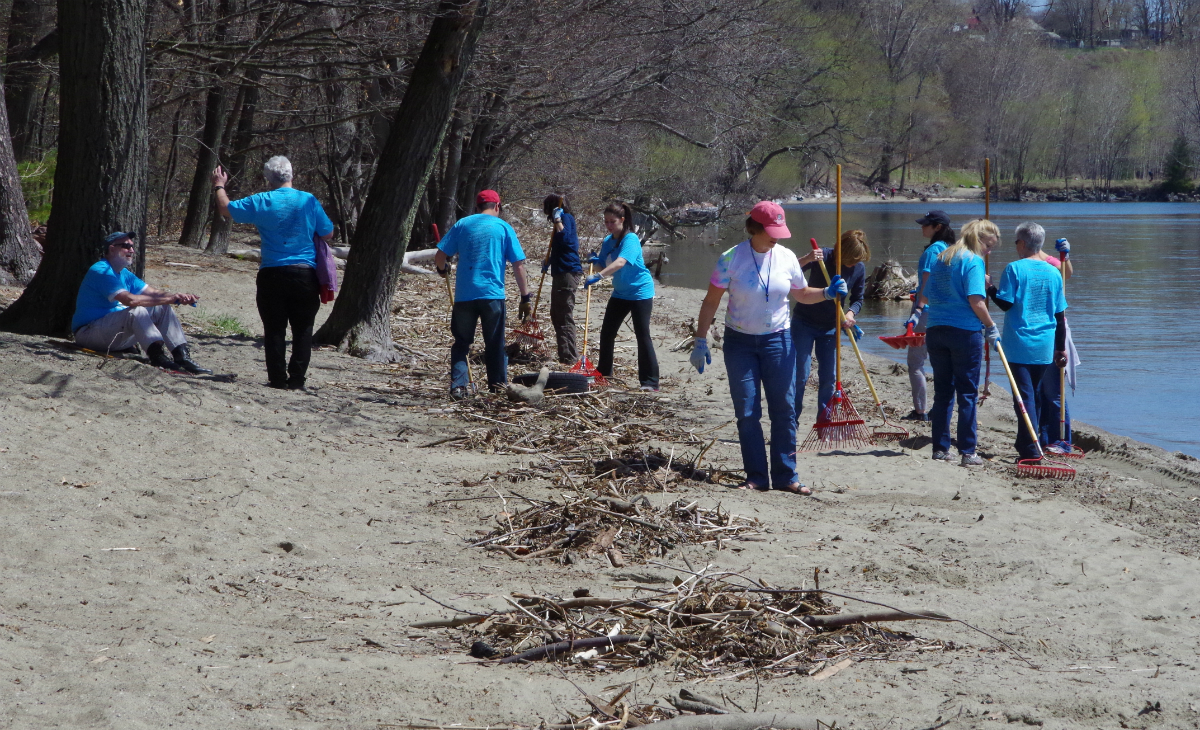
VERY TOP PHOTO: Faculty and Staff help clean up the Lake Champlain shoreline during its annual day of service in May. Photo courtesy of Champlain College