


Vermont Business Magazine The Department of Public Service, in conjunction with the Agency of Commerce and Community Development and the Department of Information and Innovation, has released the final 2014 Telecommunications Plan. The Plan addresses the major ongoing developments in the telecommunications industry, including broadband infrastructure development, regulatory policy (as the non-regulated aspects keep growing), greater competitionand recommendations for future action.
“This Plan is the product of a rigorous public input process. The Department carefully considered the proposals made by members of the public and the telecommunications industry in response to the Department’s final draft,” said Public Service Commissioner Christopher Recchia.
 The final plan includes added recommendations on “make-ready” and pole attachment policy, net neutrality, and it provides a more in depth look at the cost of deploying fiber to the home to every E911 location in Vermont. The Plan calls for a prioritization of State supported projects that ensure locations with the slowest available broadband speeds receive priority for upgrades.
One of the challenges the state has is with oversight.
"While demand for telecommunications services are greater than ever, the state’s authority to regulate the market has waned," the report states.
It goes on to say: "When the Telecommunications Act was signed into law in 1996, the Public Switched Telephone Network (PSTN) and the Internet were nearly completely separate. Voice service over the PSTN was the only plausible definition of an “essential” service. This remained largely true at the publication of the Department’s 2004 Telecommunications Plan when competition in the telephone market was still establishing itself. But technological changes over the last 10 years have blurred the line between what is an essential service and what is not. One significant change is the use of packet switching to carry voice data in the same way that information data is transmitted.
"The dominant packet switching technology, voice over Internet protocol (VoIP), has allowed a greater number of competitors to enter the voice market, such as cable and Internet content companies. Some companies provide voice service to fixed locations over internally managed Internet protocol (IP) networks, while other providers use IP technology to send voice traffic over the public Internet (nomadic VoIP). More importantly, VoIP has challenged the distinction between “telecommunications service” (or “basic service”) and an enhanced “information service.” Because federal law distinguishes between telecommunications and information services, and regulates each one differently, the rise of VoIP raises an important question about what is a telecommunications service. The transition from traditional circuit switched technology to IP technology is inevitable, and the roles that states and the national government play in this transition will be crucial to determining basic questions about quality, reach, and affordability of basic voice service in the future.
"The voice telephony market has changed in other ways. Commercial Mobile Radio Service (cellular service) has become a dominate technology in the telecommunications industry over the past decade. The 2004 Telecommunications Plan survey indicated that an overwhelming majority of Vermont households (77%) had not even considered the idea of giving up their traditional landline service in favor of wireless service. Today, 29.9% of Vermont adults live in wireless-only households, and that number continues to increase as service expands and becomes more reliable.
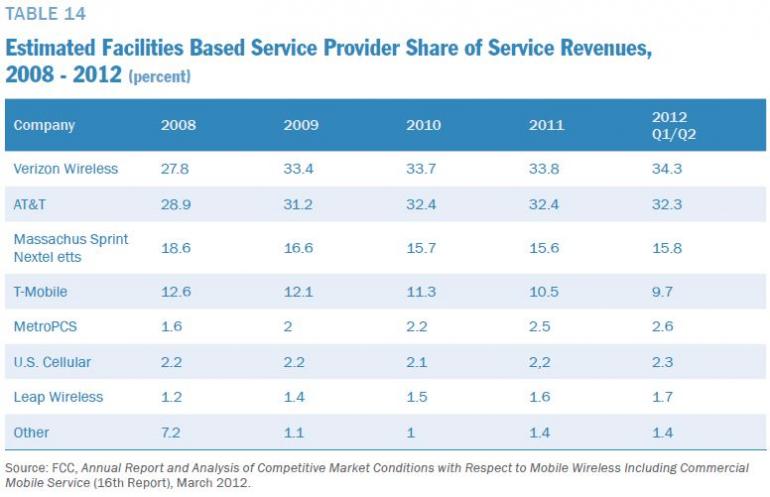
"Recent consolidation of the wireless market has resulted in four nationwide carriers offering service in Vermont. These carriers have made great inroads into rural Vermont, installing facilities in some of the hardest to reach places of the state. The result has been that Vermonters increasingly rely on their wireless devices to communicate."
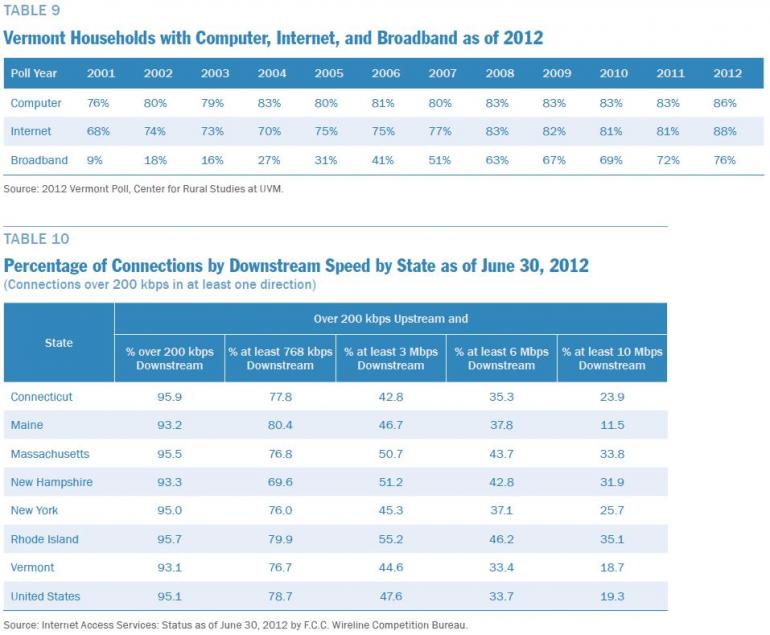
Now, broadband service is nearly universal in Vermont, with availability in at 99% of locations within the state, with the remaining 1% having a "funded solution" in place.
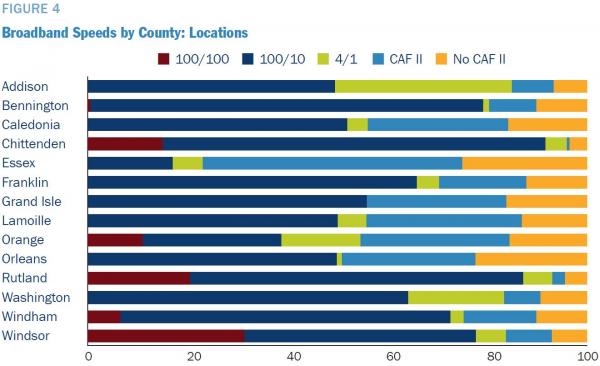 Figure 4 depicts the locations in each speed tier by county. 9% of locations (27,574) have or will have service available that meets the 2024 goal; 61% of locations (178,767) have service available that reaches 100 Mbps download and 10 Mbps upload, while this service does not meet the 2024 goal, it comes very close. At 8% of the locations (22,908), the best available service provides access at 4/1 Mbps; 22% of locations (65,816) have or will have high speed Internet access, but the best speeds are below 4/1 Mbps. This plan calls for prioritizing any state funded support by speed, starting with those locations that lack service of 4/1 Mbps or better.
“The comments we received during the public and legislative review process helped us make this plan much stronger,” Recchia said, adding “I appreciate the efforts of all those who commented and we made every effort to constructively address those comments in this final plan.”
The Department held nine public hearings during the months of August and September, including one statutorily mandated hearing at the General Assembly. During this time, the Department received numerous comments suggesting Vermont adopt a revolving loan fund that would enable providers to receive loans with favorable terms to deploy broadband projects in hard to serve areas.
“We carefully considered this proposal and decided a grant program will better serve hard to reach locations by making the business case for deploying infrastructure more favorable. A loan program would not likely enhance the business case for these areas.”
In addition to broadband, the Plan also discusses ongoing developments in the provision of telephone and cable. In addition the Plan provides an analysis of state government telecommunications infrastructure. The Plan presents readers with an overview of the last ten years and what the State should focus on over the next ten years to ensure Vermonters have access to the best available telecommunications services. “It is our hope that this plan will help guide Vermont’s future telecommunications policy.”
 Source: Vermont Public Service Department. 12.4.2014. The 2014 Telecommunications Plan is available electronically at the following link: 2014 Telecommunications Plan. To receive a hard copy of the 2014 Telecommunications Plan, please contact Jim Porter at [email protected] or (802) 828-4003.