

by John Herrick vtdigger.org The latest strike against the F-35 fighter jet will land in the state’s highest court. F-35 opponents last week filed an appeal to the Vermont Supreme Court, claiming the city of Burlington must obtain a state land use and development permit to account for expected retrofits and noise impacts of the new jets’ anticipated arrival in 2020. The lawsuit marks the latest skirmish in an ongoing battle waged by a group of residents who are opposed to the basing of the military aircraft at the airport. The US Air Force last year decided to base 18 F-35s with the Vermont Air National Guard. The F-35 has the support of Vermont’s congressional delegation, Governor Peter Shumlin and the city of Burlington.
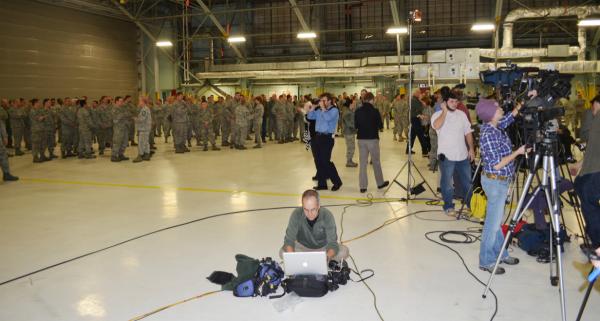
 Governor Shumlin speaks to the troops, as Mayor Weinberger and Senator Leahy listen, at the announcement last December that the Air Force would base the F-35s at Burlington International Airport. The announcement was also a massive public relations event, featuring not only politicians, but a score or more of media and hundreds of airmen. Photos by Vermont Business Magazine.
An environmental court judge ruled in May that Burlington, which owns the airport, did not need an Act 250 permit to accommodate the new jets because, he said, the Guard is not a state entity subject to the Act 250 review and the proposed changes at the airport do not qualify as development defined by the permit.
The F-35 opponents disagree with the environmental court ruling. In a legal brief filed with the Supreme Court, they argue the Guard is an agency of the state unless called upon by the president for federal service. James Dumont, who is representing the opponents, cites a US Supreme Court case that found that a Maryland Air National Guard pilot who collided with a civilian airplane was a state employee at the time.
The opponents also argue that previous developments at the airport have triggered Act 250 review in the past. The Guard plans to develop existing utility infrastructure, aircraft hangars, maintenance shops, simulator facilities and associated work areas.
Eileen Blackwood, the attorney for the city of Burlington, said the city agrees with the lower court’s ruling that the Act 250 permit does not apply to the airport modifications. She said the city will respond to the appellants’ argument by Sept. 16.
When the court reviews the city’s response it will then decide whether to hear the case before the full court or a three-justice panel. A date for the case has not been scheduled.
 RELATED STORY: Burlington gets the F-35
The opponents’ chief concern with the new aircraft designed to replace the current F-16s is that they will be louder. The final Air Force Environmental Impact Study states 18 F-35 fighter jets will expose 2,061 more people in Winooski and South Burlington to a 65 day-night average sound level (DNL) or greater.
Opponents want the city to obtain an Act 250 permit that would require the noise to be mitigated.
Burlington and the Natural Resources Board, which oversees Act 250 permits, say noise and safety issues related to a military aircraft cannot be regulated by the state but rather the Federal Aviation Administration. The District 4 Environmental Commission said in a March 2013 jurisdictional opinion that the airport has never needed an Act 250 permit for noise related impacts.
F-35 opponents say the Natural Resources Board can impose conditions that would limit noise without changing the jets’ engine, flight patterns and general operations, which they agree are regulated by the FAA. Instead, homes in the area could be soundproofed to limit noise, they say.
The Air Force said noise impacts should be studied after the jet arrives at the airport. It said it will also limit to the extent possible flying the jets at low altitudes during seasonally sensitive times, such as holidays and American Indian ceremonies.
There are ways to lower the jet noise, but Air Force officials are reluctant to say whether the techniques could be employed. Reducing thrust by lowering the power setting is not operationally feasible or safe at this time, according to the Air Force. Moderating the use of afterburners – a function of the jet that creates more noise – would not work for training and combat. The modification of departure tracks is limited by terrain and development in surrounding communities, the Air Force said.
A Vermont Air National Guard spokesperson was not able to comment for the story before coordinating a response with legal staff.
F-35 opponents also say the Air Force violated federal environmental law by failing to evaluate a range of environmental impacts and alternatives to basing the jet in Burlington.
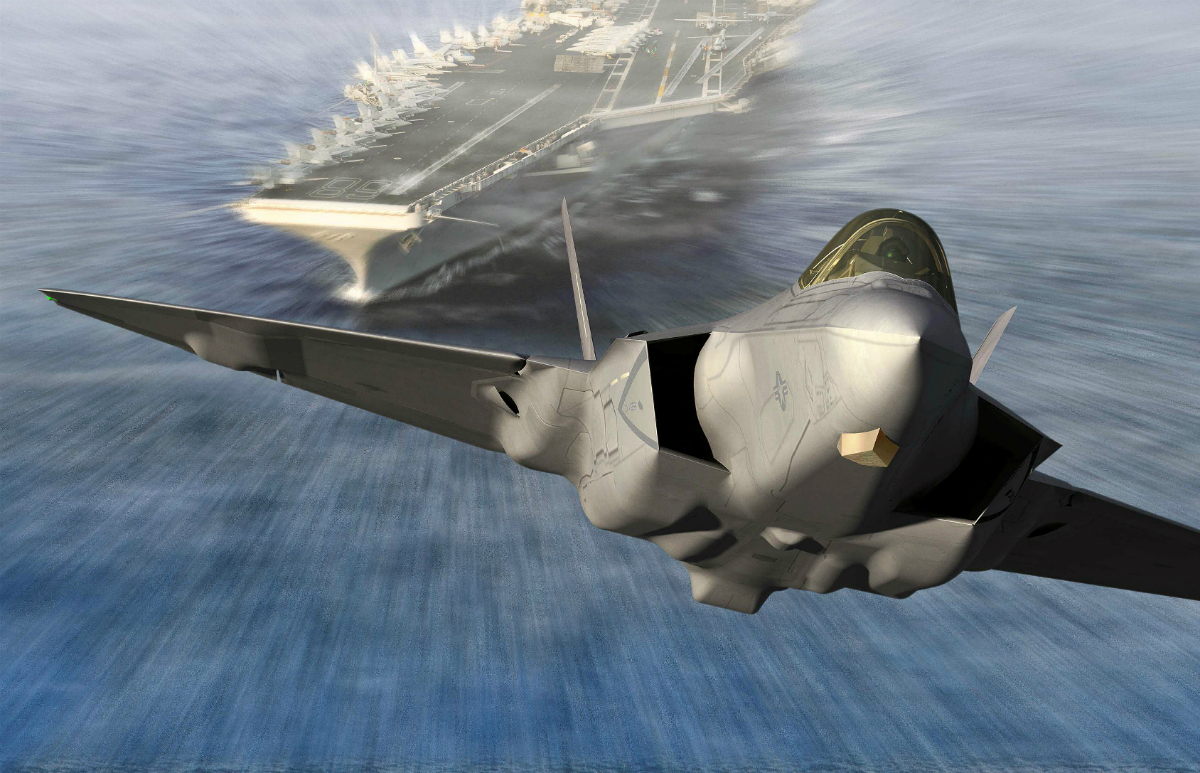
VERY TOP PHOTO: F-35 courtesy of Lockheed Martin