

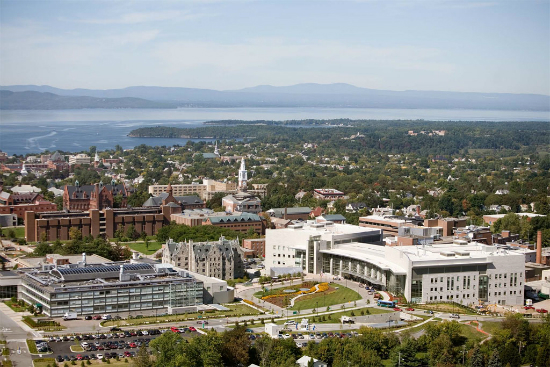
by Tim McQuiston, Vermont Business Magazine The Green Mountain Care Board (GMCB) on Wednesday approved Fletcher Allen Health Care’s $3.7 million Conceptual Development Phase Certificate of Need (CON) application to begin detailed planning for a new inpatient bed facility. The new building is expected to cost at least $85 million.
The new building will begin to take the hospital’s oldest inpatient facilities, some dating back 50 to 70 years, out of use for acute patient care. Detailed planning for the project, which will include input from stakeholders, including patients and their families, providers, and planning, design and construction teams, will take several months to complete. When the plan is complete, a CON application to construct the proposed building will be submitted to the GMCB for their review.
‘We are pleased to receive the Green Mountain Care Board’s approval to move forward with the planning process,’said John Brumsted, M.D., president and chief executive officer, Fletcher Allen Health Care, who will oversee this project. ‘I am committed to a transparent planning process that yields a plan that meets patient and community needs, is cost-effective and has broad support. We will work closely with our regulators at all times.’
New facilities are needed to provide care in inpatient rooms that are consistent with today’s hospital design standards and match the high-quality care provided by Fletcher Allen’s health care team. The project has been a focus of Fletcher Allen’s master facility planning efforts for many years and now reflects the overall thinking about needs within the Fletcher Allen Partners four-hospital system.
Fletcher Allen stated that refurbishing the exising facilities is impractical: "The age and dimensional limitations of Fletcher Allen’s oldest inpatient buildings preclude major renovations and infrastructure updating. Shallow floor to floor dimensions do not support the requirements for installation of current inpatient mechanical, electrical and information systems. Although many of the older inpatient buildings have been upgraded many times, further upgrades are not possible to meet current standards. As a result, inpatient rooms in the older buildings are functionally obsolete and are in need of replacement."
The architectural firm of Morris Switzer, based in Williston, has been selected to design the facility. ‘We have a long-standing relationship with them, including their work on our master facilities planning over the past three years. Given their focus on health care planning and design, it made sense to continue that relationship,’Brumsted said.
Fletcher Allen’s radiation oncology building, completed in 2008 on time and under budget, is LEED (Leadership in Energy & Environmental Design) certified. This project will seek that same certification as well. LEED certification is awarded for building projects that meet sustainability requirements for building design, construction and operations.
Next Steps
Fletcher Allen will actively seek community input throughout the planning phase. This will include discussions with a wide circle of individuals and key stakeholders in addition to the conversations that have already taken place with the neighbors who live by the Medical Center Campus, the City of Burlington and the University of Vermont.
A project steering committee will be formed that will be chaired by Dr. Brumsted and include members of the Board of Trustees, as well as other leaders, who will provide governance for the project.
Going forward, the planning will also be informed by balancing patient needs across the Fletcher Allen Partners system, to ensure that the project best meets the system’s future patient needs.
Equally important to meeting the challenge of designing a building to conform to today’s health care construction standards will be making the project affordable, consistent with Fletcher Allen’s goal of being a high-quality, low-cost health care system.
Upon completion, the detailed plans will be part of the CON application for construction, with review of that application by the GMCB expected to take several months.
In its development phase CON, FAHC stated that single care rooms, versus share inpatient rooms, are best practice because because they enhance privacy, improve treatment options and reduced infection:
"Fletcher Allen has a total of 373 staffed inpatient hospital beds at its Main Campus. Of these, only 156 (42%) are located in private (single-occupancy) rooms, the current standard of care for inpatient hospital facilities. The majority of Fletcher Allen’s inpatient beds are located either in double rooms (172 beds or 46%) or multi-bed rooms (45 beds or 12%). Fletcher Allen’s semiprivate rooms do not allow for an inpatient care environment that is consistent with contemporary health care practice guidelines and requirements. Double occupancy and multi-bed rooms present major challenges for maintaining privacy and confidentiality and in preventing hospital acquired infections. To prevent infection, ensure patient isolation or provide gender specific accommodations, one of the beds in a double room must often be taken out of service. This can make bed placement and census management difficult and inefficient. The size of Fletcher Allen’s double rooms also prevents the hospital from providing adequate space and amenities for the patient’s family members who in today’s care environment are an essential part of the care team. Double rooms also have inadequate space for diagnostic and treatment equipment. This can often necessitate patient transport to diagnostic facilities rather than having diagnostic equipment brought to the room."
Source: FAHC, GMCB, 8.8.2013