

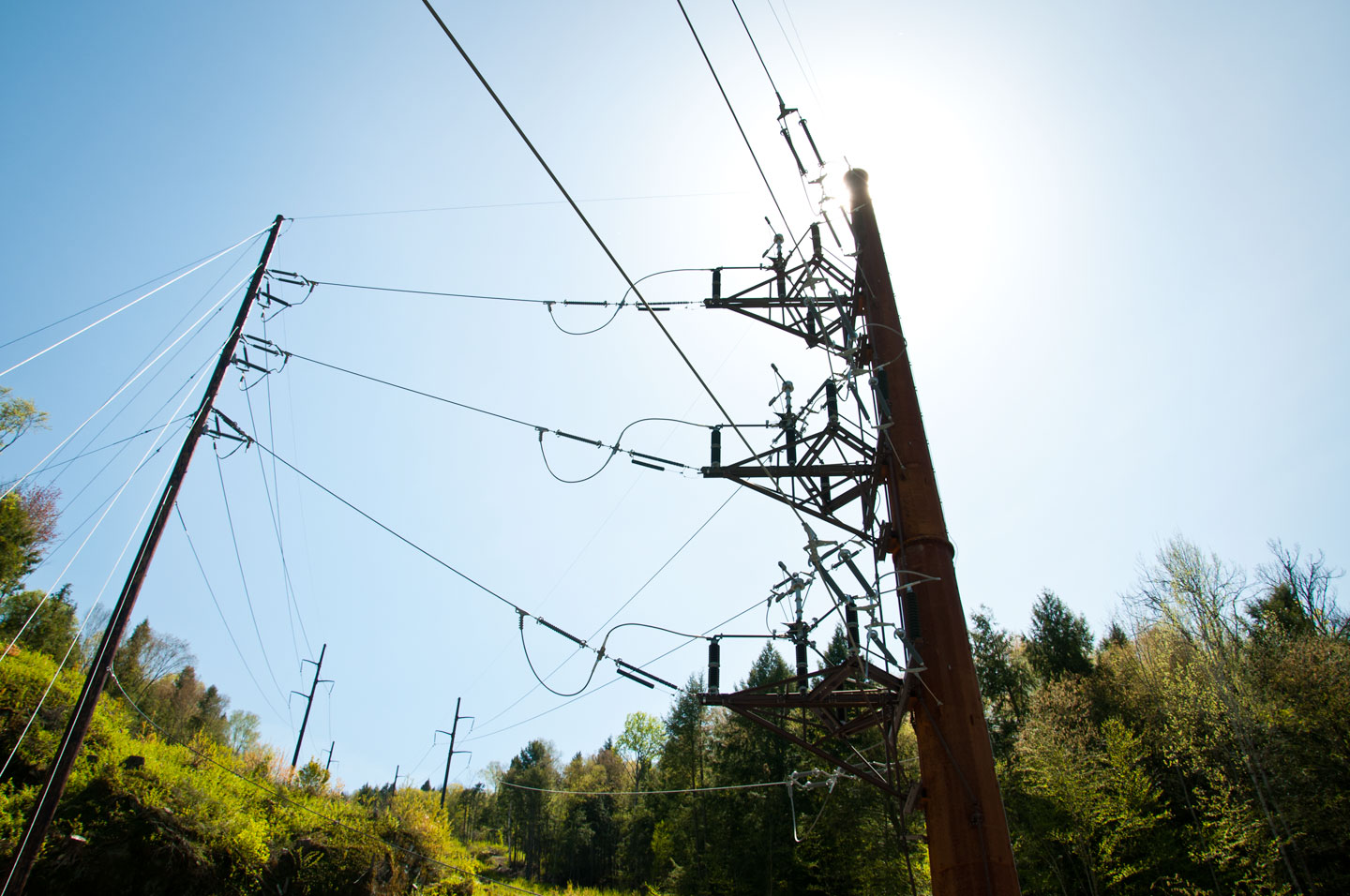
by Alan Panebaker vtdigger.org Vermont utilities say it makes more sense to build generation facilities in some areas of the state as opposed to more power lines, but they are not gaining much traction with the regional electric system operator, ISO New England.
Vermont Electric Power Co., which is finalizing its 20-year transmission plan, operates the electric transmission grid in Vermont. Every three years VELCO updates the long-term transmission plan. VELCO will file the plan with the Public Service Board July 1. It is out for public comment.
Making sure there is enough power to meet the demand of utility customers is one issue down the road, according to VELCO President and CEO Chris Dutton. The long-term plan addresses how to make sure this happens. For more populated areas, such as Burlington and Rutland, building new generating facilities as â non-transmission alternatives’could ease reliability problems. VELCO also needs to get the juice to electric customers the most cost-effective way it can.
The problem, Dutton says, is the cost. While upgrades in the transmission system, like power lines and converters, are spread among all states in the region, a local generating plant that produces energy during peak demand would be funded entirely by Vermont ratepayers. Under the current system, Vermont pays for about 4 percent of transmission upgrades in the state that benefit the regional system.
â We have a flaw in the system,’Dutton said. â The problem is to change these tariffs takes enormous efforts.â
Changing the tariffs, as Dutton says, involves a lengthy process with the Federal Energy Regulatory Commission.
A small â peaking’plant that could offer extra juice to the electrical grid in Burlington could cost $50 million. A transmission upgrade that would provide the same reliability by connecting to other larger plants with power lines, could cost $200 million. But since the state only pays 4 percent of those upgrades, it would make sense to go with the option that costs the region as a whole more money but the state less. That choice could lead to less efficient investments, Dutton said.
The current setup in New England stems from a dire need for electric transmission upgrades that came to light about a decade ago. ISO New England designed a system where transmission upgrades (like power lines) are socialized throughout the region. In the past 10 years, the Northeast states have invested around $8 billion or $9 billion, Dutton said.
That system does not distinguish where electric generating plants are located. This is an issue, according to VELCOâ s draft plan, because a 50-megawatt plant in an optimum location like a highly populated area, could provide the same reliability benefits as a plant twice its size.
â Weâ ve gotten to a point where now weâ ve fine tuned the system, and weâ ve identified upgrades that can be deferred,’Dutton said. â The problem is, we canâ t get those costs socialized.â
He said VELCO and other Vermont utilities want to see the rules modified to allow the utilities to benefit from the most cost-effective solution. They have yet to gain any traction.
Barbara Grimes, general manager of the Burlington Electric Department, said utility representatives have been making the case to ISO New England for socializing the costs of generating facilities that help ease reliability concerns for years. Grimes said Vermont utilities would be just as willing to foot their portion of the bill for generating plants in other states that promote reliability.
Grimes and Dutton say they have been trying to convince ISO New England and other utilities to change regional market rules to eliminate the seemingly perverse incentive to invest in higher-cost upgrades because their costs are socialized.
â We have needs going forward that could be met by generation at a lot less cost to the overall system than transmission,’Grimes said. â But ISO New England is unwilling to socialize those generating costs.â
Dutton said a recent report by ISO New England shows that the regional electric grid manager recognizes there is a problem.
â While the current planning process is effective at identifying reliability needs, designing transmission upgrades that meet those needs, and getting the transmission costs allocated so that the transmission can be built, a shortcoming of this process is that it doesnâ t integrate the consideration of alternatives to transmission not yet procured through the existing market structure,’the report reads.
Dutton said if there were to be a change in the rules, it would be at least three years away.
June 8, 2012 vtdigger.orgVTD file photo.