


Current News
by tim
By a margin of 46 to 26, Saint Michael’s College adjunct faculty on December 1 voted to unionize through the Service Employees International Union (SEIU). In November, adjunct professors at Burlington and Champlain colleges voted to join the SEIU.
All 101 adjuncts teaching this fall semester at Saint Michael’s were eligible to vote, meaning about three-fourths of those eligible actually voted.
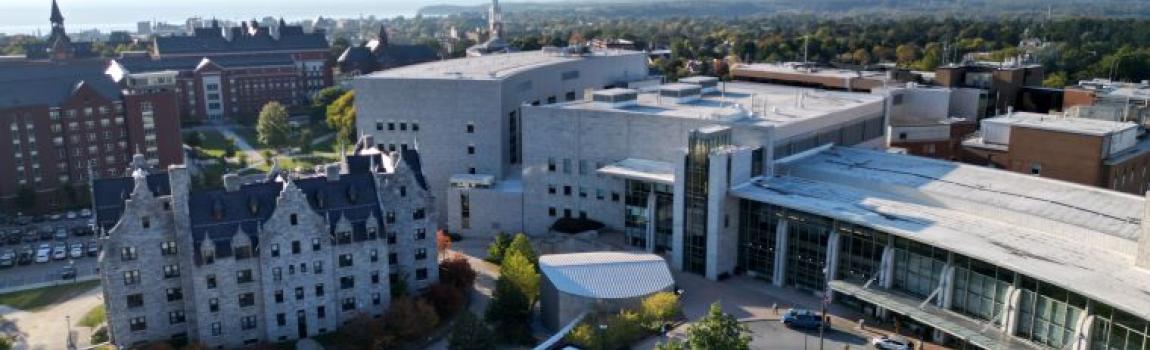
Dean of the College Jeffrey Ayres said that throughout the process to unionize the College promoted a neutral stance and provided information to adjuncts to be sure they had all the details needed for the vote. "The College has encouraged participation in the vote by all eligible adjuncts,” Ayres said. “Adjuncts are an important part of the College in providing an excellent educational experience."
by tim
Republican gubernatorial candidate Scott Milne has chosen to continue the race for governor by asking the Legislature to decide the election when it convenes in January. Governor Peter Shumlin received the most votes in the November election, but not a majority. The Vermont Constitution states that in such cases where no candidate receives a majority that a simple majority of the Legislature will decide. Each representative and senator gets one vote. In modern Vermont politics, the runner up in a plurality election has not challenged the outcome of the election in the Legislature. Shumlin received 89,509 votes or 46.53 percent of the vote; Milne received 87,075 votes or 45.27 percent. Milne could have but declined to ask for a recount.
by tim
The Northeast Organic Farming Association of Vermont (NOFA Vermont) has been awarded a two-year $90,000 grant from Newman’s Own Foundation, the independent foundation created by the late actor and philanthropist, Paul Newman. The award to NOFA Vermont was made by Newman’s Own Foundation as part of its $10 million commitment over three years to improve fresh food access and nutrition education for underserved communities.
The grant to NOFA Vermont will be used to support our statewide food security programs that increase access to local, fresh and nutritious foods for limited-income Vermonters while supporting viable farms.
by tim
A new study released in the Annals of Internal Medicine and led by Brian Sprague, PhD, at the University of Vermont Cancer Center, concludes that supplemental ultrasound screening for women with dense breasts would substantially increase costs with little improvement in overall outcomes. The research provides needed evidence on the benefits and harms of breast cancer screening options for women with dense breasts, and informs the discussion of national legislation that would mandate the disclosure of breast density information to women.
by tim
by John McClaughry Governor Shumlin and the legislative leadership have recently discovered that Vermonters are really, really unhappy about ever rising school property taxes. In a commentary published December 3, the governor observed quite correctly, “We all know that rising property taxes to fund education have put an unsustainable burden on Vermonters. Despite a steady decline in school enrollment over the last two decades, property tax payers have not seen a decline in their property taxes; they’ve seen the opposite.”
He didn’t think to mention that education property taxes do not just “rise”, like cream to the top of a milk pail. Somebody has to “rise” them, and the signature on the bills that increased the homestead property tax rate from $.89 to $.98 per $100 of fair market value – and will soon increase it to $1.00 – is and will be Peter Shumlin’s.
by tim
Green Mountain Power is preparing for the upcoming storm to ensure timely restoration of power by assembling internal teams and lining up additional outside crews to supplement GMP’s workforce. The storm is predicted to begin in southern Vermont early Tuesday and spread across the state during the day. Wet, heavy snow could cause a significant number of outages by bringing down trees and branches onto the power lines. Crews will be available in all parts of the state to begin to restore outages as they occur.
“This storm has the potential to impact customers in a widespread area across the state, so we are really beefing up the number of people who can respond to outages,” said GMP spokesperson Dorothy Schnure. “In addition to 120 GMP lineworkers, we’ve already lined up at least 120 additional lineworkers and have access to another 160 if we need them.”
GMP is encouraging Vermonters to stay safe and report downed lines.
by tim
Vermont Business Magazine The Personal Income Tax, the most important of Vermont's revenue sources, was again steeply lower than projections and is running behind for the fiscal year. The Corporate Tax, which has helped make up some of the difference, also fell back but continues to stay well ahead of targets. The consumption taxes showed mixed results, with the gasoline tax well behind again and in need of adjustment, the sales tax slightly ahead and rooms & meals off. The Lottery had a big month. Secretary of Administration Jeb Spaulding released the preliminary November fiscal year (FY) 2015 revenue results today.
by tim
Bridging the digital divide and expanding the innovative use of online tools will remain critical for Vermont if it wants to continue building resilience into our communities, keep businesses competitive, and assure that community organizations work more effectively throughout the state. That is the clear message from “Vermont’s Digital Stories”, a new report highlighting some of the successes that were launched by the Vermont Council on Rural Development’s (VCRD) two-year Vermont Digital Economy Project. The examples show the promise that technology offers across many sectors and they can be adapted to expand opportunities across the Green Mountain state.
by tim
by Anne Galloway vtdigger.org The word “structural” has entered the lexicon in the pre-legislative rhetoric about the state’s $100 million budget gap. Governor Peter Shumlin is fond of using the word, as are his fellow Democrats in the Legislature, perhaps because it’s a way of soft-pedaling the restructuring of state government, lest they sound too much like Republicans. Right-sizing state government is another euphemism Shumlin is using to sum up what will certainly be a painful budget-cutting exercise in the Legislature this session.
Budget-writers and legislative leaders are talking about making significant long-term changes to the way the state spends money in order to permanently close a $100 million gap in revenues and state expenditures in fiscal year 2016. The state has seen a $30 million to $75 million gap every year since 2010, and has filled the hole with one-time funds.
by tim
UVM President Tom Sullivan joined President Obama, the First Lady, and Vice President Biden along with other college presidents and other higher education leaders last Thursday to announce new actions to help more students prepare for and successfully graduate from college. The White House College Opportunity Day of Action helps to support the President's commitment to partner with colleges and universities, business leaders, and nonprofits to support students across the country to help our nation reach its goal of leading the world in college attainment.
by tim
US Senator Bernie Sanders (I-Vermont) and the University of Vermont held a Youth Climate Summit today. More than 150 Vermont high school students and dozens of teachers from 26 high schools throughout the state worked in small teams to create climate action plans for their high schools.
“Global warming is the planetary crisis of our time,” Sanders told the students. “The scientific community is telling us that we have a narrow window of opportunity to address the crisis of climate change and to transform our energy system away from fossil fuels and toward sustainable energy,” added the senator, a member of both the Senate energy and environment committees.
The high school students took part in workshops organized by 65 UVM undergraduates who had studied ecological economics. Organizing the climate summit for young Vermonters was one of the goals of the college course that also focused on energy efficiency, renewable energy development and greenhouse gas auditing.
by tim
Vermont Business Magazine New weekly unemployment claims in Vermont edged above 1,400 last week. Claims had been very low during the summer, trending under 500, but have been high since early October. After five weeks of increases, claims were down for two weeks before again increasing the last two. Levels this year had been running consistently lower than those of last year, but are now nearly the same. For the week of November 29, 2014, there were 1,428 new, regular benefit claims for Unemployment Insurance in Vermont. This is an increase of 422 from the previous week's total, and 37 fewer than they were a year ago.
According to Mathew Barewicz, Economic & Labor Market Information Chief at the Vermont Department of Labor, the cause of the increase was predominately the result of "a seasonal transition. This past week was much higher than the previous week but slightly lower than this time last year."