






Current News
by tim
by Anne Galloway vtdigger.org Vermont could be the first state in the nation to impose a payroll tax to fund Medicaid. The 0.7 percent payroll tax proposed by Governor Peter Shumlin to close the Medicaid reimbursement gap is anomalous nationally. The tax would raise $90 million a year. It would be the biggest tax increase since Governor Jim Douglas increased the sales tax in 2006 from 5 percent to 6 percent to help shore up the Education Fund.
Lawmakers say passage of Shumlin’s payroll tax, which would introduce a new broad-based tax on all employers, is a “heavy lift.” It would be applied to the payroll for all employees who now qualify for unemployment insurance.
State payroll taxes are uncommon. Four states — California, Rhode Island, New York and New Jersey — charge a payroll tax to pay for mandatory disability insurance. Oregon imposes a payroll tax to pay for public transit.
by tim
Johnson State College has received $3,000 from Union Bank to launch a new fund to support students engaged in internships at area businesses and organizations. The new Student Internship Support Fund will provide grants to students to defray costs associated with internships, such as transportation to work sites, wardrobe needs and mandatory background checks.
“This generous gift will help remove the financial barriers to internship opportunities,” says Ellen Hill, coordinator of internship programs at JSC. “Students often cannot afford to take unpaid internships, or they may have to take a paid job outside their field simply because they don’t have the funds to support their placement.”
by tim
Governor Peter Shumlin today announced that President Barack Obama has signed a major disaster declaration for Addison, Chittenden, Essex, Franklin, Lamoille, Orange, Orleans, Rutland, Windsor, and Washington counties. Those 10 counties suffered nearly $4 million in damages during a severe storm in December that caused widespread power outages.
The Public Assistance disaster declaration allows communities and public utilities in those counties to receive 75 percent reimbursement for storm response and recovery. Those costs include debris removal and repairs to the power grid, public roads, bridges, and other infrastructure that was damaged during the storm.
by tim
A new study from national insurance rating firm SmartAsset looked at data on wealth transfers made during estate settlements and life insurance payouts, to determine the Vermont counties with the largest annual inheritance payments. The following ranked as the top 10 counties in Vermont with the largest amount of annual inheritance. The list closely, but not exactly follows population, with Chittenden and Rutland the largest in the state. The one notable outlier in this regard is Franklin, which is the fifth largest county, but only ranks eighth on this "inheritance" list.
Top Ten Vermont Counties (US Rank Below):
by tim
On Monday, Burlington College completed the real estate transaction with Eric Farrell. The College sold 27.65 acres of land, including the cottage at 311 North Avenue, a parking lot at 85 North Avenue, and an apartment building at 9 Lakeview Terrace. The College has retained 6 acres of land and its main buildings at 351 North Avenue. The college has suffered through financial hardship and the resignation of its former president during a tumultuous 2014. Its accreditation was also in jeopardy.
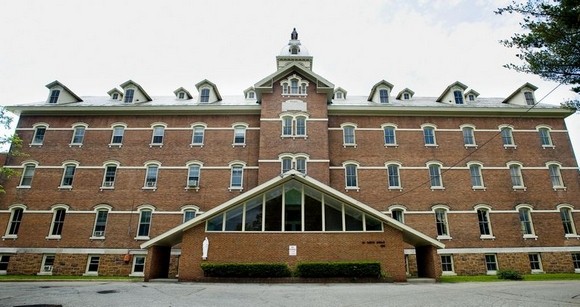 The college had no immediate plans to use the land for educational purposes and the sale of this property has resulted in significant financial resources for the College. While the sale was a complex agreement that has taken many,many months, the end result puts Burlington College on much more stable financial ground.
by tim
The University of Vermont Medical Center (formerly Fletcher Allen Health Care) was one of two recipients of a humanitarian award from the Patient Safety Movement Foundation for making significant strides to reduce and eliminate preventable patient harm. The award recognizes years of sustained effort in the field. The other recipient this year was the Texas-based American Association for Respiratory Care. The award was announced at the foundation’s third annual Patient Safety, Science & Technology Summit in Irvine, CA. Previous recipients include United States Senator Barbara Boxer and Jennifer Howse, Ph.D., president, March of Dimes Foundation.
by tim
by John McClaughry Finally alarmed by voter resentment at high school property taxes, the Vermont Legislature is hot on the trail of some kind of “solution.” It’s not likely to be productive unless legislators crawl out of the box that confines their thinking. One obvious (non) ”solution” is to ship more money from the General Fund to the Education Fund. The GF already sends $300 million a year to the EF. Increasing that transfer would reduce the homestead school property tax. Great!
But not so fast. The General Fund is $100 million in deficit, largely because of Medicaid expansions. This “solution” can’t happen.
Another obvious (non) “solution”: Raise new taxes for education. Governor Shumlin’s proposed new payroll tax will if enacted go toward financing government health care, not education. An increased income tax? Sales tax? The VPIRG carbon tax? The sugary beverage tax? Not a prayer.
by tim
The State of Vermont has released an explanation of how the Medicaid cost shift impacts health care providers and how that in turn affects premiums. Governor Peter Shumlin in his Budget Address earlier this month said that a 0.7 percent payroll tax could raise $90 million a year to offset this cost shift. The governor said that all businesses would be required to pay the tax, which would thus reduce premiums for those businesses who currently offer health insurance to their employees.
Medicaid reimburses doctors and hospitals at only 40 to 60 cents for a dollar of cost. To make up for those losses, doctors and hospitals have to charge those with private insurance higher rates for the same services. That shift of costs from Medicaid to private insurance it what is referred to as the Medicaid Cost Shift.
WHY IS IT A PROBLEM?
by tim
The Diabetes Self-Management Education Program at Mt Ascutney Hospital and Health Center (MAHHC) has received official accreditation from the American Association of Diabetes Education (AADE). This certification is awarded to programs and organizations that have demonstrated a commitment to the field of diabetes education by offering quality programming to support diabetes patients in self-managing the disease. Accreditation ensures that each program meets the National Standards for Diabetes Self-Management Education and Support.
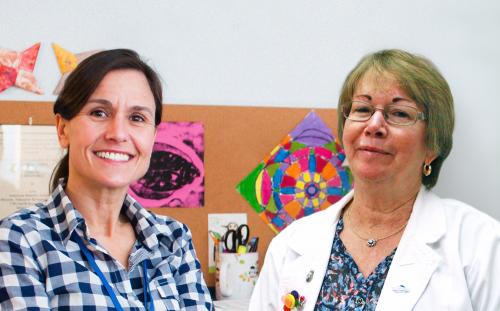 Virginia Quinn, RD, CDE and Nancy McCullough, RN, CDE
by tim
Gifford Medical Center ranks above the national average for infant feeding practices in maternity care settings, according to the most recent Centers for Disease Control and Prevention’s (CDC) survey of Maternity Practices in Infant Nutrition and Care (mPINC). Gifford scored 91 of 100 points, performing better than 84 percent of facilities nationwide with a similar number of births per year (less than 250). Across Vermont, the average mPINC score was 88; the national average score was 75.
“Gifford has always been a leader in providing women’s and obstetrics services and supporting moms and babies,” said Alison B. White, vice president of Patient Care Services at Gifford. “This report reflects the excellent care programs embedded in our pregnancy and maternity care, which create an environment that promotes and supports health and nutrition practices.”
by tim
Cary Brown, Executive Director of the Vermont Commission on Women which works to advance rights and opportunities for women and girls, applauded news that Vermont’s most recent gender wage gap number is 91.3 percent. In several recently released reports on working women from the US Bureau of Labor Statistics (BLS), Vermont's was best in the nation.
The BLS reports, Highlights of Women’s Earnings and Highlights of Women’s Earnings in Region I: Connecticut, Maine, Massachusetts, New Hampshire, Rhode Island, Vermont, are frequently used to provide comparison among the states for measuring women’s earnings as a percentage of men’s.
by tim
After at least four incidents involving VTrans plow trucks being hit today, Governor Peter Shumlin issued the following statement reminding Vermonters to take it slow as the snow continues to fall during the evening commute. Blinding conditions and numerous accidents on I-89 and on the southern section of I-91 have resulted in both highways being closed at least once each today. In addition, I-89 in South Burlington was also closed late in the afternoon because of a tractor trailer accident.